State Key Laboratory of Stem Cell and Reproductive Biology, Institute of Zoology, Chinese Academy of Sciences, Beijing, China.
Institute for Stem Cell and Regenerative Medicine, Chinese Academy of Sciences, Beijing, China.
Cell Prolif. 2021 Aug;54(8):e13090. doi: 10.1111/cpr.13090. Epub 2021 Jul 1.
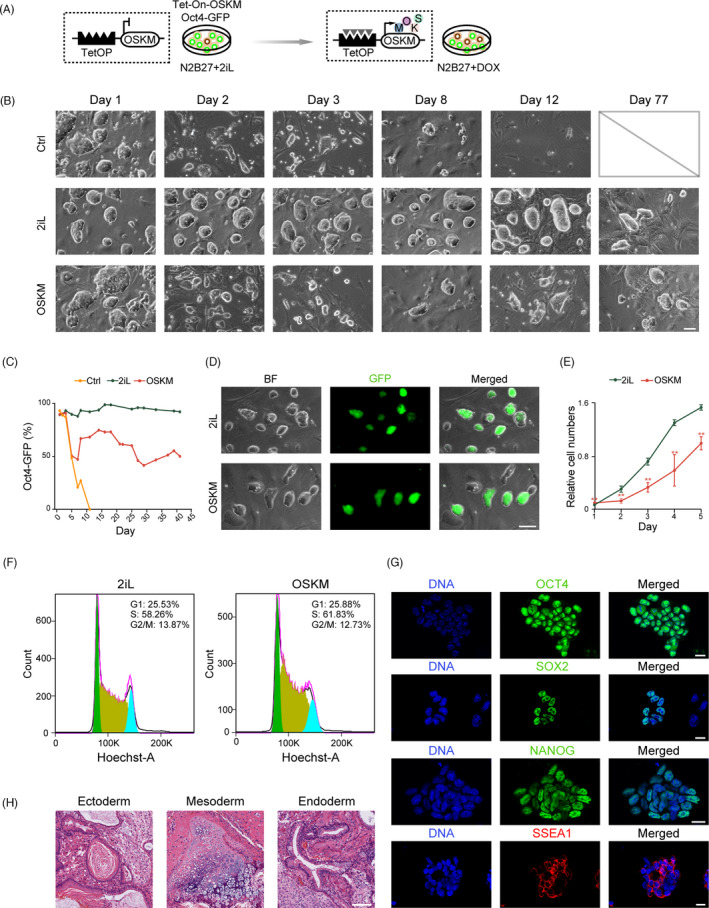
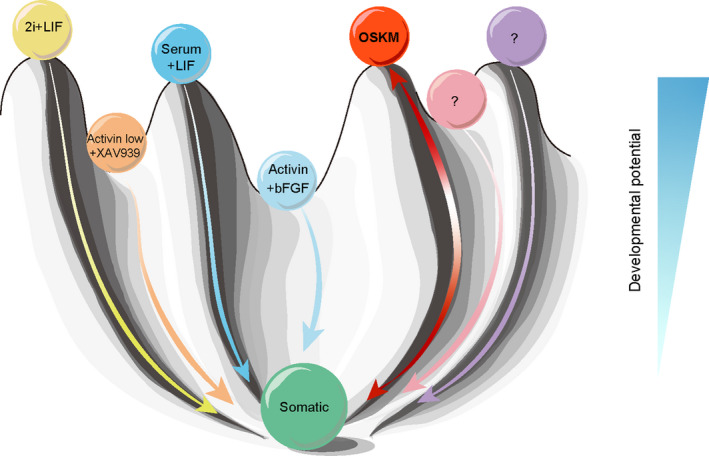
Derivation and maintenance of pluripotent stem cells (PSCs) generally require optimized and complex culture media, which hinders the derivation of PSCs from various species. Expression of Oct4, Sox2, Klf4, and c-Myc (OSKM) can reprogram somatic cells into induced PSCs (iPSCs), even for species possessing no optimal culture condition. Herein, we explored whether expression of OSKM could induce and maintain pluripotency without PSC-specific growth factors and signaling inhibitors.
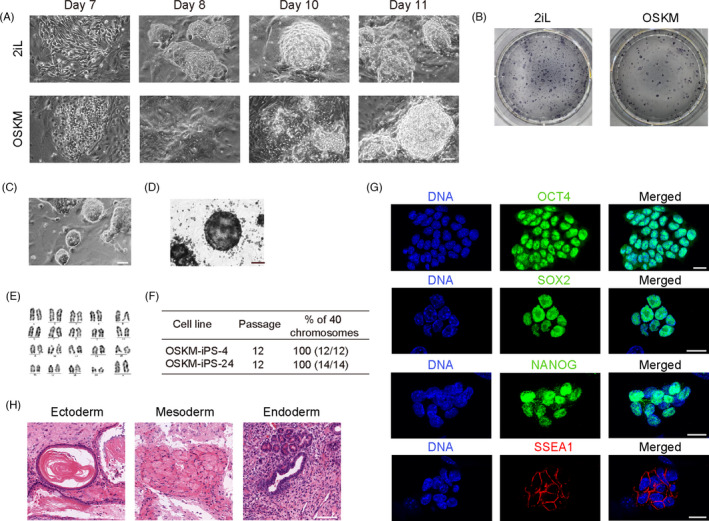
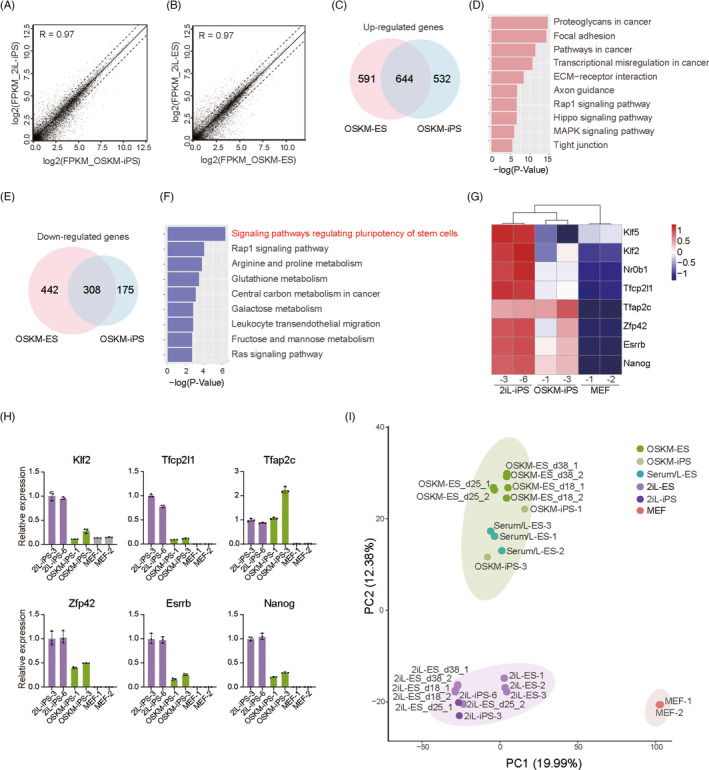
The culture medium of Tet-On-OSKM/Oct4-GFP mouse embryonic stem cells (ESCs) was switched from N2B27 with MEK inhibitor, GSK3β inhibitor, and leukemia inhibitory factor (LIF) (2iL) to N2B27 with doxycycline. Tet-On-OSKM mouse embryonic fibroblast (MEF) cells were reprogrammed in N2B27 with doxycycline. Cell proliferation was traced. Pluripotency was assessed by expression of ESC marker genes, teratoma, and chimera formation. RNA-Seq was conducted to analyze gene expression.
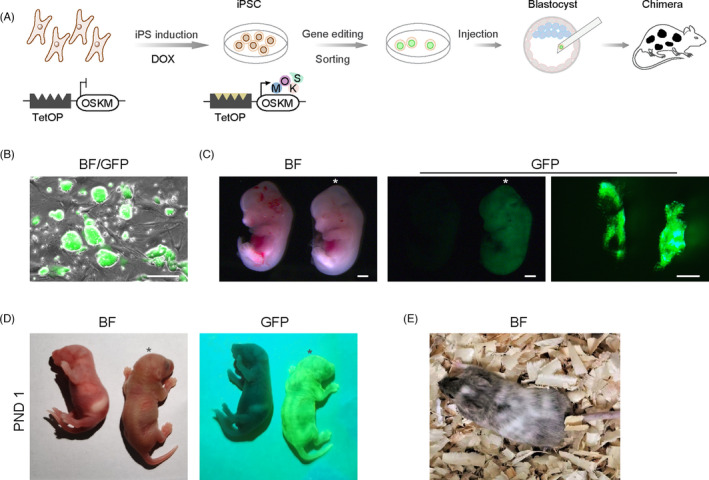
Via continuous expression of OSKM, mouse ESCs (OSKM-ESCs) and the resulting iPSCs (OSKM-iPSCs) reprogrammed from MEF cells propagated stably, expressed pluripotency marker genes, and formed three germ layers in teratomas. Transcriptional landscapes of OSKM-iPSCs resembled those of ESCs cultured in 2iL and were more similar to those of ESCs cultured in serum/LIF. Furthermore, OSKM-iPSCs contributed to germline transmission.
Expression of OSKM could induce and maintain mouse pluripotency without specific culturing factors. Importantly, OSKM-iPSCs could produce gene-modified animals through germline transmission, with potential applications in other species.
多能干细胞(PSCs)的诱导和维持通常需要优化和复杂的培养基,这阻碍了各种物种 PSCs 的诱导。Oct4、Sox2、Klf4 和 c-Myc(OSKM)的表达可以将体细胞重编程为诱导多能干细胞(iPSCs),即使对于没有最佳培养条件的物种也是如此。在此,我们探讨了是否可以在没有 PSC 特异性生长因子和信号抑制剂的情况下,通过表达 OSKM 来诱导和维持多能性。
将 Tet-On-OSKM/Oct4-GFP 小鼠胚胎干细胞(ESCs)的培养基从含有 MEK 抑制剂、GSK3β 抑制剂和白血病抑制因子(LIF)的 N2B27(2iL)切换为含有强力霉素的 N2B27。在含有强力霉素的 N2B27 中重编程 Tet-On-OSKM 小鼠胚胎成纤维细胞(MEF)细胞。追踪细胞增殖。通过 ESC 标记基因的表达、畸胎瘤和嵌合体形成来评估多能性。进行 RNA-Seq 分析基因表达。
通过持续表达 OSKM,小鼠 ESCs(OSKM-ESCs)和由 MEF 细胞重编程而来的 iPSCs(OSKM-iPSCs)稳定增殖,表达多能性标记基因,并在畸胎瘤中形成三个胚层。OSKM-iPSCs 的转录图谱与在 2iL 中培养的 ESCs 相似,与在血清/LIF 中培养的 ESCs 更为相似。此外,OSKM-iPSCs 有助于种系传递。
表达 OSKM 可以在没有特定培养因子的情况下诱导和维持小鼠多能性。重要的是,OSKM-iPSCs 可以通过种系传递产生基因修饰的动物,在其他物种中具有潜在的应用前景。