Vector Behavior and Pathogen Interaction Group, Instituto René Rachou, Fundação Oswaldo Cruz-FIOCRUZ, Belo Horizonte, Brazil.
PLoS Negl Trop Dis. 2021 Jul 1;15(7):e0009570. doi: 10.1371/journal.pntd.0009570. eCollection 2021 Jul.
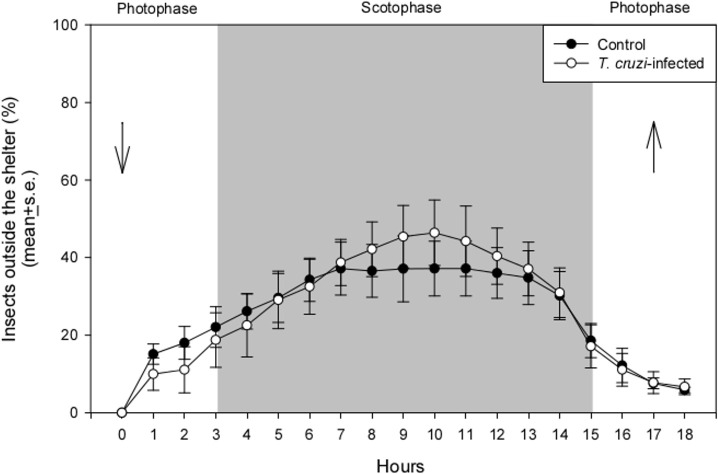
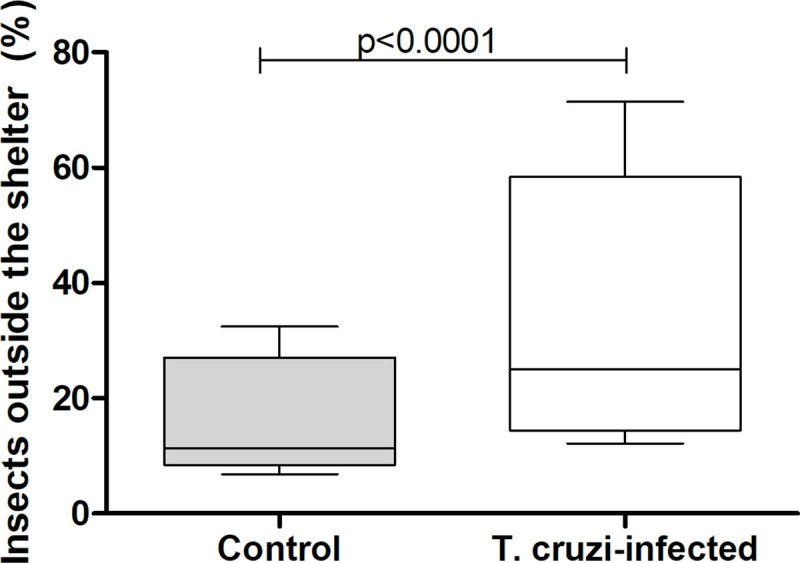
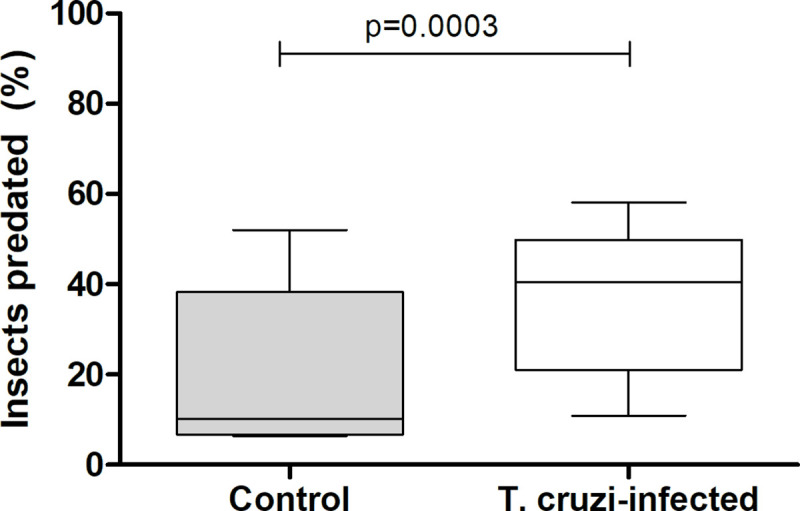
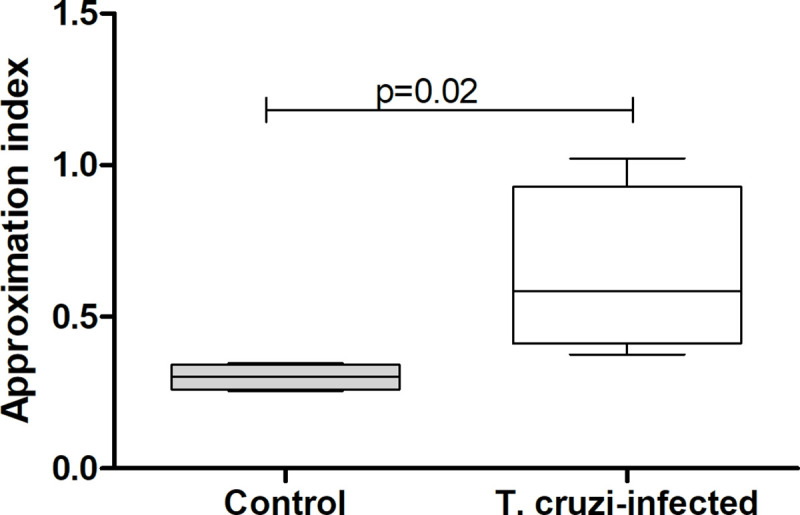
Triatomine bugs aggregate with conspecifics inside shelters during daylight hours. At dusk, they leave their refuges searching for hosts on which to blood feed. After finding a host, triatomines face the threat of being killed, because hosts often prey on them. As it is known that many parasites induce the predation of intermediate hosts to promote transmission, and that ingestion of Trypanosoma cruzi-infected bugs represents a very effective means for mammal infection, we hypothesized that trypanosomes induce infected bugs to take increased risk, and, as a consequence, be predated when approaching a host. Therefore, we evaluated whether the predation risk and predation rates endured by Rhodnius prolixus increase when infected with T. cruzi. Assays were performed in square glass arenas offering one central refuge to infected and uninfected 5th instar nymphs. A caged mouse was introduced in each arena after a three-day acclimation interval to activate sheltered insects and induce them to approach it. As hypothesized, a significantly higher proportion of infected insects was predated when compared with uninfected ones (36% and 19%, respectively). Indeed, T. cruzi-infected bugs took higher risk (Approximation Index = 0.642) when compared with healthy ones (Approximation Index = 0.302) and remained outside the shelters when the host was removed from the arena. Our results show that infection by T. cruzi induces bugs to assume higher risk and endure higher predation rates. We reveal a hitherto unknown trypanosome-vector interaction process that increases infected bug predation, promoting increased rates of robust oral transmission. The significant consequences of the mechanism revealed here make it a fundamental component for the resilient maintenance of sylvatic, peridomestic and domestic cycles.
三锥虫在白天会聚集在庇护所内与同种昆虫聚集在一起。黄昏时分,它们离开避难所,寻找可以吸血的宿主。找到宿主后,三锥虫面临被杀死的威胁,因为宿主经常捕食它们。由于许多寄生虫会诱使中间宿主捕食以促进传播,并且摄入感染克氏锥虫的三锥虫是哺乳动物感染的非常有效的手段,我们假设锥虫会诱使感染的三锥虫承担更大的风险,因此,当它们接近宿主时,更容易被捕食。因此,我们评估了感染克氏锥虫是否会增加丽蝇感染后被捕食的风险和被捕食率。在提供一个中央避难所的方形玻璃竞技场中,对感染和未感染的第 5 龄若虫进行了测定。在适应期三天后,每个竞技场都会引入一只笼养老鼠,以激活受庇护的昆虫并诱使其接近它。正如假设的那样,与未感染的昆虫相比,感染的昆虫被捕食的比例明显更高(分别为 36%和 19%)。实际上,与健康的昆虫相比(接近指数=0.302),感染克氏锥虫的昆虫承担了更高的风险(接近指数=0.642),并且当宿主从竞技场中移除时,它们仍然留在庇护所外。我们的研究结果表明,感染克氏锥虫会导致昆虫承担更高的风险并忍受更高的被捕食率。我们揭示了一种以前未知的锥虫-媒介相互作用过程,该过程增加了感染昆虫的捕食率,从而提高了强有力的口腔传播率。这里揭示的机制的显著后果使其成为维持森林、半户内和户内循环的重要组成部分。