Moško Tibor, Galušková Soňa, Matěj Radoslav, Brůžová Magdalena, Holada Karel
Institute of Immunology and Microbiology, First Faculty of Medicine, Charles University, 12800 Prague, Czech Republic.
Department of Pathology and Molecular Medicine, Third Faculty of Medicine, Charles University and Thomayer University Hospital, 14059 Prague, Czech Republic.
Pathogens. 2021 Jun 13;10(6):750. doi: 10.3390/pathogens10060750.
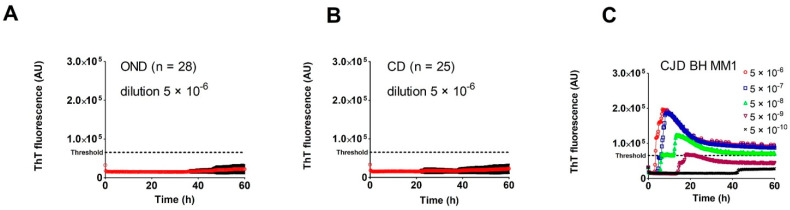
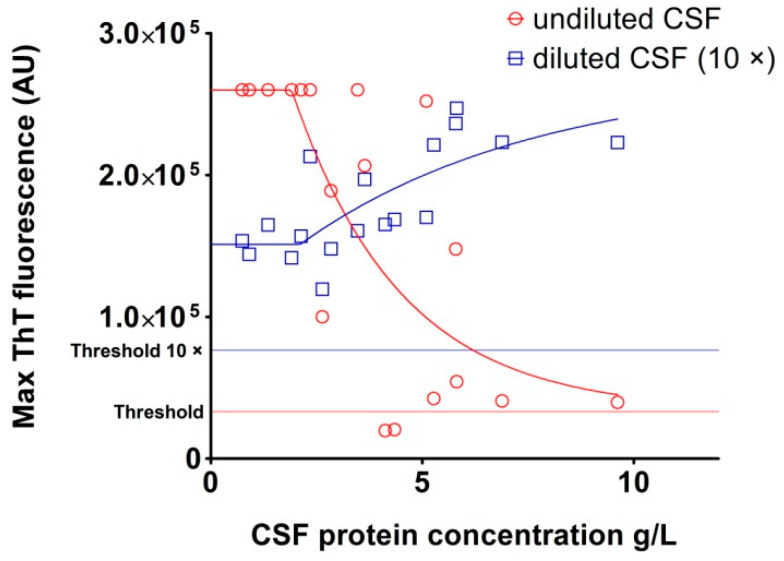
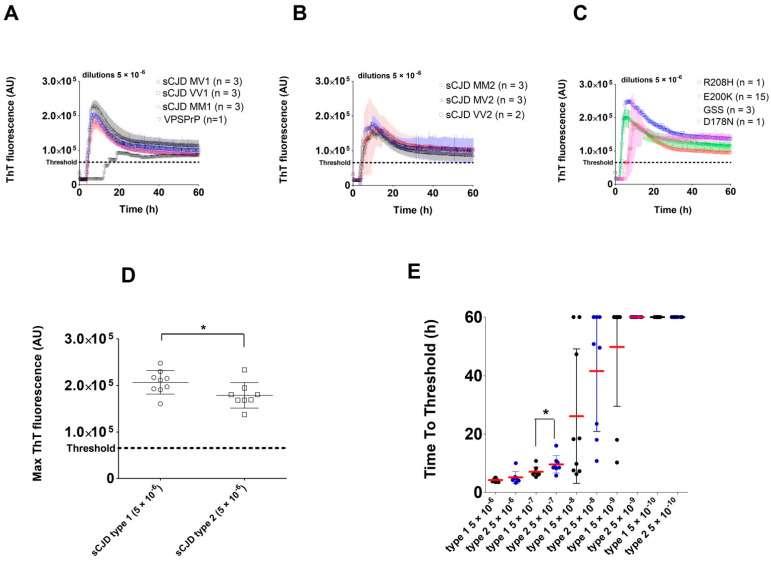
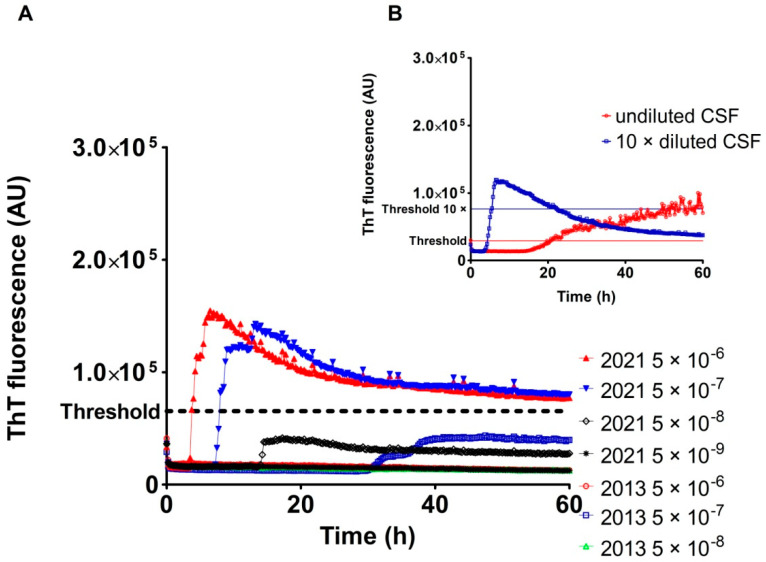
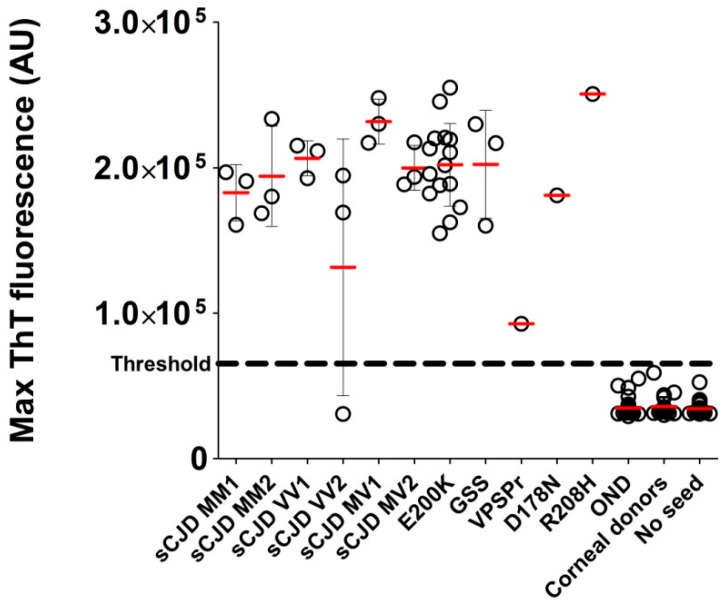
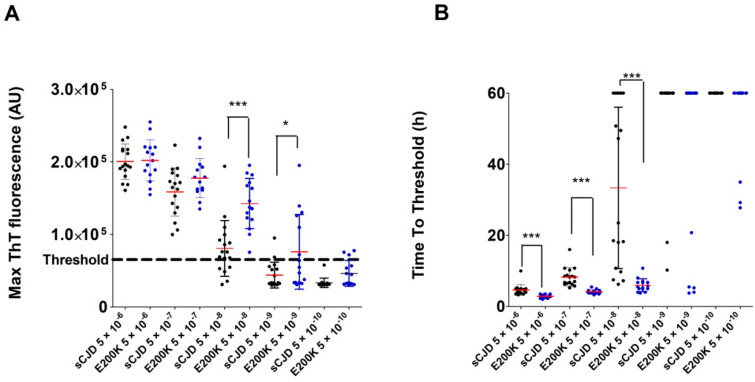
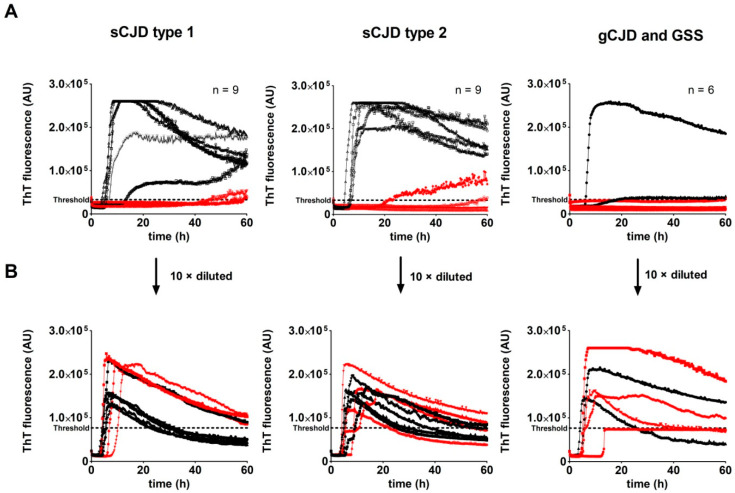
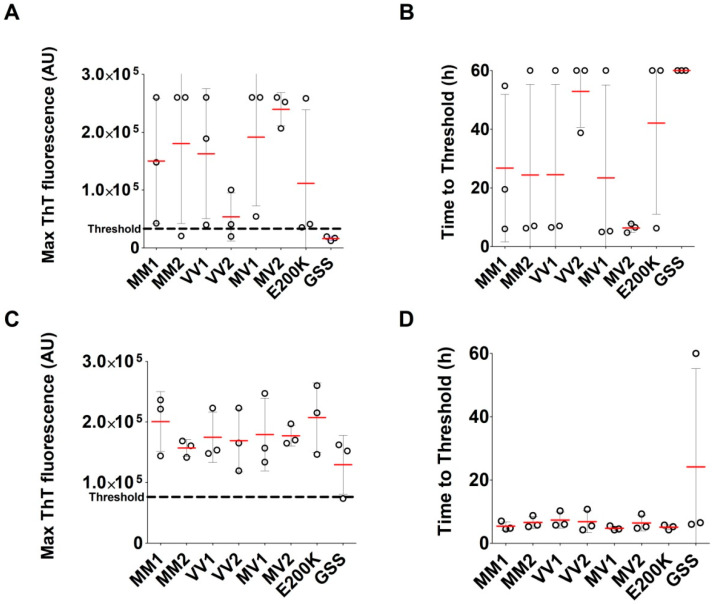
The possibilities for diagnosing prion diseases have shifted significantly over the last 10 years. The RT-QuIC assay option has been added for neuropsychiatric symptoms, supporting biomarkers and final confirmation. Samples of brain homogenates used for final diagnosis, archived for many years, provide the possibility for retrospective studies. We used a second-generation RT-QuIC assay to detect seeding activity in different types of sporadic and genetic prion diseases in archival brain homogenates and CSF samples that were 2 to 15 years old. Together, we tested 92 archival brain homogenates: 39 with definite prion disease, 28 with definite other neurological disease, and 25 with no signs of neurological disorders. The sensitivity and specificity of the assay were 97.4% and 100%, respectively. Differences were observed in gCJD E200K, compared to the sporadic CJD group. In 52 CSF samples-24 with definite prion disease and 28 controls-we detected the inhibition of seeding reaction due to high protein content. Diluting the samples eliminated such inhibition and led to 95.8% sensitivity and 100% specificity of the assay. In conclusion, we proved the reliability of archived brain homogenates and CSF samples for retrospective analysis by RT-QuIC after long-term storage, without changed reactivity.
在过去10年里,朊病毒疾病的诊断可能性发生了显著变化。针对神经精神症状、支持性生物标志物及最终确诊增加了实时无细胞感染性检测(RT-QuIC)方法。用于最终诊断的脑匀浆样本已存档多年,为回顾性研究提供了可能。我们使用第二代RT-QuIC检测法,检测存档2至15年的脑匀浆和脑脊液样本中不同类型散发性和遗传性朊病毒疾病的种子活性。我们共检测了92份存档脑匀浆:39份确诊为朊病毒疾病,28份确诊为其他神经系统疾病,25份无神经系统疾病迹象。该检测方法的敏感性和特异性分别为97.4%和100%。与散发性克雅氏病(CJD)组相比,在E200K型变异型克雅氏病(gCJD)中观察到了差异。在52份脑脊液样本中(24份确诊为朊病毒疾病,28份为对照样本),我们检测到由于高蛋白含量导致的种子反应抑制。稀释样本消除了这种抑制,使该检测方法的敏感性达到95.8%,特异性达到100%。总之,我们证明了长期保存后的存档脑匀浆和脑脊液样本通过RT-QuIC进行回顾性分析的可靠性,其反应性未发生改变。