Quamine Aicha E, Olsen Mallery R, Cho Monica M, Capitini Christian M
Department of Pediatrics, University of Wisconsin School of Medicine and Public Health, Madison, WI 53705, USA.
Carbone Cancer Center, University of Wisconsin School of Medicine and Public Health, Madison, WI 53705, USA.
Cancers (Basel). 2021 Jun 4;13(11):2796. doi: 10.3390/cancers13112796.
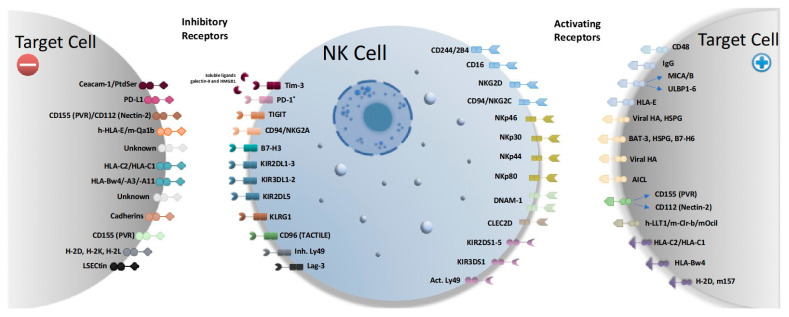
Treatment of metastatic pediatric solid tumors remain a significant challenge, particularly in relapsed and refractory settings. Standard treatment has included surgical resection, radiation, chemotherapy, and, in the case of neuroblastoma, immunotherapy. Despite such intensive therapy, cancer recurrence is common, and most tumors become refractory to prior therapy, leaving patients with few conventional treatment options. Natural killer (NK) cells are non-major histocompatibility complex (MHC)-restricted lymphocytes that boast several complex killing mechanisms but at an added advantage of not causing graft-versus-host disease, making use of allogeneic NK cells a potential therapeutic option. On top of their killing capacity, NK cells also produce several cytokines and growth factors that act as key regulators of the adaptive immune system, positioning themselves as ideal effector cells for stimulating heavily pretreated immune systems. Despite this promise, clinical efficacy of adoptive NK cell therapy to date has been inconsistent, prompting a detailed understanding of the biological pathways within NK cells that can be leveraged to develop "next generation" NK cell therapies. Here, we review advances in current approaches to optimizing the NK cell antitumor response including combination with other immunotherapies, cytokines, checkpoint inhibition, and engineering NK cells with chimeric antigen receptors (CARs) for the treatment of pediatric solid tumors.
转移性小儿实体瘤的治疗仍然是一项重大挑战,尤其是在复发和难治性情况下。标准治疗方法包括手术切除、放疗、化疗,对于神经母细胞瘤还包括免疫疗法。尽管进行了如此强化的治疗,但癌症复发很常见,而且大多数肿瘤对先前的治疗产生耐药性,使患者几乎没有传统的治疗选择。自然杀伤(NK)细胞是不受主要组织相容性复合体(MHC)限制的淋巴细胞,具有多种复杂的杀伤机制,而且还有一个额外的优势,即不会引起移植物抗宿主病,因此利用同种异体NK细胞成为一种潜在的治疗选择。除了杀伤能力外,NK细胞还产生多种细胞因子和生长因子,这些因子是适应性免疫系统的关键调节因子,使它们成为刺激经过大量预处理的免疫系统的理想效应细胞。尽管有这种前景,但迄今为止,过继性NK细胞疗法的临床疗效并不一致,这促使人们详细了解NK细胞内可用于开发“下一代”NK细胞疗法的生物学途径。在这里,我们综述了当前优化NK细胞抗肿瘤反应方法的进展,包括与其他免疫疗法、细胞因子、检查点抑制以及用嵌合抗原受体(CAR)工程化NK细胞相结合来治疗小儿实体瘤。