Barone Rita, Bastin Jean, Djouadi Fatima, Singh Indrapal, Karim Mohammad Azharul, Ammanamanchi Amrit, McCarty Patrick John, Delhey Leanna, Shannon Rose, Casabona Antonino, Rizzo Renata, Frye Richard Eugene
Department of Clinical and Experimental Medicine, Child Neuropsychiatry Section, University of Catania, 95124 Catania, Italy.
CNR-Institute for Polymers, Composites and Biomaterials IPCB, 95124 Catania, Italy.
J Pers Med. 2021 Jun 4;11(6):510. doi: 10.3390/jpm11060510.
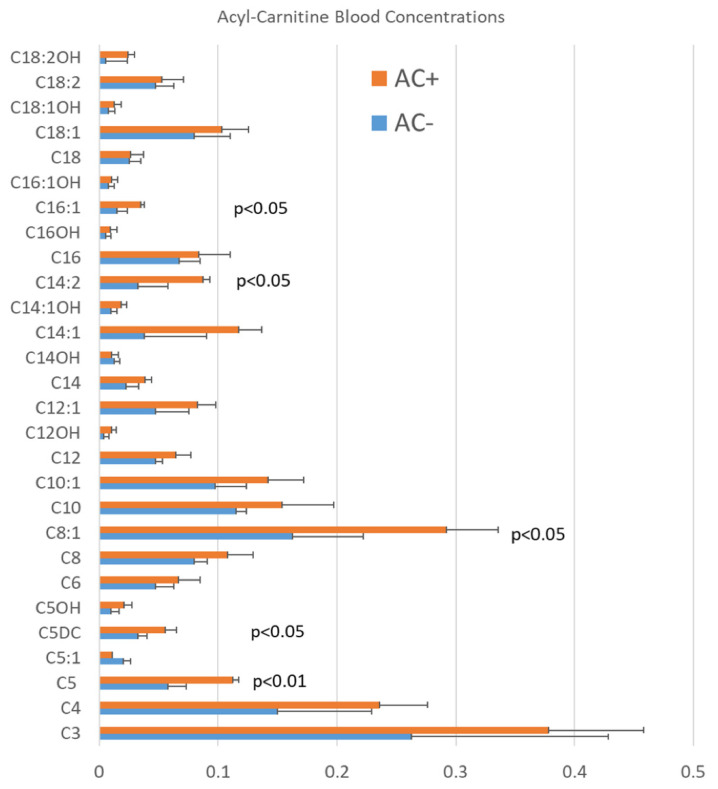
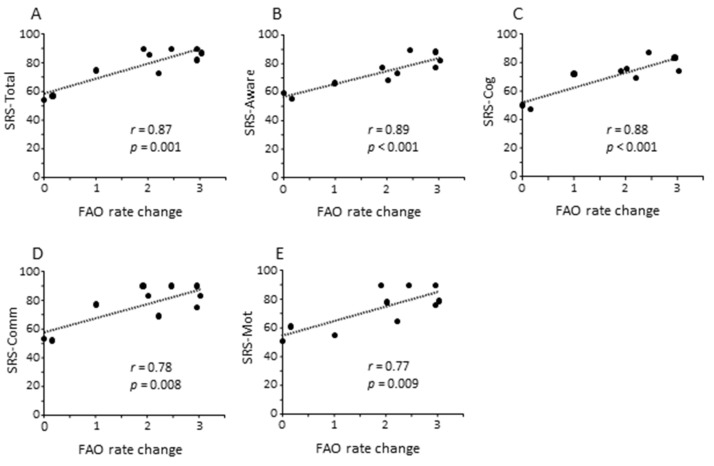
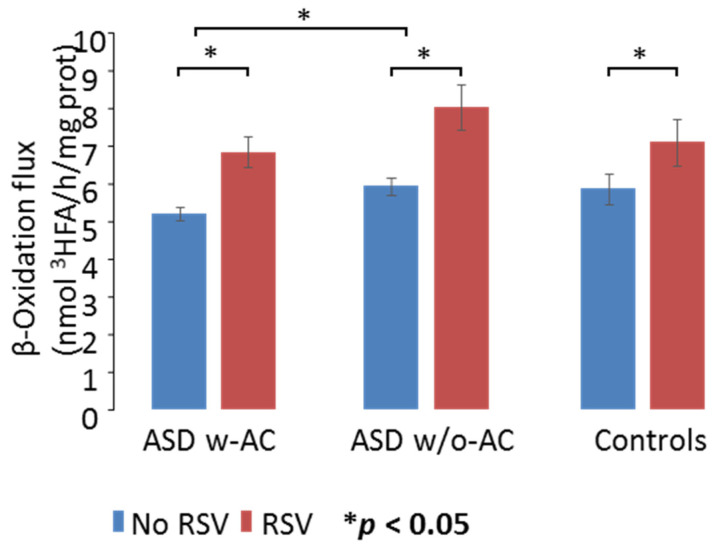
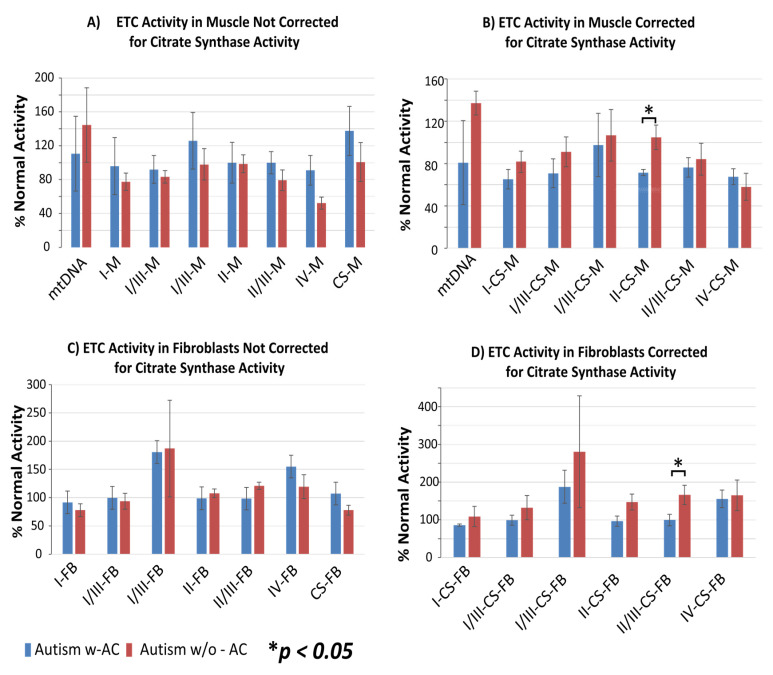
Patients with autism spectrum disorder (ASD) may have an increase in blood acyl-carnitine (AC) concentrations indicating a mitochondrial fatty acid β-oxidation (mtFAO) impairment. However, there are no data on systematic mtFAO analyses in ASD. We analyzed tritiated palmitate oxidation rates in fibroblasts from patients with ASD before and after resveratrol (RSV) treatment, according to methods used for the diagnosis of congenital defects in mtFAO. ASD participants ( = 10, 60%; male; mean age (SD) 7.4 (3.2) years) were divided in two age-equivalent groups based on the presence ( = 5) or absence ( = 5) of elevated blood AC levels. In addition, electron transport chain (ETC) activity in fibroblasts and muscle biopsies and clinical characteristics were compared between the ASD groups. Baseline fibroblast mtFAO was not significantly different in patients in comparison with control values. However, ASD patients with elevated AC exhibited significantly decreased mtFAO rates, muscle ETC complex II activity, and fibroblast ETC Complex II/III activity ( < 0.05), compared with patients without an AC signature. RSV significantly increased the mtFAO activity in all study groups ( = 0.001). The highest mtFAO changes in response to RSV were observed in fibroblasts from patients with more severe symptoms on the Social Responsiveness Scale total ( = 0.001) and Awareness, Cognition, Communication and Motivation subscales (all < 0.01). These findings suggested recognition of an ASD patient subset characterized by an impaired mtFAO flux associated with abnormal blood AC. The study elucidated that RSV significantly increased fibroblast mtFAO irrespective of plasma AC status, and the highest changes to RSV effects on mtFAO were observed in the more severely affected patients.
自闭症谱系障碍(ASD)患者血液中的酰基肉碱(AC)浓度可能会升高,这表明线粒体脂肪酸β-氧化(mtFAO)存在损伤。然而,目前尚无关于ASD患者线粒体脂肪酸β-氧化系统分析的数据。我们根据用于诊断线粒体脂肪酸β-氧化先天性缺陷的方法,分析了白藜芦醇(RSV)治疗前后ASD患者成纤维细胞中氚标记的棕榈酸氧化速率。ASD参与者(n = 10,60%为男性;平均年龄(标准差)7.4(3.2)岁)根据血液AC水平升高(n = 5)或未升高(n = 5)分为两个年龄相当的组。此外,还比较了ASD组之间成纤维细胞和肌肉活检中的电子传递链(ETC)活性以及临床特征。与对照值相比,患者的基线成纤维细胞mtFAO无显著差异。然而,与没有AC特征的患者相比,AC升高的ASD患者的mtFAO速率、肌肉ETC复合物II活性和成纤维细胞ETC复合物II/III活性显著降低(P < 0.05)。RSV显著增加了所有研究组的mtFAO活性(P = 0.001)。在社交反应量表总分(P = 0.001)以及意识、认知、沟通和动机子量表(均P < 0.01)上症状更严重的患者的成纤维细胞中,观察到对RSV反应的mtFAO变化最大。这些发现表明,识别出了一个以与异常血液AC相关的mtFAO通量受损为特征的ASD患者亚组。该研究阐明,无论血浆AC状态如何,RSV均显著增加成纤维细胞mtFAO,并且在受影响更严重的患者中观察到对RSV对mtFAO影响的最大变化。