Department of Dermatology, School of Medicine, UC Davis, Sacramento, CA 95816, USA.
Dermatology Section, VA Northern California Health Care System, Mather, CA 95655, USA.
Int J Mol Sci. 2021 Jun 7;22(11):6135. doi: 10.3390/ijms22116135.
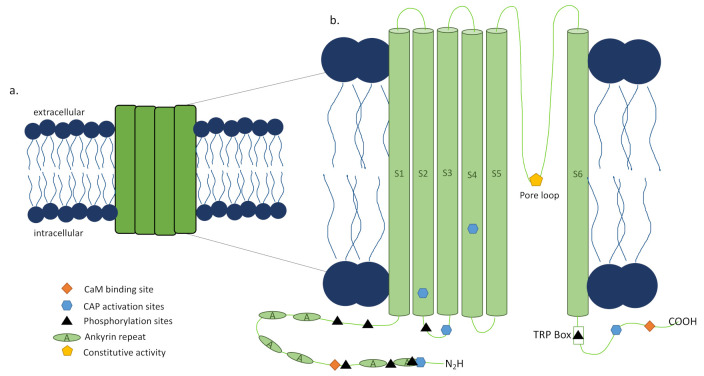
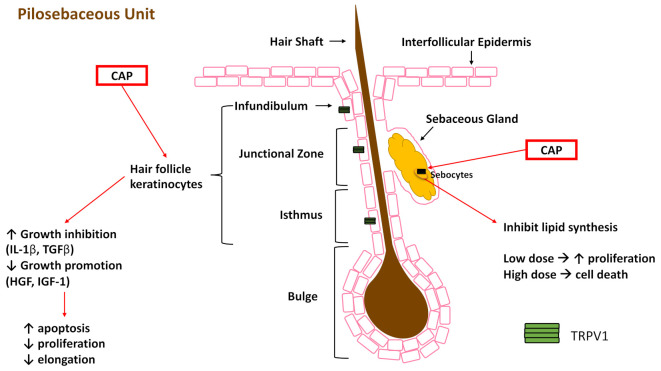
Skin is innervated by a multitude of sensory nerves that are important to the function of this barrier tissue in homeostasis and injury. The role of innervation and neuromediators has been previously reviewed so here we focus on the role of the transient receptor potential cation channel, subfamily V member 1 (TRPV1) in wound healing, with the intent of targeting it in treatment of non-healing wounds. TRPV1 structure and function as well as the outcomes of TRPV1-targeted therapies utilized in several diseases and tissues are summarized. In skin, keratinocytes, sebocytes, nociceptors, and several immune cells express TRPV1, making it an attractive focus area for treating wounds. Many intrinsic and extrinsic factors confound the function and targeting of TRPV1 and may lead to adverse or off-target effects. Therefore, a better understanding of what is known about the role of TRPV1 in skin and wound healing will inform future therapies to treat impaired and chronic wounds to improve healing.
皮肤由众多感觉神经支配,这些神经对于维持这一屏障组织的正常功能和应对损伤非常重要。神经支配和神经递质的作用之前已经被综述过,因此在这里我们重点关注瞬时受体电位阳离子通道亚家族 V 成员 1(TRPV1)在伤口愈合中的作用,以期将其作为治疗非愈合性伤口的靶点。本文总结了 TRPV1 的结构和功能,以及几种疾病和组织中使用的 TRPV1 靶向治疗的结果。在皮肤中,角质形成细胞、皮脂腺细胞、伤害感受器和几种免疫细胞表达 TRPV1,使其成为治疗伤口的一个有吸引力的焦点区域。许多内在和外在因素会影响 TRPV1 的功能和靶向性,并可能导致不良反应或脱靶效应。因此,更好地了解 TRPV1 在皮肤和伤口愈合中的作用将为未来治疗受损和慢性伤口以改善愈合的疗法提供信息。