Berdel Andrew F, Schwöppe Christian, Brand Caroline, Harrach Saliha, Brömmel Kathrin, Hintelmann Heike, Lenz Georg, Liersch Ruediger, Heinzow Hauke, Schliemann Christoph, Mesters Rolf M, Berdel Wolfgang E, Kessler Torsten
Department of Medicine A (Hematology, Hemostaseology, Oncology, Pneumology), University Hospital Muenster, D-48149 Muenster, Germany.
Department of Medicine B (Gastroenterology, Endocrinology, Infectious Diseases), University Hospital Muenster, D-48149 Muenster, Germany.
Cancers (Basel). 2021 Jun 7;13(11):2841. doi: 10.3390/cancers13112841.
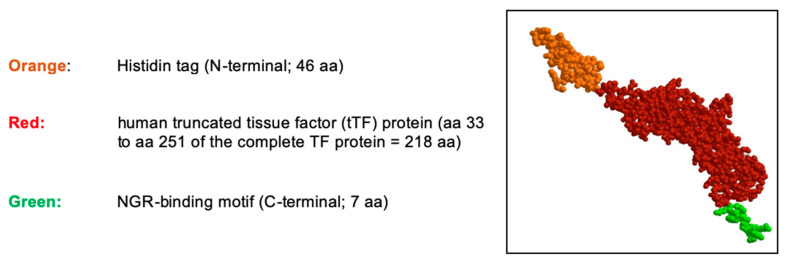
Besides its central functional role in coagulation, TF has been described as being operational in the development of malignancies and is currently being studied as a possible therapeutic tool against cancer. One of the avenues being explored is retargeting TF or its truncated extracellular part (tTF) to the tumor vasculature to induce tumor vessel occlusion and tumor infarction. To this end, multiple structures on tumor vascular wall cells have been studied at which tTF has been aimed via antibodies, derivatives, or as bifunctional fusion protein through targeting peptides. Among these targets were vascular adhesion molecules, oncofetal variants of fibronectin, prostate-specific membrane antigens, vascular endothelial growth factor receptors and co-receptors, integrins, fibroblast activation proteins, NG2 proteoglycan, microthrombus-associated fibrin-fibronectin, and aminopeptidase N. Targeting was also attempted toward cellular membranes within an acidic milieu or toward necrotic tumor areas. tTF-NGR, targeting tTF primarily at aminopeptidase N on angiogenic endothelial cells, was the first drug candidate from this emerging class of coaguligands translated to clinical studies in cancer patients. Upon completion of a phase I study, tTF-NGR entered randomized studies in oncology to test the therapeutic impact of this novel therapeutic modality.
除了在凝血过程中发挥核心功能作用外,组织因子(TF)还被描述为在恶性肿瘤发展过程中发挥作用,目前正在作为一种可能的抗癌治疗工具进行研究。正在探索的途径之一是将TF或其截短的细胞外部分(tTF)重新靶向肿瘤血管系统,以诱导肿瘤血管闭塞和肿瘤梗死。为此,已经研究了肿瘤血管壁细胞上的多种结构,通过抗体、衍生物或作为双功能融合蛋白通过靶向肽将tTF靶向这些结构。这些靶点包括血管粘附分子、纤连蛋白的癌胚变体、前列腺特异性膜抗原、血管内皮生长因子受体和共受体、整合素、成纤维细胞活化蛋白、NG2蛋白聚糖、微血栓相关的纤维蛋白-纤连蛋白和氨肽酶N。还尝试将靶点定位于酸性环境中的细胞膜或坏死肿瘤区域。tTF-NGR主要将tTF靶向血管生成内皮细胞上的氨肽酶N,是这类新兴的凝血配体中首个进入癌症患者临床研究的候选药物。在完成I期研究后,tTF-NGR进入肿瘤学随机研究,以测试这种新型治疗方式的治疗效果。