Cui Mingjun, Yu Yue, Zheng Yuxuan
Key Laboratory of Impact and Safety Engineering, Ministry of Education, School of Mechanical Engineering and Mechanics, Ningbo University, Ningbo 315211, China.
Key Laboratory of Marine Materials and Related Technologies, Zhejiang Key Laboratory of Marine Materials and Protective Technologies, Ningbo Institute of Materials Technology and Engineering, Chinese Academy of Sciences, Ningbo 315201, China.
Polymers (Basel). 2021 Jun 10;13(12):1923. doi: 10.3390/polym13121923.
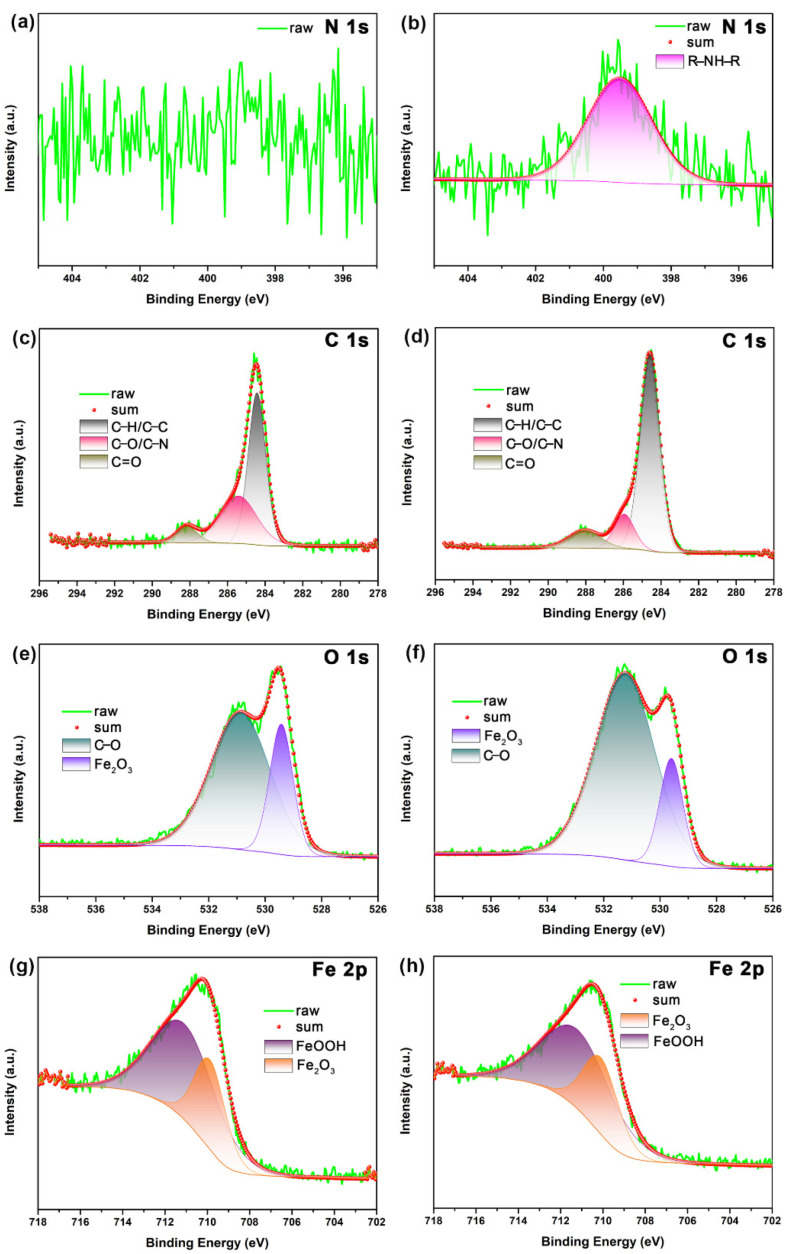
In present study, novel nitrogen doped carbon dots (NCDs) are synthesized using a green material-dopamine-as a precursor and studied as corrosion inhibitors for Q235 carbon steel in 1 M HCl solution. According to the electrochemical results, it is found that NCDs acting as a mixed-type corrosion inhibitor can effectively retard the acid corrosion of carbon steel, and their inhibition efficiency increases with the concentration increasing from 50 to 400 ppm. The highest inhibition efficiency is 96.1% in the presence of 400 ppm NCDs at room temperature. Additionally, the adsorption of NCDs obeys the Langmuir adsorption isotherm. In addition, weight loss results show that the inhibition efficiency in the presence of 400 ppm NCDs increases with prolonged exposure time and rising temperature (298-328 K), owing to the strong adsorption of NCDs on the steel surface, and the η value is 92.2% at 60 h of immersion and 86.2%, 89.1%, 90.6% and 92.9% at 298, 308, 318 and 328 K, respectively. Surface analysis by scanning electron microscope (SEM), laser scanning confocal microscope (LSCM) and X-ray photoelectron spectroscopy (XPS) further proves the formation of a protective NCD film on the steel surface.
在本研究中,使用绿色材料多巴胺作为前驱体合成了新型氮掺杂碳点(NCDs),并研究了其在1 M HCl溶液中作为Q235碳钢缓蚀剂的性能。根据电化学结果发现,NCDs作为混合型缓蚀剂可有效抑制碳钢的酸腐蚀,其缓蚀效率随浓度从50 ppm增加到400 ppm而提高。在室温下,400 ppm NCDs存在时的最高缓蚀效率为96.1%。此外,NCDs的吸附符合朗缪尔吸附等温线。另外,失重结果表明,由于NCDs在钢表面的强吸附作用,400 ppm NCDs存在时的缓蚀效率随浸泡时间延长和温度升高(298 - 328 K)而增加,浸泡60 h时η值为92.2%,在298、308、318和328 K时分别为86.2%、89.1%、90.6%和92.9%。通过扫描电子显微镜(SEM)、激光扫描共聚焦显微镜(LSCM)和X射线光电子能谱(XPS)进行的表面分析进一步证明了钢表面形成了保护性的NCD膜。