Sadura Filip, Wróbel Maciej S, Karpienko Katarzyna
Department of Metrology and Optoelectronics, Faculty of Electronics, Telecommunications and Informatics, Gdańsk University of Technology, G. Narutowicza 11/12, 80-233 Gdańsk, Poland.
Materials (Basel). 2021 Jun 8;14(12):3147. doi: 10.3390/ma14123147.
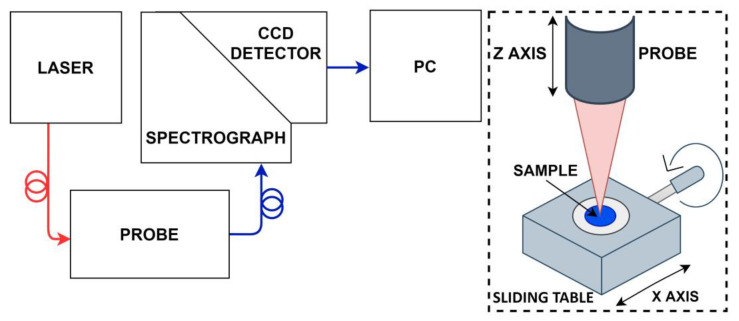
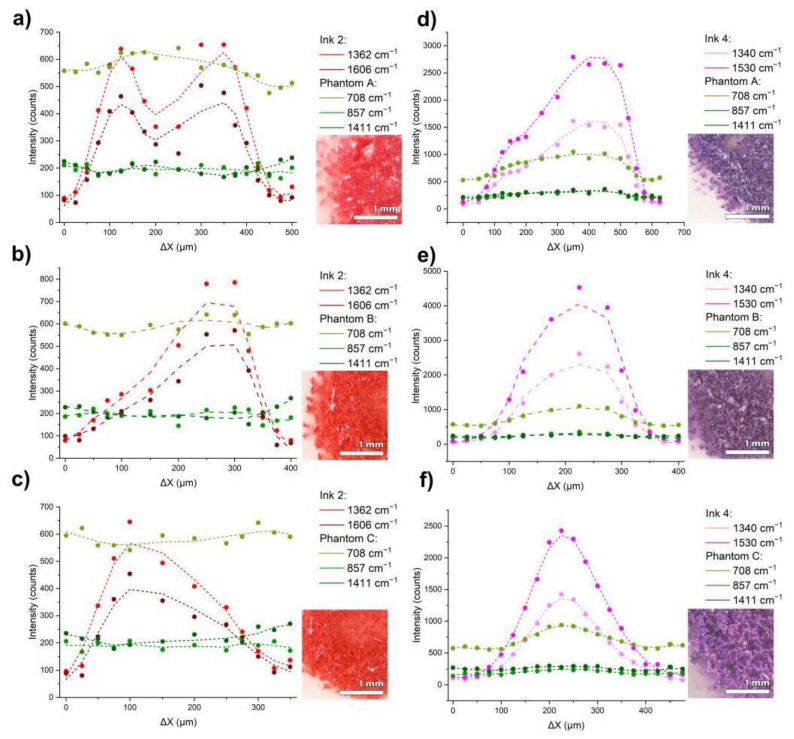
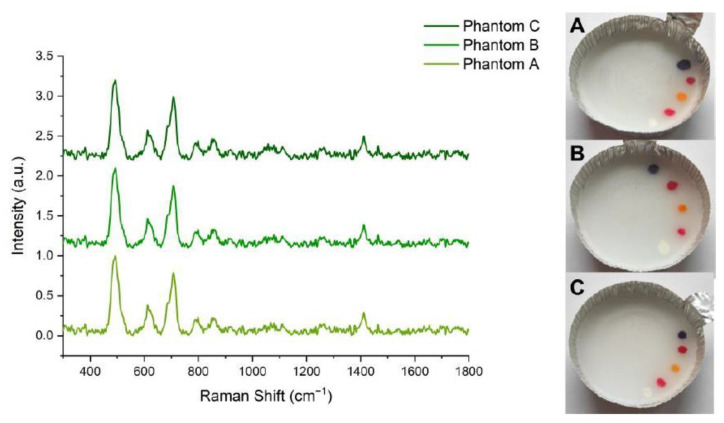
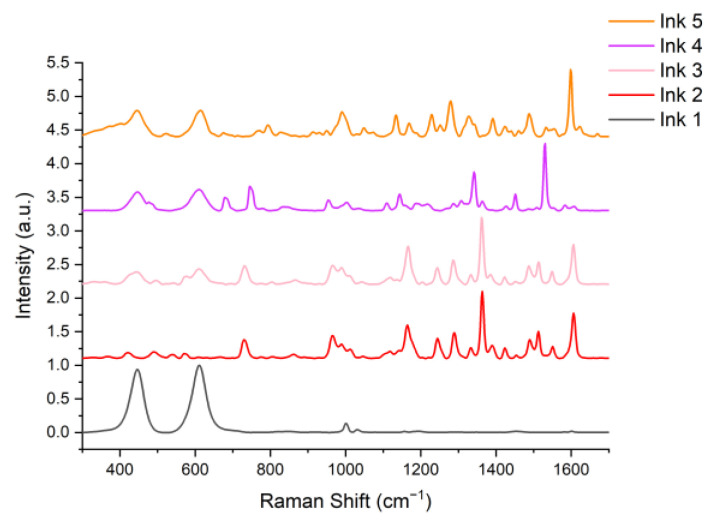
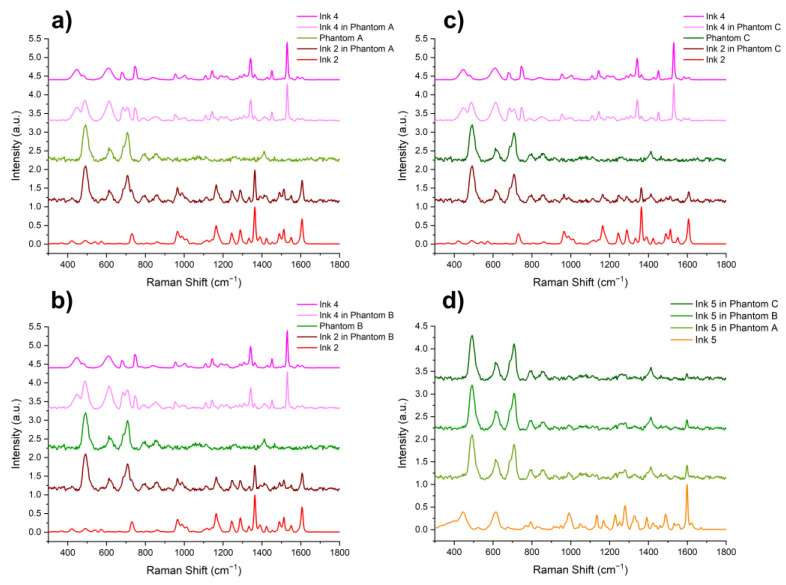
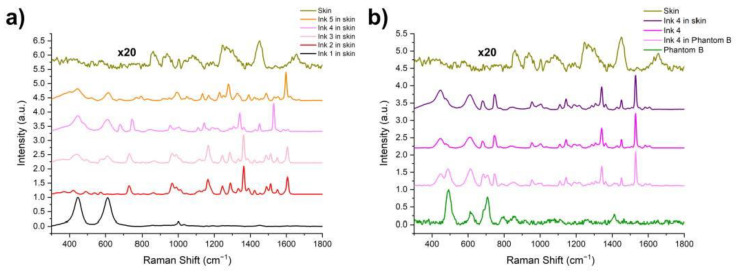
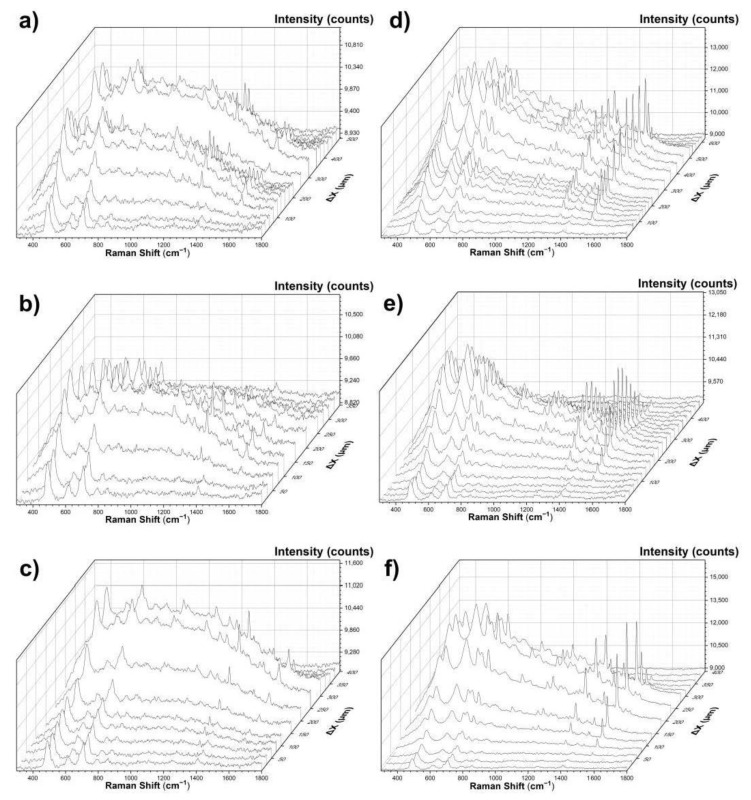
Due to the increasing popularity of tattoos among the general population, to ensure their safety and quality, there is a need to develop reliable and rapid methods for the analysis of the composition of tattoo inks, both in the ink itself and in already existing tattoos. This paper presents the possibility of using Raman spectroscopy to examine tattoo inks in biological materials. We have developed optical tissue phantoms mimicking the optical scattering coefficient typical for human dermis as a substitute for an in vivo study. The material employed herein allows for mimicking the tattoo-making procedure. We investigated the effect of the scattering coefficient of the matrix in which the ink is located, as well as its chemical compositions on the spectra. Raman surface line scanning has been carried out for each ink in the skin phantom to establish the spatial gradient of ink concentration distribution. This ensures the ability to detect miniature concentrations for a tattoo margin assessment. An analysis and comparison of the spectra of the inks and the tattooed inks in the phantoms are presented. We recommend the utilization of Raman spectroscopy as a screening method to enforce the tattoo ink safety legislations as well as an early medical diagnostic screening tool.
由于纹身在普通人群中越来越受欢迎,为确保其安全性和质量,需要开发可靠且快速的方法来分析纹身墨水的成分,包括墨水本身以及已有的纹身中的成分。本文介绍了使用拉曼光谱法检测生物材料中纹身墨水的可能性。我们已经开发出模仿人类真皮典型光学散射系数的光学组织模型,以替代体内研究。本文所采用的材料能够模拟纹身制作过程。我们研究了墨水所在基质的散射系数及其化学成分对光谱的影响。对皮肤模型中的每种墨水进行了拉曼表面线扫描,以确定墨水浓度分布的空间梯度。这确保了能够检测出微量浓度,用于纹身边缘评估。文中还对模型中墨水和纹身墨水的光谱进行了分析和比较。我们建议将拉曼光谱法用作一种筛选方法,以强化纹身墨水安全法规,同时作为一种早期医学诊断筛选工具。