Granata Antonio, Campo Irene, Lentini Paolo, Pesce Francesco, Gesualdo Loreto, Basile Antonio, Cantisani Vito, Zeiler Matthias, Bertolotto Michele
Nephrology and Dialysis Unit, "Cannizzaro" Hospital, 95026 Catania, Italy.
Department of Radiology, "Civile di Conegliano" Hospital, ULSS 2 Marca Trevigiana, 31015 Conegliano, Italy.
Diagnostics (Basel). 2021 Jun 8;11(6):1058. doi: 10.3390/diagnostics11061058.
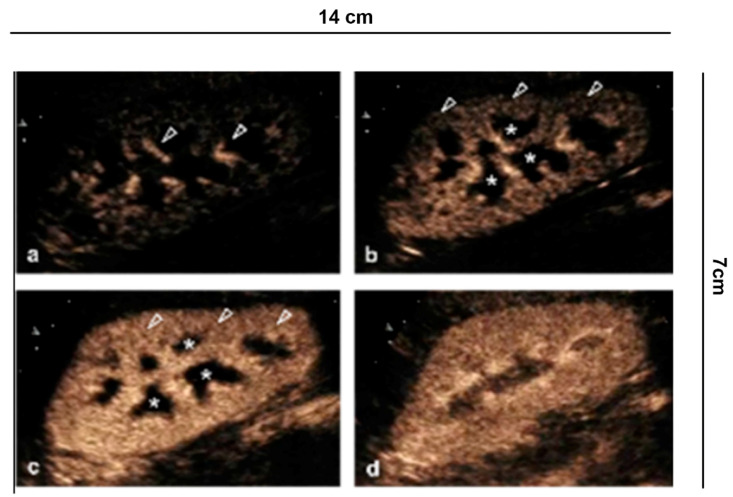
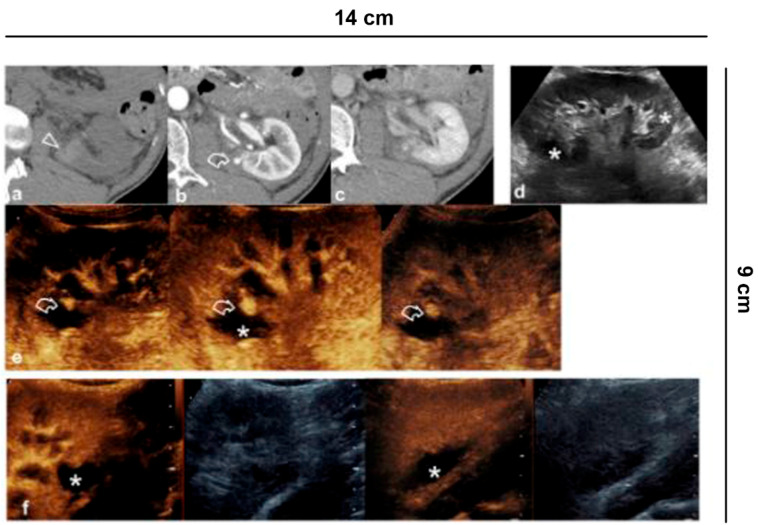
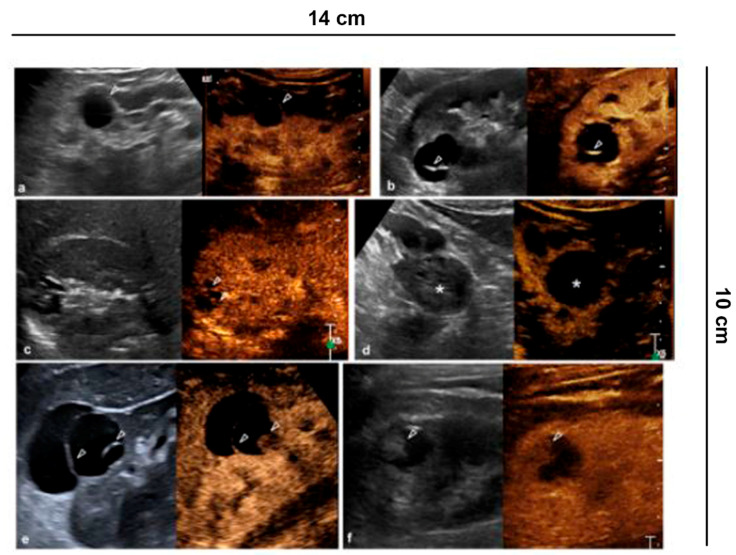
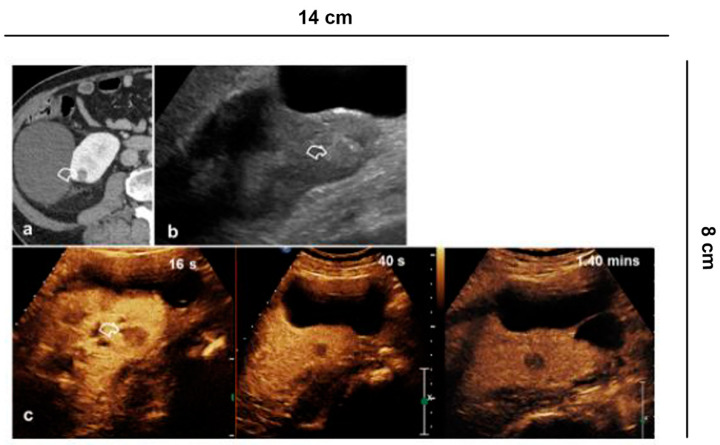
Gray scale ultrasound has an important diagnostic role in native kidney disease. Low cost, absence of ionizing radiation and nephrotoxicity, short performance time, and repeatability even at the bedside, are the major advantages of this technique. The introduction of contrast enhancement ultrasound (CEUS) in daily clinical practice has significantly reduced the use of contrast enhancement computed tomography (CECT) and contrast enhancement magnetic resonance (CEMR), especially in patients with renal disease. Although there are many situations in which CECT and CEMRI are primarily indicated, their use may be limited by the administration of the contrast medium, which may involve a risk of renal function impairment, especially in the elderly, and in patients with acute kidney injury (AKI) and moderate to severe chronic kidney disease (CKD). In these cases, CEUS can be a valid diagnostic choice. To date, numerous publications have highlighted the role of CEUS in the study of parenchymal micro-vascularization and renal pathology by full integration with second level imaging methods (CECT and CEMRI) both in patients with normal renal function and with diseased kidneys. The aim of this review is to offer an updated overview of the limitations and potential applications of CEUS in native kidney disease.
灰阶超声在原发性肾病中具有重要的诊断作用。该技术的主要优点包括成本低、无电离辐射和肾毒性、检查时间短以及即使在床边也可重复进行。在日常临床实践中,超声造影(CEUS)的引入显著减少了增强计算机断层扫描(CECT)和增强磁共振成像(CEMR)的使用,尤其是在肾病患者中。尽管在许多情况下,CECT和CEMRI是主要的检查手段,但它们的使用可能会受到造影剂注射的限制,这可能会导致肾功能损害的风险,尤其是在老年人、急性肾损伤(AKI)患者以及中度至重度慢性肾病(CKD)患者中。在这些情况下,CEUS可能是一种有效的诊断选择。迄今为止,许多出版物都强调了CEUS在研究肾实质微血管化和肾脏病理学方面的作用,它通过与二级成像方法(CECT和CEMRI)完全整合,应用于肾功能正常和患有肾病的患者。这篇综述的目的是提供关于CEUS在原发性肾病中的局限性和潜在应用的最新概述。