Tomasini Paula Pellenz, Guecheva Temenouga Nikolova, Leguisamo Natalia Motta, Péricart Sarah, Brunac Anne-Cécile, Hoffmann Jean Sébastien, Saffi Jenifer
Laboratory of Genetic Toxicology, Federal University of Health Sciences of Porto Alegre, Avenida Sarmento Leite, 245, Porto Alegre 90050-170, Brazil.
Post-Graduation Program in Cell and Molecular Biology, Federal University of Rio Grande do Sul, Avenida Bento Gonçalves, 9500, Porto Alegre 91501-970, Brazil.
Cancers (Basel). 2021 Jun 23;13(13):3130. doi: 10.3390/cancers13133130.
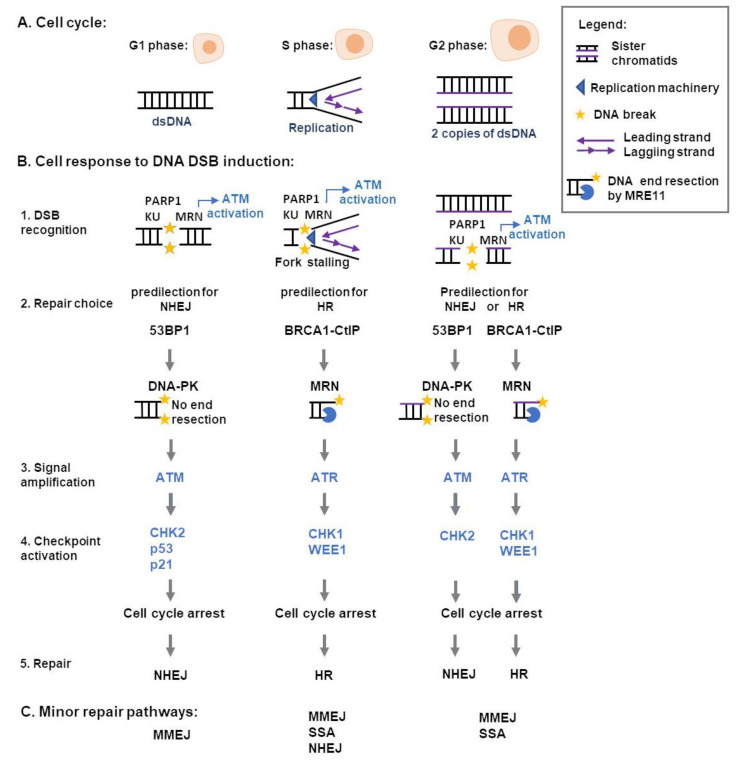
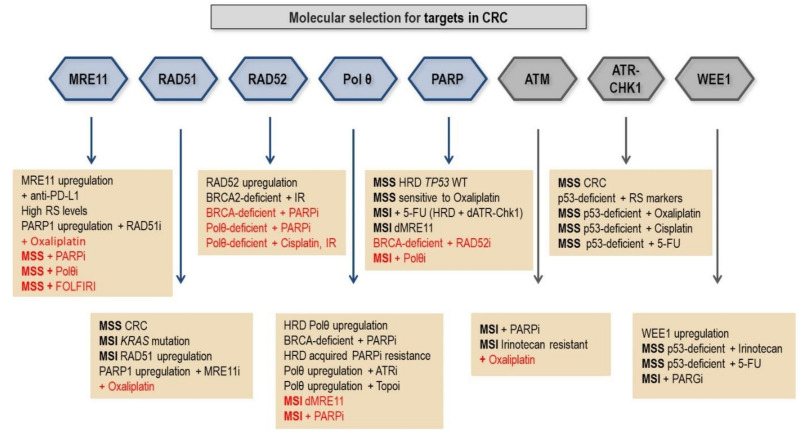
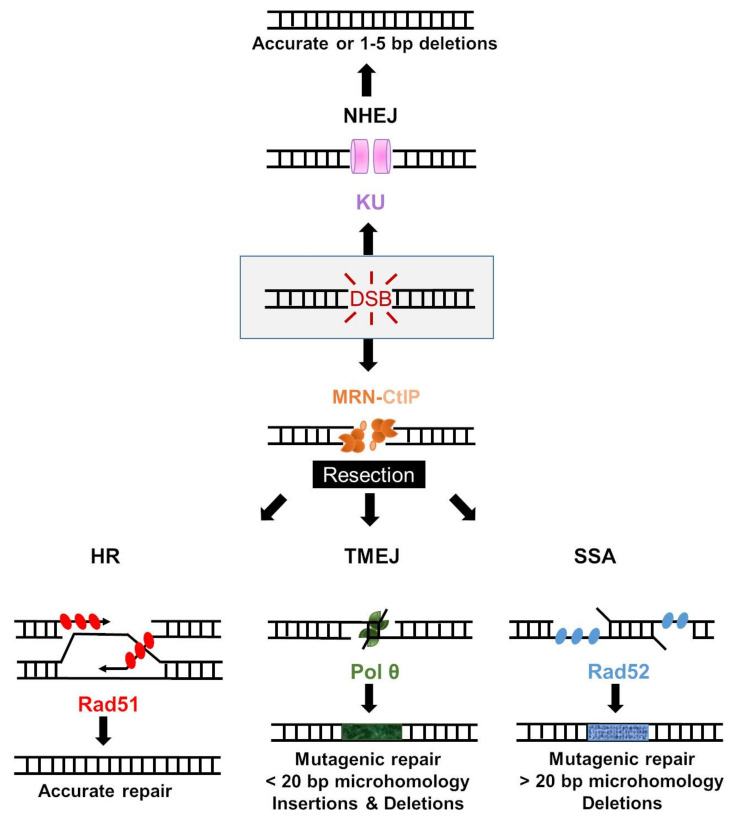
Despite the ample improvements of CRC molecular landscape, the therapeutic options still rely on conventional chemotherapy-based regimens for early disease, and few targeted agents are recommended for clinical use in the metastatic setting. Moreover, the impact of cytotoxic, targeted agents, and immunotherapy combinations in the metastatic scenario is not fully satisfactory, especially the outcomes for patients who develop resistance to these treatments need to be improved. Here, we examine the opportunity to consider therapeutic agents targeting DNA repair and DNA replication stress response as strategies to exploit genetic or functional defects in the DNA damage response (DDR) pathways through synthetic lethal mechanisms, still not explored in CRC. These include the multiple actors involved in the repair of DNA double-strand breaks (DSBs) through homologous recombination (HR), classical non-homologous end joining (NHEJ), and microhomology-mediated end-joining (MMEJ), inhibitors of the base excision repair (BER) protein poly (ADP-ribose) polymerase (PARP), as well as inhibitors of the DNA damage kinases ataxia-telangiectasia and Rad3 related (ATR), CHK1, WEE1, and ataxia-telangiectasia mutated (ATM). We also review the biomarkers that guide the use of these agents, and current clinical trials with targeted DDR therapies.
尽管结直肠癌的分子格局有了显著改善,但早期疾病的治疗选择仍依赖于传统的基于化疗的方案,在转移性疾病中推荐用于临床的靶向药物很少。此外,细胞毒性药物、靶向药物和免疫疗法联合使用在转移性疾病中的效果并不完全令人满意,尤其是对这些治疗产生耐药性的患者的治疗效果需要改善。在此,我们探讨将靶向DNA修复和DNA复制应激反应的治疗药物作为通过合成致死机制利用DNA损伤反应(DDR)途径中的基因或功能缺陷的策略的机会,这在结直肠癌中尚未得到探索。这些包括通过同源重组(HR)、经典非同源末端连接(NHEJ)和微同源性介导的末端连接(MMEJ)参与DNA双链断裂(DSB)修复的多种因子、碱基切除修复(BER)蛋白聚(ADP-核糖)聚合酶(PARP)抑制剂,以及DNA损伤激酶共济失调毛细血管扩张症和Rad3相关蛋白(ATR)、CHK1、WEE1和共济失调毛细血管扩张症突变蛋白(ATM)的抑制剂。我们还综述了指导这些药物使用以及当前DDR靶向治疗临床试验的生物标志物。