Lin You-Zhe, Shen Yi-Chun, Wu Wan-Rong, Wang Wei-Jan, Wang Yuan-Liang, Lin Chen-Yuan, Hung Mien-Chie, Wang Shao-Chun
Graduate Institute of Biomedical Sciences, College of Medicine, China Medical University, Taichung 40402, Taiwan.
Research Center for Cancer Biology, China Medical University, Taichung 40402, Taiwan.
Int J Mol Sci. 2021 Jun 28;22(13):6938. doi: 10.3390/ijms22136938.
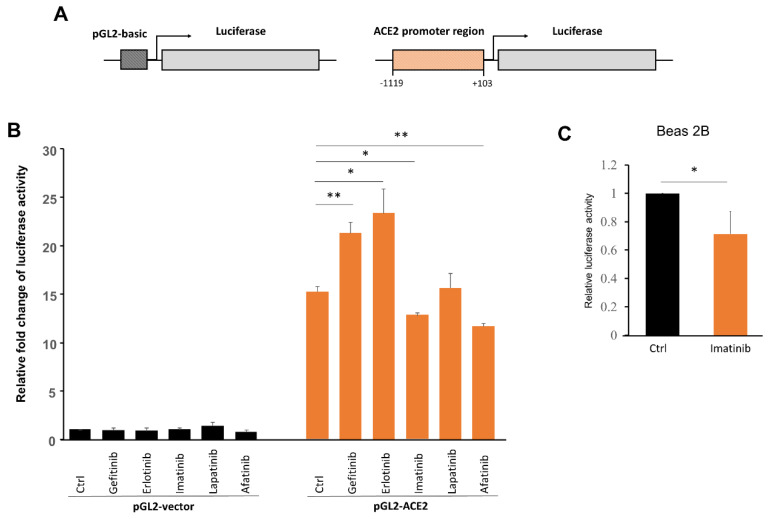
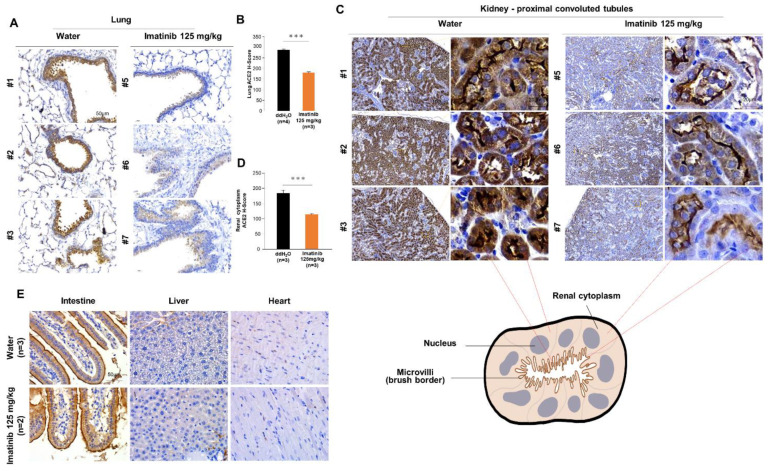
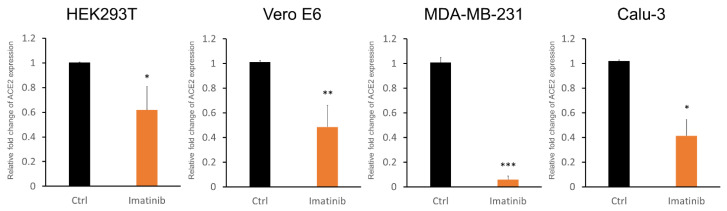
A group of clinically approved cancer therapeutic tyrosine kinase inhibitors was screened to test their effects on the expression of angiotensin-converting enzyme 2 (ACE2), the cell surface receptor for SARS-CoV-2. Here, we show that the receptor tyrosine kinase inhibitor imatinib (also known as STI571, Gleevec) can inhibit the expression of the endogenous ACE2 gene at both the transcript and protein levels. Treatment with imatinib resulted in inhibition of cell entry of the viral pseudoparticles (Vpps) in cell culture. In FVB mice orally fed imatinib, tissue expression of ACE2 was reduced, specifically in the lungs and renal tubules, but not in the parenchyma of other organs such as the heart and intestine. Our finding suggests that receptor tyrosine kinases play a role in COVID-19 infection and can be therapeutic targets with combined treatments of the best conventional care of COVID-19.
对一组临床批准的癌症治疗性酪氨酸激酶抑制剂进行了筛选,以测试它们对血管紧张素转换酶2(ACE2)表达的影响,ACE2是严重急性呼吸综合征冠状病毒2(SARS-CoV-2)的细胞表面受体。在此,我们表明受体酪氨酸激酶抑制剂伊马替尼(也称为STI571、格列卫)可在转录和蛋白质水平上抑制内源性ACE2基因的表达。用伊马替尼治疗导致细胞培养中病毒假颗粒(Vpps)的细胞进入受到抑制。在口服伊马替尼的FVB小鼠中,ACE2的组织表达降低,特别是在肺和肾小管中,但在心脏和肠道等其他器官的实质中未降低。我们的发现表明受体酪氨酸激酶在2019冠状病毒病感染中起作用,并且可以作为2019冠状病毒病最佳常规治疗联合治疗的治疗靶点。