Zhang Huan, Wang Xinpei, Liu Changchun, Li Yuanyang, Liu Yuanyuan, Jiao Yu, Liu Tongtong, Dong Huiwen, Wang Jikuo
School of Control Science and Engineering, Shandong University, Jinan 250061, China.
Department of Medical Engineering, Shandong Provincial Hospital Affiliated to Shandong First Medical University, Jinan 250021, China.
Entropy (Basel). 2021 Jun 28;23(7):823. doi: 10.3390/e23070823.
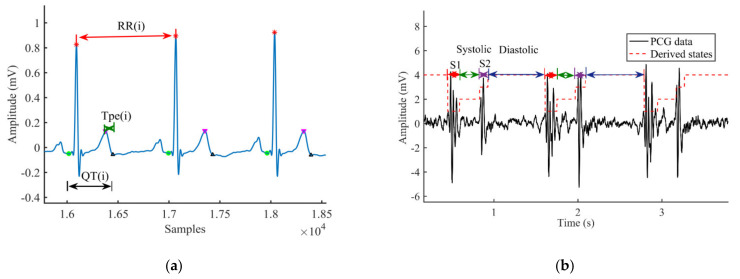
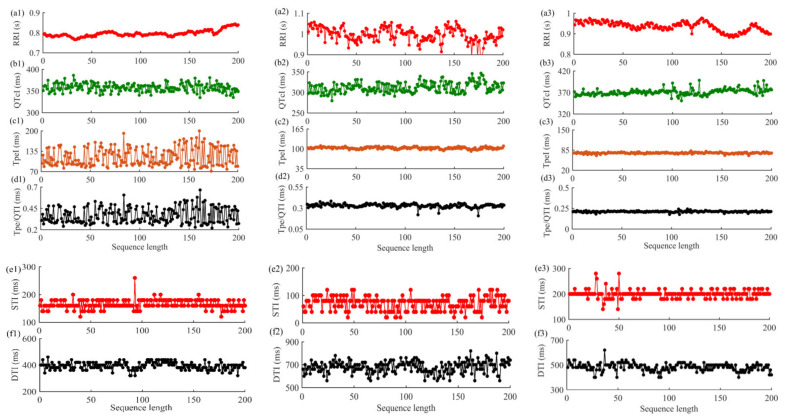
Coronary heart disease (CHD) is the leading cause of cardiovascular death. This study aimed to propose an effective method for mining cardiac mechano-electric coupling information and to evaluate its ability to distinguish patients with varying degrees of coronary artery stenosis (VDCAS). Five minutes of electrocardiogram and phonocardiogram signals was collected synchronously from 191 VDCAS patients to construct heartbeat interval (RRI)-systolic time interval (STI), RRI-diastolic time interval (DTI), HR-corrected QT interval (QTcI)-STI, QTcI-DTI, Tpeak-Tend interval (TpeI)-STI, TpeI-DTI, Tpe/QT interval (Tpe/QTI)-STI, and Tpe/QTI-DTI series. Then, the cross sample entropy (XSampEn), cross fuzzy entropy (XFuzzyEn), joint distribution entropy (JDistEn), magnitude-squared coherence function, cross power spectral density, and mutual information were applied to evaluate the coupling of the series. Subsequently, support vector machine recursive feature elimination and XGBoost were utilized for feature selection and classification, respectively. Results showed that the joint analysis of XSampEn, XFuzzyEn, and JDistEn had the best ability to distinguish patients with VDCAS. The classification accuracy of severe CHD-mild-to-moderate CHD group, severe CHD-chest pain and normal coronary angiography (CPNCA) group, and mild-to-moderate CHD-CPNCA group were 0.8043, 0.7659, and 0.7500, respectively. The study indicates that the joint analysis of XSampEn, XFuzzyEn, and JDistEn can effectively capture the cardiac mechano-electric coupling information of patients with VDCAS, which can provide valuable information for clinicians to diagnose CHD.
冠心病(CHD)是心血管死亡的主要原因。本研究旨在提出一种挖掘心脏机电耦合信息的有效方法,并评估其区分不同程度冠状动脉狭窄(VDCAS)患者的能力。从191例VDCAS患者中同步采集5分钟的心电图和心音图信号,构建心跳间期(RRI)-收缩期时间间期(STI)、RRI-舒张期时间间期(DTI)、心率校正QT间期(QTcI)-STI、QTcI-DTI、T波峰-末间期(TpeI)-STI、TpeI-DTI、Tpe/QT间期(Tpe/QTI)-STI和Tpe/QTI-DTI序列。然后,应用交叉样本熵(XSampEn)、交叉模糊熵(XFuzzyEn)、联合分布熵(JDistEn)、幅度平方相干函数、交叉功率谱密度和互信息来评估这些序列的耦合情况。随后,分别利用支持向量机递归特征消除和XGBoost进行特征选择和分类。结果表明,XSampEn、XFuzzyEn和JDistEn的联合分析具有区分VDCAS患者的最佳能力。重度冠心病-轻度至中度冠心病组、重度冠心病-胸痛和冠状动脉造影正常(CPNCA)组以及轻度至中度冠心病-CPNCA组的分类准确率分别为0.8043、0.7659和0.7500。该研究表明,XSampEn、XFuzzyEn和JDistEn的联合分析能够有效捕捉VDCAS患者的心脏机电耦合信息,可为临床医生诊断冠心病提供有价值的信息。