School of Life Science, Jiangsu Normal University, Xuzhou 221116, China.
Xuzhou Institute of Agricultural Sciences in Jiangsu Xuhuai District/Key Laboratory of Biology and Genetic Breeding of Sweetpotato, Ministry of Agriculture and Rural Affairs, Xuzhou 221131, China.
Int J Mol Sci. 2021 Jun 22;22(13):6641. doi: 10.3390/ijms22136641.
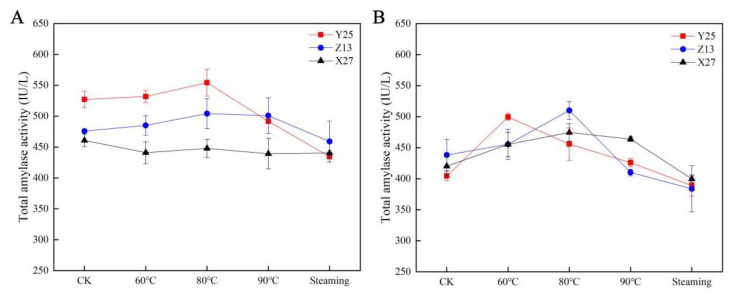
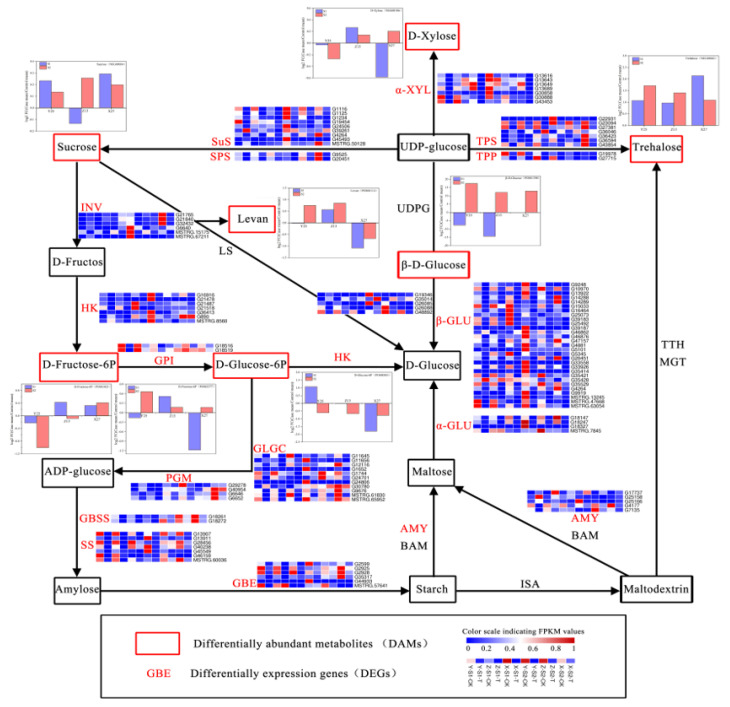
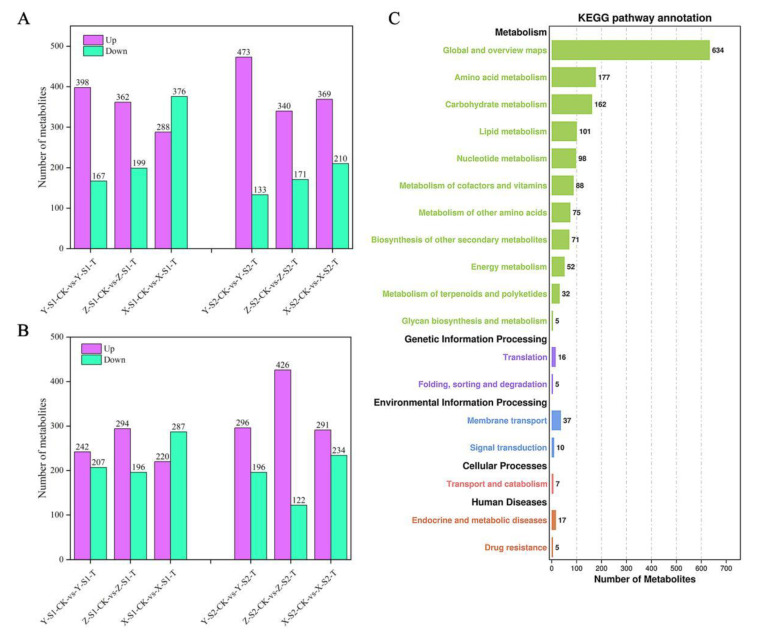
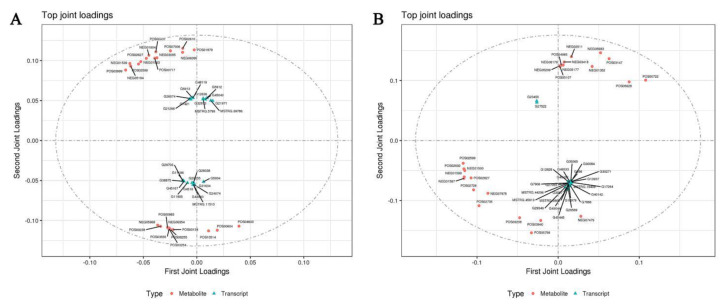
The saccharification of sweetpotato storage roots is a common phenomenon in the cooking process, which determines the edible quality of table use sweetpotato. In the present study, two high saccharified sweetpotato cultivars (Y25, Z13) and one low saccharified cultivar (X27) in two growth periods (S1, S2) were selected as materials to reveal the molecular mechanism of sweetpotato saccharification treated at high temperature by transcriptome sequencing and non-targeted metabolome determination. The results showed that the comprehensive taste score, sweetness, maltose content and starch change of X27 after steaming were significantly lower than those of Y25 and Z13. Through transcriptome sequencing analysis, 1918 and 1520 differentially expressed genes were obtained in the two periods of S1 and S2, respectively. Some saccharification-related transcription factors including MYB families, WRKY families, bHLH families and inhibitors were screened. Metabolic analysis showed that 162 differentially abundant metabolites related to carbohydrate metabolism were significantly enriched in starch and sucrose capitalization pathways. The correlation analysis between transcriptome and metabolome confirmed that the starch and sucrose metabolic pathways were significantly co-annotated, indicating that it is a vitally important metabolic pathway in the process of sweetpotato saccharification. The data obtained in this study can provide valuable resources for follow-up research on sweetpotato saccharification and will provide new insights and theoretical basis for table use sweetpotato breeding in the future.
甘薯块根糖化是烹饪过程中的常见现象,决定了食用甘薯的食用品质。本研究以 2 个高糖化品种(Y25、Z13)和 1 个低糖化品种(X27)在 2 个生长时期(S1、S2)为材料,通过转录组测序和非靶向代谢组学测定揭示了高温处理甘薯糖化的分子机制。结果表明,X27 经蒸煮后综合口感评分、甜度、麦芽糖含量和淀粉变化均显著低于 Y25 和 Z13。通过转录组测序分析,分别在 S1 和 S2 两个时期获得了 1918 个和 1520 个差异表达基因。筛选到一些与糖化相关的转录因子,包括 MYB 家族、WRKY 家族、bHLH 家族和抑制剂。代谢分析表明,淀粉和蔗糖生物合成途径中显著富集了 162 个与碳水化合物代谢相关的差异丰度代谢物。转录组和代谢组的相关性分析证实,淀粉和蔗糖代谢途径显著共注释,表明这是甘薯糖化过程中至关重要的代谢途径。本研究获得的数据可为后续甘薯糖化研究提供有价值的资源,并为未来食用甘薯的选育提供新的见解和理论依据。