Sánchez-Cordón Pedro J, Floyd Tobias, Hicks Daniel, Crooke Helen R, McCleary Stephen, McCarthy Ronan R, Strong Rebecca, Dixon Linda K, Neimanis Aleksija, Wikström-Lassa Emil, Gavier-Widén Dolores, Núñez Alejandro
Pathology and Animal Sciences Department, Animal and Plant Health Agency (APHA-Weybridge), Woodham Lane, New Haw, Addlestone KT15 3NB, UK.
Pathology Department, Centro de Investigación en Sanidad Animal (CISA), Instituto Nacional de Investigación y Tecnología Agraria y Alimentaria (INIA-CSIC), Carretera Algete-El Casar Km. 8.1, Valdeolmos, 28130 Madrid, Spain.
Pathogens. 2021 Jun 18;10(6):768. doi: 10.3390/pathogens10060768.
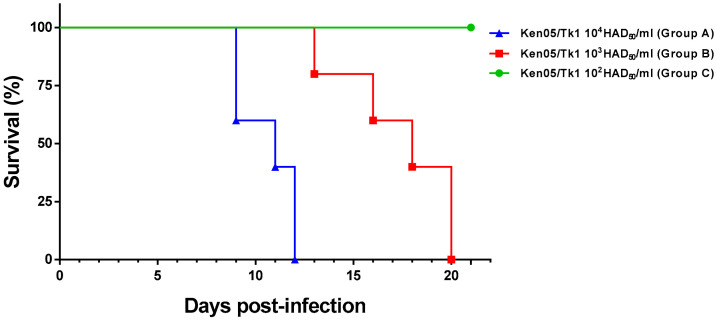
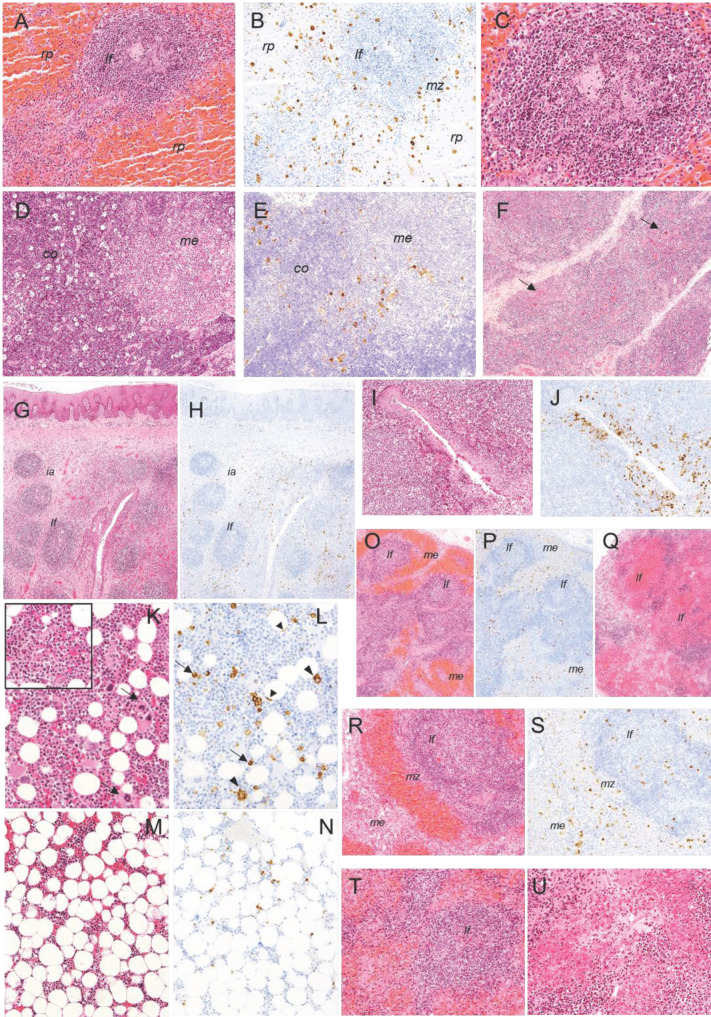
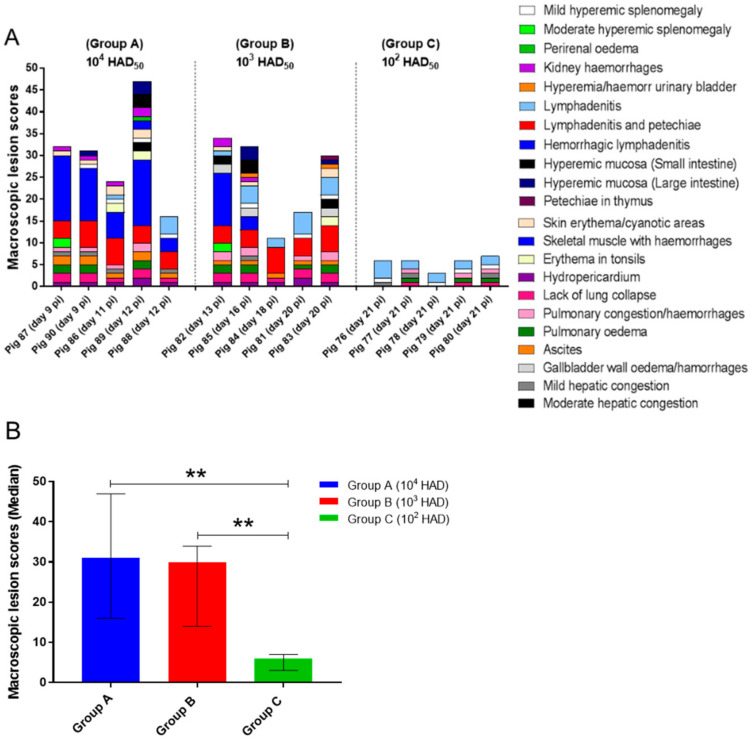
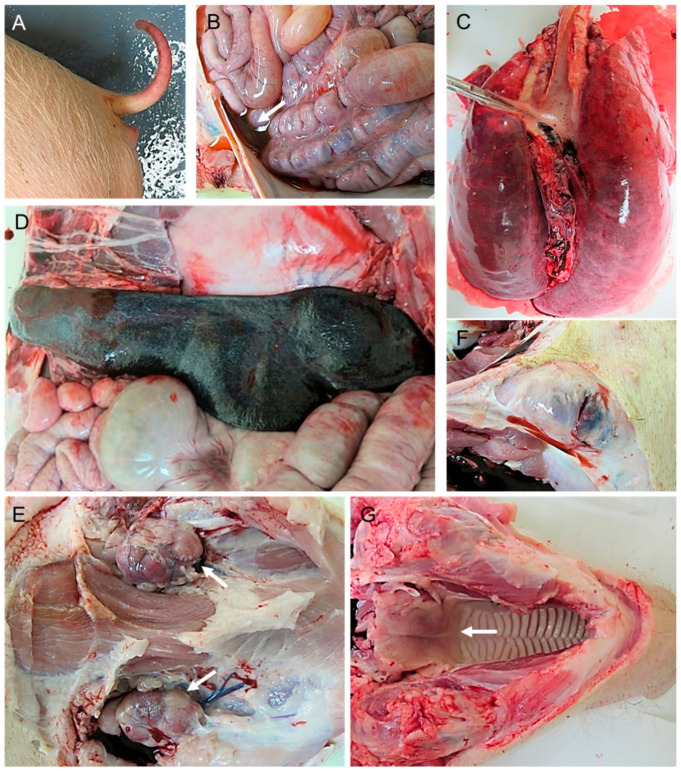
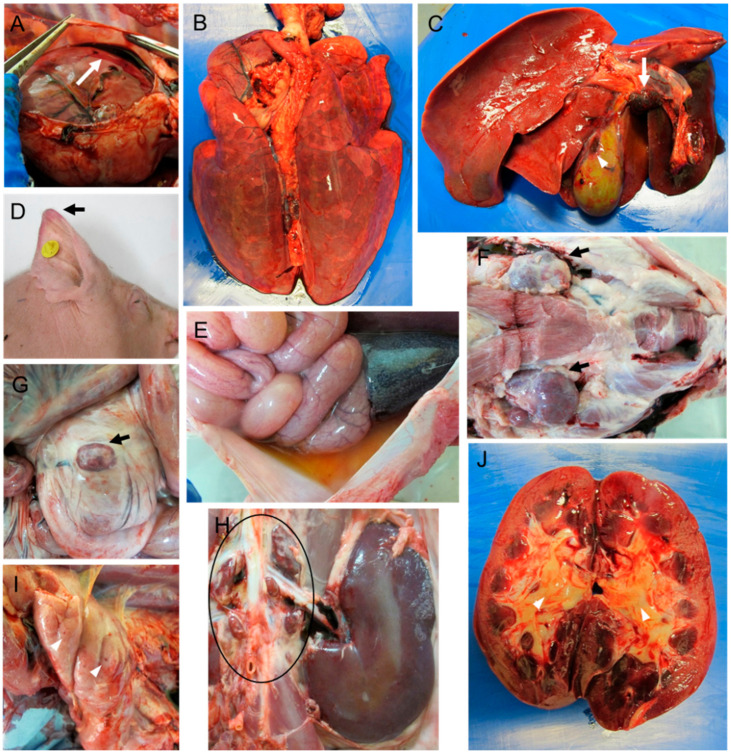
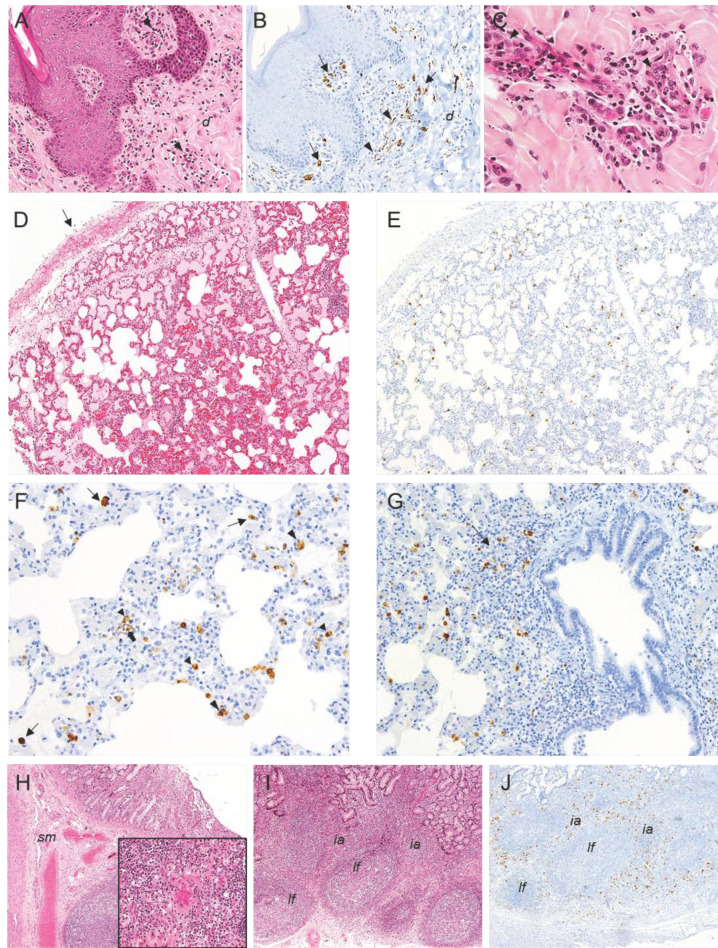
The understanding of the pathogenic mechanisms and the clinicopathological forms caused by currently circulating African swine fever virus (ASFV) isolates is incomplete. So far, most of the studies have been focused on isolates classified within genotypes I and II, the only genotypes that have circulated outside of Africa. However, less is known about the clinical presentations and lesions induced by isolates belonging to the other twenty-two genotypes. Therefore, the early clinicopathological identification of disease outbreaks caused by isolates belonging to, as yet, not well-characterised ASFV genotypes may be compromised, which might cause a delay in the implementation of control measures to halt the virus spread. To improve the pathological characterisation of disease caused by diverse isolates, we have refined the macroscopic and histopathological evaluation protocols to standardise the scoring of lesions. Domestic pigs were inoculated intranasally with different doses (high, medium and low) of ASFV isolate Ken05/Tk1 (genotype X). To complement previous studies, the distribution and severity of macroscopic and histopathological lesions, along with the amount and distribution of viral antigen in tissues, were characterised by applying the new scoring protocols. The intranasal inoculation of domestic pigs with high doses of the Ken05/Tk1 isolate induced acute forms of ASF in most of the animals. Inoculation with medium doses mainly induced acute forms of disease. A less severe but longer clinical course, typical of subacute forms, characterised by the presence of more widespread and severe haemorrhages and oedema, was observed in one pig inoculated with the medium dose. The severity of vascular lesions (haemorrhages and oedema) induced by high and medium doses was not associated with the amount of virus antigen detected in tissues, therefore these might be attributed to indirect mechanisms not evaluated in the present study. The absence of clinical signs, lesions and detectable levels of virus genome or antigen in blood from the animals inoculated with the lowest dose ruled out the existence of possible asymptomatic carriers or persistently infected pigs, at least for the 21 days period of the study. The results corroborate the moderate virulence of the Ken05/Tk1 isolate, as well as its capacity to induce both the acute and, occasionally, subacute forms of ASF when high and medium doses were administered intranasally.
目前对非洲猪瘟病毒(ASFV)流行毒株所引发的致病机制及临床病理形式的认识并不完整。到目前为止,大多数研究都集中在I型和II型基因型的毒株上,这是仅有的在非洲以外地区流行的基因型。然而,对于其他22种基因型毒株所引发的临床表现和病变却知之甚少。因此,由尚未充分表征的ASFV基因型毒株引发的疾病暴发的早期临床病理诊断可能会受到影响,这可能会导致在实施控制病毒传播的措施方面出现延误。为了改进对不同毒株引发疾病的病理特征描述,我们完善了大体和组织病理学评估方案,以规范病变评分。用不同剂量(高、中、低)的ASFV毒株Ken05/Tk1(基因型X)经鼻内接种家猪。为补充先前的研究,应用新的评分方案对大体和组织病理学病变的分布及严重程度,以及组织中病毒抗原的数量和分布进行了表征。经鼻内给家猪接种高剂量的Ken05/Tk1毒株,在大多数动物中诱发了急性形式的非洲猪瘟。接种中等剂量主要诱发急性疾病形式。在一只接种中等剂量的猪中观察到了一种不太严重但病程较长的临床过程,这是亚急性形式的典型表现,其特征是存在更广泛、更严重的出血和水肿。高剂量和中等剂量所诱发的血管病变(出血和水肿)的严重程度与组织中检测到的病毒抗原数量无关,因此这些可能归因于本研究未评估的间接机制。接种最低剂量的动物血液中没有临床症状、病变以及可检测到的病毒基因组或抗原水平,排除了可能存在无症状携带者或持续感染猪的情况,至少在本研究的21天期间如此。结果证实了Ken05/Tk1毒株的中等毒力,以及经鼻内给予高剂量和中等剂量时诱发急性以及偶尔亚急性形式非洲猪瘟的能力。