Gonzalez-Sanchez Ester, Vaquero Javier, Férnandez-Barrena Maite G, Lasarte Juan José, Avila Matías A, Sarobe Pablo, Reig María, Calvo Mariona, Fabregat Isabel
Centro de Investigación Biomédica en Red de Enfermedades Hepáticas y Digestivas (CIBEREHD), National Biomedical Research Institute on Liver and Gastrointestinal Diseases, Instituto de Salud Carlos III, 28029 Madrid, Spain.
Bellvitge Biomedical Research Institute (IDIBELL), L'Hospitalet de Llobregat, 08908 Barcelona, Spain.
Cancers (Basel). 2021 Jun 29;13(13):3248. doi: 10.3390/cancers13133248.
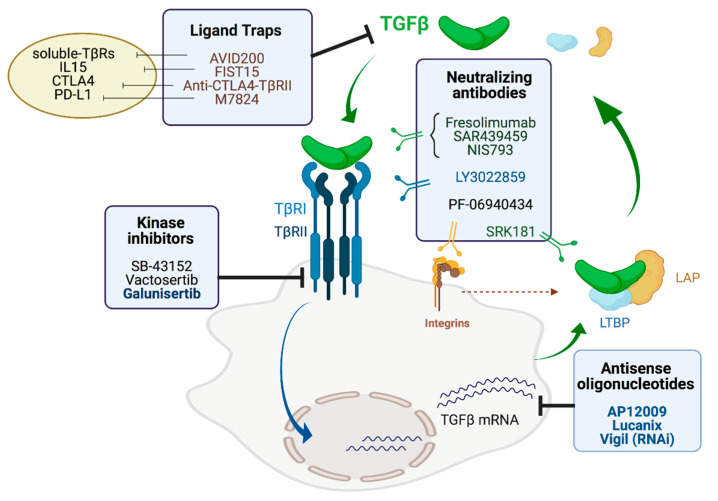
Transforming Growth Factor-beta (TGF-β) superfamily members are essential for tissue homeostasis and consequently, dysregulation of their signaling pathways contributes to the development of human diseases. In the liver, TGF-β signaling participates in all the stages of disease progression from initial liver injury to hepatocellular carcinoma (HCC). During liver carcinogenesis, TGF-β plays a dual role on the malignant cell, behaving as a suppressor factor at early stages, but contributing to later tumor progression once cells escape from its cytostatic effects. Moreover, TGF-β can modulate the response of the cells forming the tumor microenvironment that may also contribute to HCC progression, and drive immune evasion of cancer cells. Thus, targeting the TGF-β pathway may constitute an effective therapeutic option for HCC treatment. However, it is crucial to identify biomarkers that allow to predict the response of the tumors and appropriately select the patients that could benefit from TGF-β inhibitory therapies. Here we review the functions of TGF-β on HCC malignant and tumor microenvironment cells, and the current strategies targeting TGF-β signaling for cancer therapy. We also summarize the clinical impact of TGF-β inhibitors in HCC patients and provide a perspective on its future use alone or in combinatorial strategies for HCC treatment.
转化生长因子-β(TGF-β)超家族成员对于组织稳态至关重要,因此,其信号通路的失调会导致人类疾病的发生。在肝脏中,TGF-β信号传导参与了从最初的肝损伤到肝细胞癌(HCC)疾病进展的所有阶段。在肝癌发生过程中,TGF-β对恶性细胞发挥双重作用,在早期表现为抑制因子,但一旦细胞逃脱其细胞生长抑制作用,就会促进后期肿瘤进展。此外,TGF-β可以调节构成肿瘤微环境的细胞的反应,这也可能有助于HCC的进展,并促使癌细胞逃避免疫监视。因此,靶向TGF-β途径可能构成HCC治疗的有效治疗选择。然而,至关重要的是要识别能够预测肿瘤反应并适当选择可能从TGF-β抑制疗法中受益的患者的生物标志物。在这里,我们综述了TGF-β对HCC恶性细胞和肿瘤微环境细胞的作用,以及目前针对TGF-β信号传导进行癌症治疗的策略。我们还总结了TGF-β抑制剂对HCC患者的临床影响,并对其未来单独使用或联合用于HCC治疗的策略提供了展望。