• 文献检索
  • 文档翻译
  • 深度研究
  • 学术资讯
  • Suppr Zotero 插件Zotero 插件
  • 邀请有礼
  • 套餐&价格
  • 历史记录
应用&插件
Suppr Zotero 插件Zotero 插件浏览器插件Mac 客户端Windows 客户端微信小程序
定价
高级版会员购买积分包购买API积分包
服务
文献检索文档翻译深度研究API 文档MCP 服务
关于我们
关于 Suppr公司介绍联系我们用户协议隐私条款
关注我们

Suppr 超能文献

核心技术专利:CN118964589B侵权必究
粤ICP备2023148730 号-1Suppr @ 2026

文献检索

告别复杂PubMed语法,用中文像聊天一样搜索,搜遍4000万医学文献。AI智能推荐,让科研检索更轻松。

立即免费搜索

文件翻译

保留排版,准确专业,支持PDF/Word/PPT等文件格式,支持 12+语言互译。

免费翻译文档

深度研究

AI帮你快速写综述,25分钟生成高质量综述,智能提取关键信息,辅助科研写作。

立即免费体验

Acoustilytix™:一个基于网络的自动超声发声评分平台。

Acoustilytix™: A Web-Based Automated Ultrasonic Vocalization Scoring Platform.

作者信息

Ashley Catherine B, Snyder Ryan D, Shepherd James E, Cervantes Catalina, Mittal Nitish, Fleming Sheila, Bailey Jaxon, Nievera Maisie D, Souleimanova Sharmin Islam, Nyaoga Bill, Lichtenfeld Lauren, Chen Alicia R, Maddox W Todd, Duvauchelle Christine L

机构信息

Cornerstone Research Group, Miamisburg, OH 45342, USA.

Division of Pharmacology and Toxicology, College of Pharmacy, The University of Texas at Austin, 2409 University Avenue, Stop A1915, Austin, TX 78712, USA.

出版信息

Brain Sci. 2021 Jun 29;11(7):864. doi: 10.3390/brainsci11070864.

DOI:10.3390/brainsci11070864
PMID:34209754
原文链接:https://pmc.ncbi.nlm.nih.gov/articles/PMC8301917/
Abstract

Ultrasonic vocalizations (USVs) are known to reflect emotional processing, brain neurochemistry, and brain function. Collecting and processing USV data is manual, time-intensive, and costly, creating a significant bottleneck by limiting researchers' ability to employ fully effective and nuanced experimental designs and serving as a barrier to entry for other researchers. In this report, we provide a snapshot of the current development and testing of Acoustilytix™, a web-based automated USV scoring tool. Acoustilytix implements machine learning methodology in the USV detection and classification process and is recording-environment-agnostic. We summarize the user features identified as desirable by USV researchers and how these were implemented. These include the ability to easily upload USV files, output a list of detected USVs with associated parameters in csv format, and the ability to manually verify or modify an automatically detected call. With no user intervention or tuning, Acoustilytix achieves 93% sensitivity (a measure of how accurately Acoustilytix detects true calls) and 73% precision (a measure of how accurately Acoustilytix avoids false positives) in call detection across four unique recording environments and was superior to the popular DeepSqueak algorithm (sensitivity = 88%; precision = 41%). Future work will include integration and implementation of machine-learning-based call type classification prediction that will recommend a call type to the user for each detected call. Call classification accuracy is currently in the 71-79% accuracy range, which will continue to improve as more USV files are scored by expert scorers, providing more training data for the classification model. We also describe a recently developed feature of Acoustilytix that offers a fast and effective way to train hand-scorers using automated learning principles without the need for an expert hand-scorer to be present and is built upon a foundation of learning science. The key is that trainees are given practice classifying hundreds of calls with immediate corrective feedback based on an expert's USV classification. We showed that this approach is highly effective with inter-rater reliability (i.e., kappa statistics) between trainees and the expert ranging from 0.30-0.75 (average = 0.55) after only 1000-2000 calls of training. We conclude with a brief discussion of future improvements to the Acoustilytix platform.

摘要

已知超声发声(USV)能反映情绪处理、大脑神经化学和大脑功能。收集和处理USV数据是人工操作,耗时且成本高,限制了研究人员采用全面有效的精细实验设计的能力,从而造成了重大瓶颈,也成为其他研究人员进入该领域的障碍。在本报告中,我们简要介绍了基于网络的自动USV评分工具Acoustilytix™的当前开发和测试情况。Acoustilytix在USV检测和分类过程中采用机器学习方法,且与录音环境无关。我们总结了USV研究人员确定的理想用户功能以及这些功能的实现方式。这些功能包括能够轻松上传USV文件、以csv格式输出检测到的USV及其相关参数列表,以及能够手动验证或修改自动检测到的叫声。在无需用户干预或调整的情况下,Acoustilytix在四种独特录音环境中的叫声检测中实现了93%的灵敏度(衡量Acoustilytix检测真实叫声的准确程度)和73%的精确率(衡量Acoustilytix避免误报的准确程度),优于流行的DeepSqueak算法(灵敏度 = 88%;精确率 = 41%)。未来的工作将包括基于机器学习的叫声类型分类预测的集成与实施,该预测将为每个检测到的叫声向用户推荐叫声类型。目前叫声分类准确率在71 - 79%的范围内,随着更多USV文件由专家评分员评分,为分类模型提供更多训练数据,准确率将持续提高。我们还描述了Acoustilytix最近开发的一项功能,该功能提供了一种快速有效的方法,利用自动学习原理训练人工评分员,无需专家人工评分员在场,且基于学习科学的基础构建。关键在于为受训人员提供对数百个叫声进行分类的练习,并根据专家的USV分类立即给予纠正反馈。我们表明,仅经过1000 - 2000次叫声训练后,这种方法在受训人员与专家之间的评分者间信度(即kappa统计量)为0.30 - 0.75(平均 = 0.55)时非常有效。最后,我们简要讨论了Acoustilytix平台未来的改进方向。
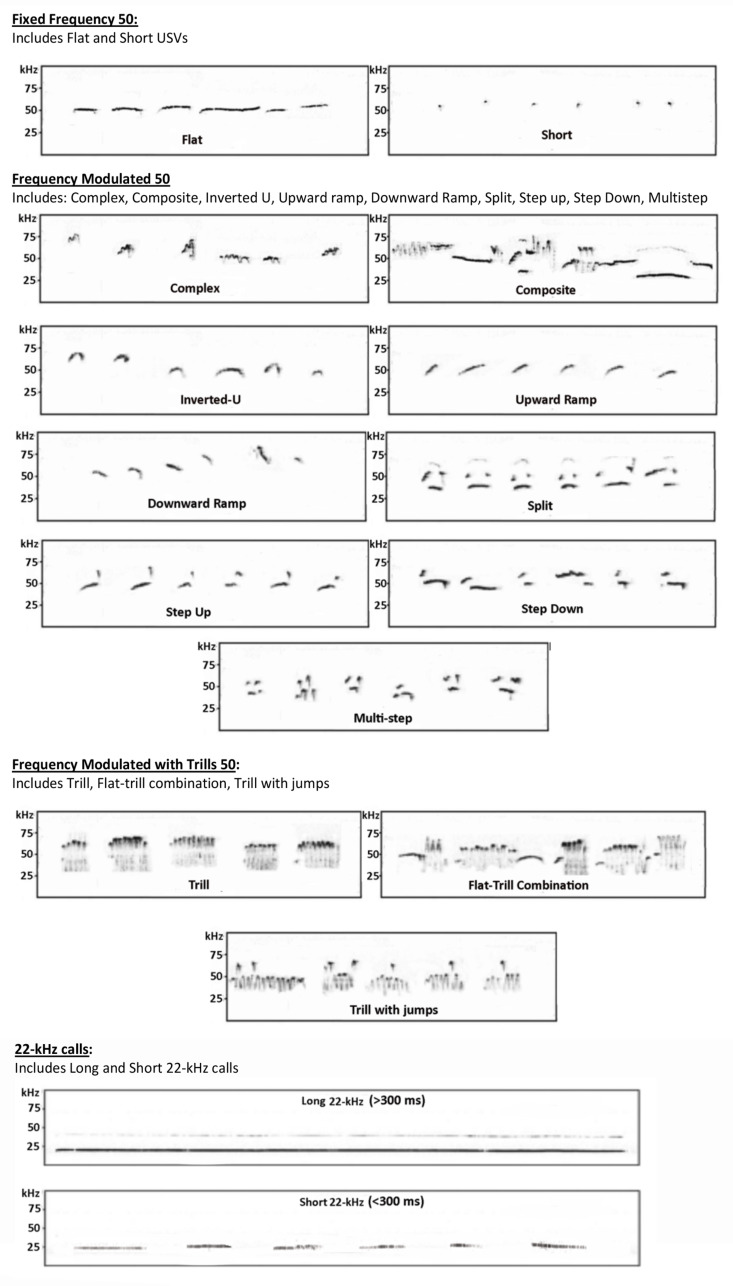
https://cdn.ncbi.nlm.nih.gov/pmc/blobs/5dfa/8301917/0e17a170313d/brainsci-11-00864-g001.jpg

相似文献

1
Acoustilytix™: A Web-Based Automated Ultrasonic Vocalization Scoring Platform.Acoustilytix™:一个基于网络的自动超声发声评分平台。
Brain Sci. 2021 Jun 29;11(7):864. doi: 10.3390/brainsci11070864.
2
DeepSqueak: a deep learning-based system for detection and analysis of ultrasonic vocalizations.DeepSqueak:一种基于深度学习的超声发声检测与分析系统。
Neuropsychopharmacology. 2019 Apr;44(5):859-868. doi: 10.1038/s41386-018-0303-6. Epub 2019 Jan 4.
3
Analysis of ultrasonic vocalizations from mice using computer vision and machine learning.利用计算机视觉和机器学习分析小鼠的超声发声。
Elife. 2021 Mar 31;10:e59161. doi: 10.7554/eLife.59161.
4
Automating ultrasonic vocalization analyses: the WAAVES program.自动化超声发声分析:WAAVES 程序。
J Neurosci Methods. 2013 Sep 30;219(1):155-61. doi: 10.1016/j.jneumeth.2013.06.006. Epub 2013 Jul 4.
5
Extended performance analysis of deep-learning algorithms for mice vocalization segmentation.深度学习算法在小鼠发声分割中的扩展性能分析。
Sci Rep. 2023 Jul 11;13(1):11238. doi: 10.1038/s41598-023-38186-7.
6
Analysis of within Subjects Variability in Mouse Ultrasonic Vocalization: Pups Exhibit Inconsistent, State-Like Patterns of Call Production.小鼠超声发声的受试者内变异性分析:幼崽表现出不一致的、类似状态的叫声产生模式。
Front Behav Neurosci. 2016 Sep 28;10:182. doi: 10.3389/fnbeh.2016.00182. eCollection 2016.
7
Capturing the songs of mice with an improved detection and classification method for ultrasonic vocalizations (BootSnap).利用一种改进的超声发声检测和分类方法(BootSnap)捕捉老鼠的歌声。
PLoS Comput Biol. 2022 May 12;18(5):e1010049. doi: 10.1371/journal.pcbi.1010049. eCollection 2022 May.
8
Semi-Automated Training of Rat Ultrasonic Vocalizations.大鼠超声发声的半自动训练
Front Behav Neurosci. 2022 Mar 4;16:826550. doi: 10.3389/fnbeh.2022.826550. eCollection 2022.
9
Evaluating the DeepSqueak and Mouse Song Analyzer vocalization analysis systems in C57BL/6J, FVB.129, and FVB neonates.评估 DeepSqueak 和 Mouse Song Analyzer 声谱分析系统在 C57BL/6J、FVB.129 和 FVB 新生鼠中的应用。
J Neurosci Methods. 2021 Dec 1;364:109356. doi: 10.1016/j.jneumeth.2021.109356. Epub 2021 Sep 9.
10
Enhancing the analysis of murine neonatal ultrasonic vocalizations: Development, evaluation, and application of different mathematical models.增强对鼠类新生期超声发声的分析:不同数学模型的开发、评估与应用。
J Acoust Soc Am. 2024 Oct 1;156(4):2448-2466. doi: 10.1121/10.0030473.

本文引用的文献

1
Spontaneous Ultrasonic Vocalization Transmission in Adult, Male Long-Evans Rats Is Age-Dependent and Sensitive to EtOH Modulation.成年雄性Long-Evans大鼠的自发性超声发声传递具有年龄依赖性且对乙醇调节敏感。
Brain Sci. 2020 Nov 22;10(11):890. doi: 10.3390/brainsci10110890.
2
DeepSqueak: a deep learning-based system for detection and analysis of ultrasonic vocalizations.DeepSqueak:一种基于深度学习的超声发声检测与分析系统。
Neuropsychopharmacology. 2019 Apr;44(5):859-868. doi: 10.1038/s41386-018-0303-6. Epub 2019 Jan 4.
3
Dissociated features of social cognition altered in mouse models of schizophrenia: Focus on social dominance and acoustic communication.
精神分裂症小鼠模型中社会认知的分离特征改变:关注社会统治和声音交流。
Neuropharmacology. 2019 Nov 15;159:107334. doi: 10.1016/j.neuropharm.2018.09.009. Epub 2018 Sep 17.
4
Alcohol-naïve USVs distinguish male HAD-1 from LAD-1 rat strains.酒精未处理的 USVs 可区分 HAD-1 雄性大鼠和 LAD-1 大鼠品系。
Alcohol. 2018 May;68:9-17. doi: 10.1016/j.alcohol.2017.09.003. Epub 2017 Sep 14.
5
Drd3 Signaling in the Lateral Septum Mediates Early Life Stress-Induced Social Dysfunction.Drd3 信号在外侧隔核中介导早期生活应激诱导的社会功能障碍。
Neuron. 2018 Jan 3;97(1):195-208.e6. doi: 10.1016/j.neuron.2017.11.040. Epub 2017 Dec 21.
6
Rodent ultrasonic vocalizations as biomarkers of future alcohol use: A predictive analytic approach.啮齿动物的超声波发声作为未来酒精使用的生物标志物:一种预测性分析方法。
Cogn Affect Behav Neurosci. 2018 Feb;18(1):88-98. doi: 10.3758/s13415-017-0554-4.
7
Sex-specific ultrasonic vocalization patterns and alcohol consumption in high alcohol-drinking (HAD-1) rats.雄性和雌性大鼠在高酒精摄入(HAD-1)条件下的特异性超声发声模式和酒精摄入量。
Physiol Behav. 2019 May 1;203:81-90. doi: 10.1016/j.physbeh.2017.11.012. Epub 2017 Nov 13.
8
MUPET-Mouse Ultrasonic Profile ExTraction: A Signal Processing Tool for Rapid and Unsupervised Analysis of Ultrasonic Vocalizations.MUPET-小鼠超声轮廓提取:一种用于快速且无监督分析超声发声的信号处理工具。
Neuron. 2017 May 3;94(3):465-485.e5. doi: 10.1016/j.neuron.2017.04.005.
9
Automated acoustic analysis of 50-kHz ultrasonic vocalizations using template matching and contour analysis.使用模板匹配和轮廓分析对50千赫兹超声波发声进行自动声学分析。
J Acoust Soc Am. 2017 Mar;141(3):EL281. doi: 10.1121/1.4977990.
10
Negative Affect-Associated USV Acoustic Characteristics Predict Future Excessive Alcohol Drinking and Alcohol Avoidance in Male P and NP Rats.与消极情绪相关的超声波发声声学特征可预测雄性P和NP大鼠未来的过度饮酒和戒酒行为。
Alcohol Clin Exp Res. 2017 Apr;41(4):786-797. doi: 10.1111/acer.13344. Epub 2017 Feb 23.