School of Biomedical Engineering, Shanghai Jiao Tong University, Shanghai 200030, China.
School of Biomedical Engineering and Med-X Research Institute, Shanghai Jiao Tong University, Shanghai 200030, China.
Int J Mol Sci. 2021 Jun 29;22(13):7010. doi: 10.3390/ijms22137010.
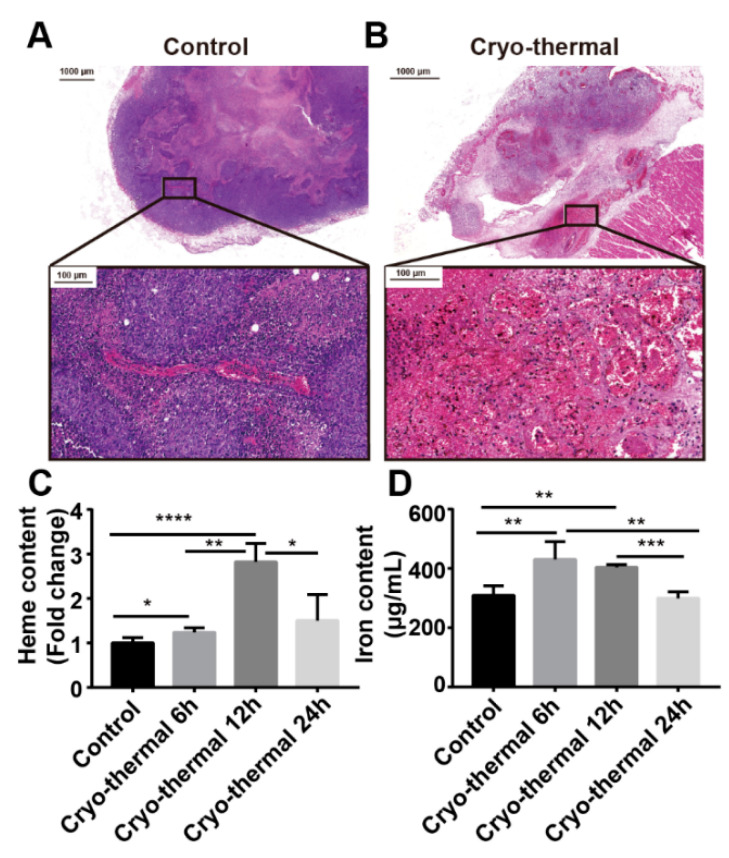
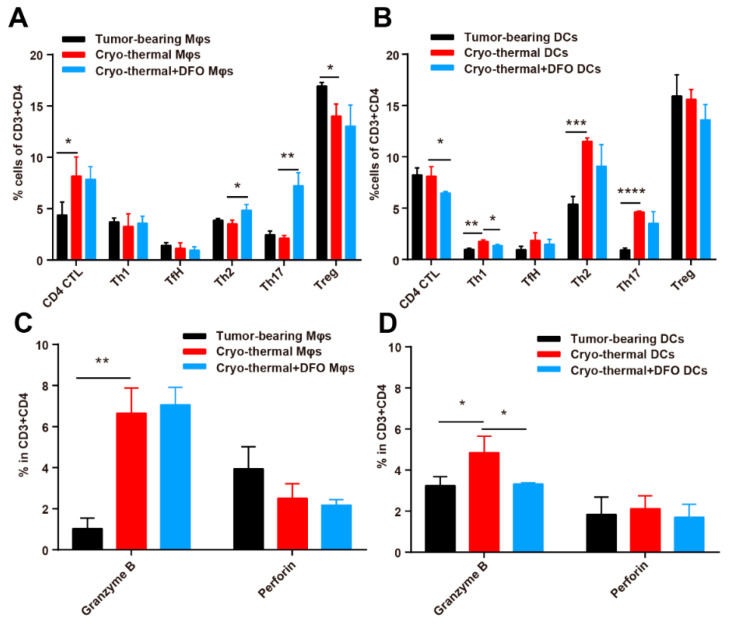
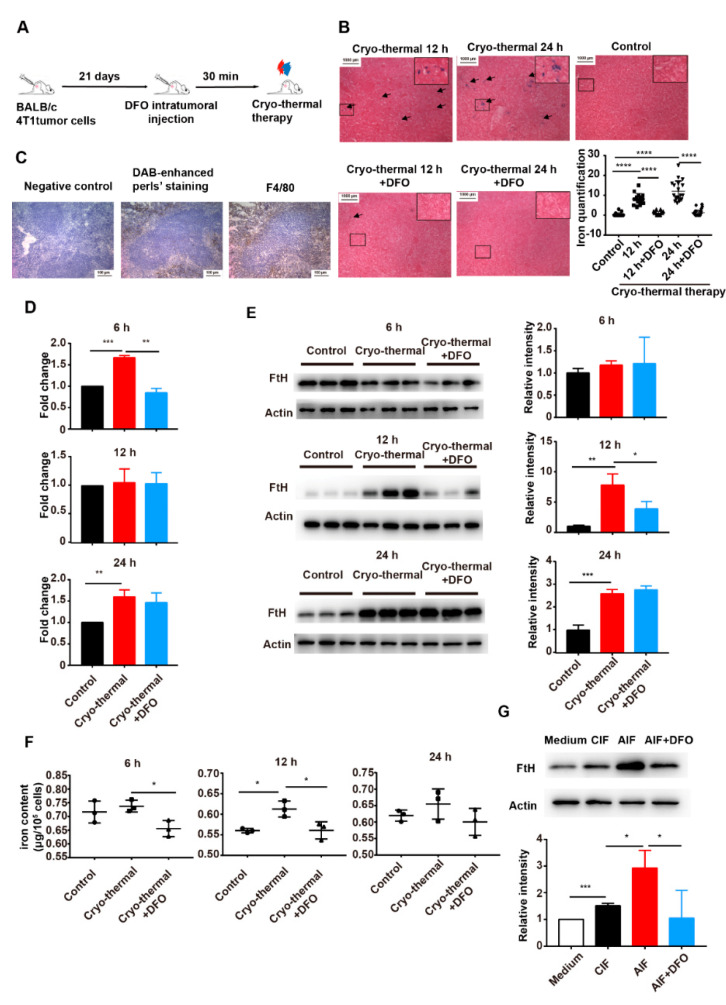
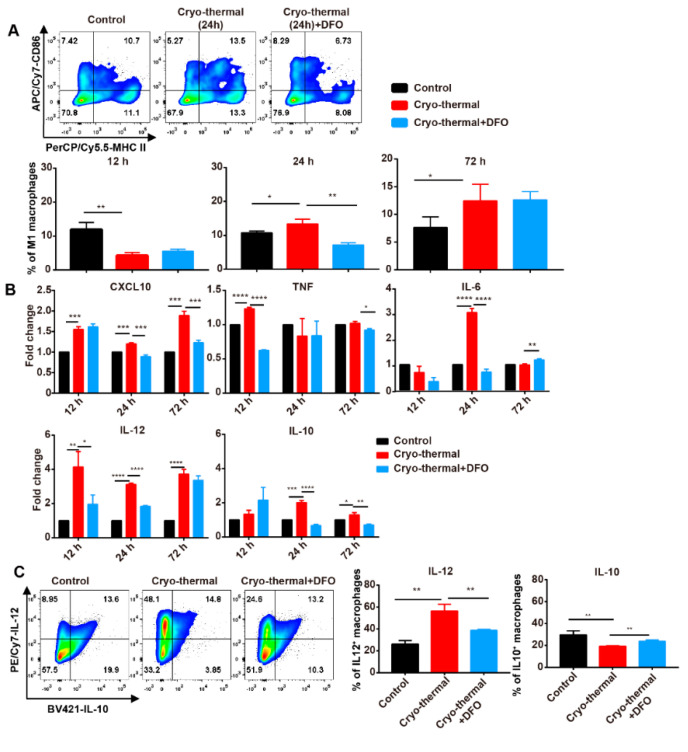
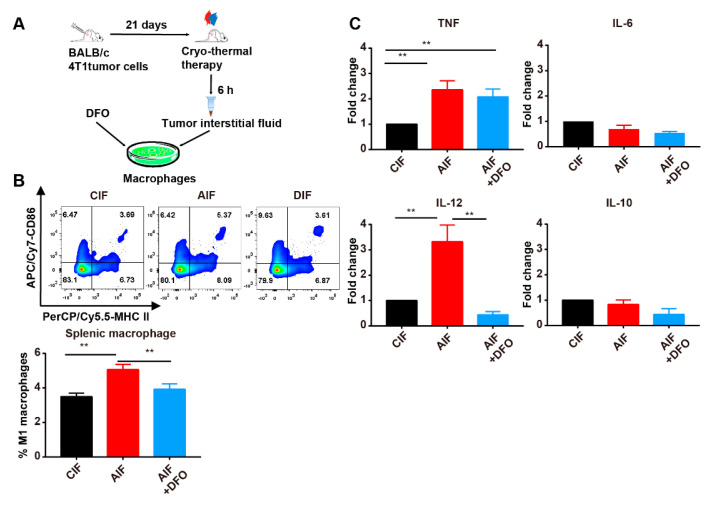
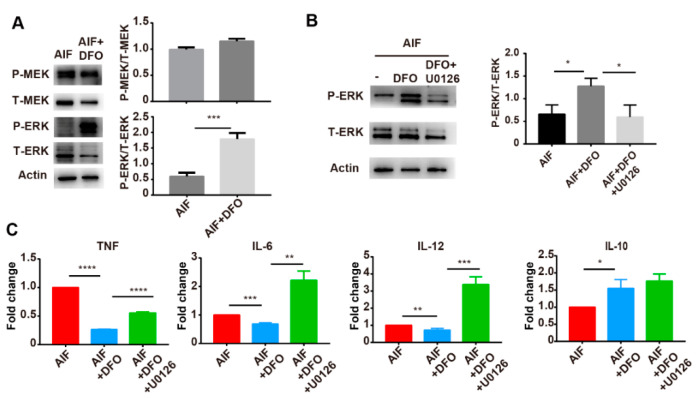
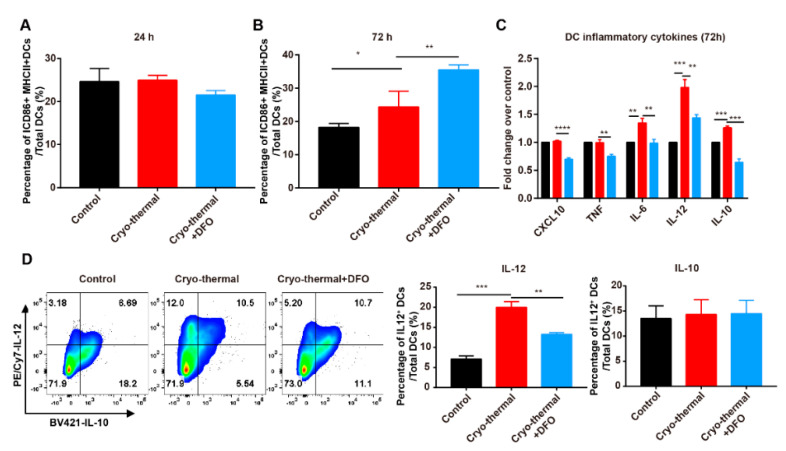
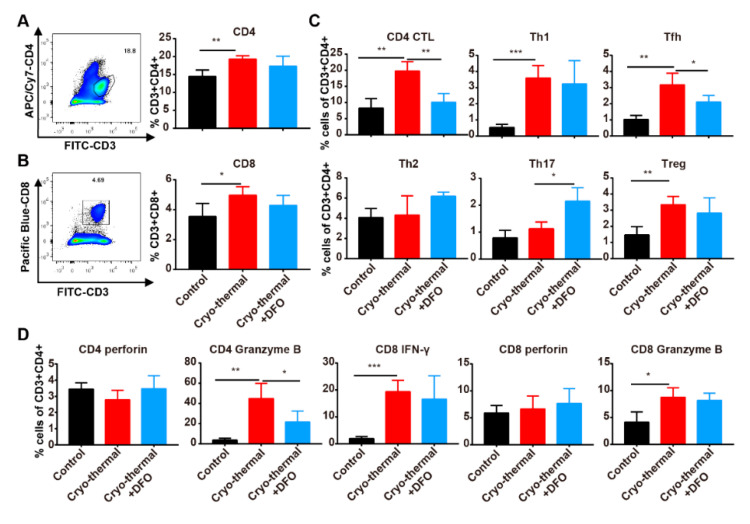
Macrophages play critical roles in both innate and adaptive immunity and are known for their high plasticity in response to various external signals. Macrophages are involved in regulating systematic iron homeostasis and they sequester iron by phagocytotic activity, which triggers M1 macrophage polarization and typically exerts antitumor effects. We previously developed a novel cryo-thermal therapy that can induce the mass release of tumor antigens and damage-associated molecular patterns (DAMPs), promoting M1 macrophage polarization. However, that study did not examine whether iron released after cryo-thermal therapy induced M1 macrophage polarization; this question still needed to be addressed. We hypothesized that cryo-thermal therapy would cause the release of a large quantity of iron to augment M1 macrophage polarization due to the disruption of tumor cells and blood vessels, which would further enhance antitumor immunity. In this study, we investigated iron released in primary tumors, the level of iron in splenic macrophages after cryo-thermal therapy and the effect of iron on macrophage polarization and CD4 T cell differentiation in metastatic 4T1 murine mammary carcinoma. We found that a large amount of iron was released after cryo-thermal therapy and could be taken up by splenic macrophages, which further promoted M1 macrophage polarization by inhibiting ERK phosphorylation. Moreover, iron promoted DC maturation, which was possibly mediated by iron-induced M1 macrophages. In addition, iron-induced M1 macrophages and mature DCs promoted the differentiation of CD4 T cells into the CD4 cytolytic T lymphocytes (CTL) subset and inhibited differentiation into Th2 and Th17 cells. This study explains the role of iron in cryo-thermal therapy-induced antitumor immunity from a new perspective.
巨噬细胞在先天免疫和适应性免疫中发挥着关键作用,其对各种外部信号的高可塑性是众所周知的。巨噬细胞参与调节系统性铁稳态,它们通过吞噬作用摄取铁,这会引发 M1 巨噬细胞极化,并通常发挥抗肿瘤作用。我们之前开发了一种新型的冷冻-热疗,可以诱导肿瘤抗原和损伤相关分子模式(DAMPs)的大量释放,促进 M1 巨噬细胞极化。然而,该研究并未检查冷冻-热疗后释放的铁是否诱导 M1 巨噬细胞极化;这个问题仍需要解决。我们假设冷冻-热疗会由于肿瘤细胞和血管的破坏而释放大量的铁,从而增强 M1 巨噬细胞极化,进而进一步增强抗肿瘤免疫。在这项研究中,我们研究了原发性肿瘤中释放的铁、冷冻-热疗后脾脏巨噬细胞中的铁水平以及铁对转移性 4T1 鼠乳腺肿瘤中巨噬细胞极化和 CD4 T 细胞分化的影响。我们发现冷冻-热疗后会释放大量的铁,并且可以被脾脏巨噬细胞摄取,这进一步通过抑制 ERK 磷酸化促进 M1 巨噬细胞极化。此外,铁促进了 DC 的成熟,这可能是由铁诱导的 M1 巨噬细胞介导的。此外,铁诱导的 M1 巨噬细胞和成熟的 DC 促进了 CD4 T 细胞向 CD4 细胞毒性 T 淋巴细胞(CTL)亚群的分化,并抑制了向 Th2 和 Th17 细胞的分化。这项研究从一个新的角度解释了铁在冷冻-热疗诱导的抗肿瘤免疫中的作用。