Cancer Center, Daping Hospital, Army Medical University, Chongqing, 400042, China.
School of Medicine, Chongqing University, Chongqing, 400030, China.
J Exp Clin Cancer Res. 2021 Jul 1;40(1):220. doi: 10.1186/s13046-021-02006-5.
Metastasis is a major challenge in cervical cancer treatment. Previous studies have shown that the dual functional protein apurinic/apyrimidinic endonuclease 1 (APE1) promotes tumor metastasis and is overexpressed in cervical cancer. However, the biological role and mechanism of APE1 in cervical cancer metastasis have rarely been studied.
We used gene set enrichment analysis (GSEA) to determine the APE1-related signaling pathways in cervical cancer. To investigate the role and mechanism of APE1 in cervical cancer metastasis and invasion, immunohistochemistry, immunofluorescence, western blotting, secondary structure prediction, coimmunoprecipitation, luciferase reporter, and electrophoretic mobility shift assays were performed. The inhibitory effects of the APE1 redox function inhibitor APX3330 on cervical cancer metastasis were evaluated using animal models.
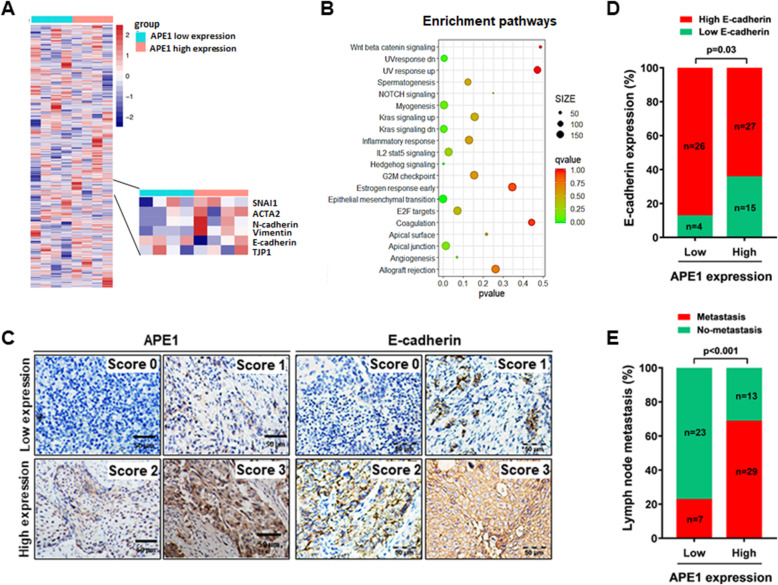
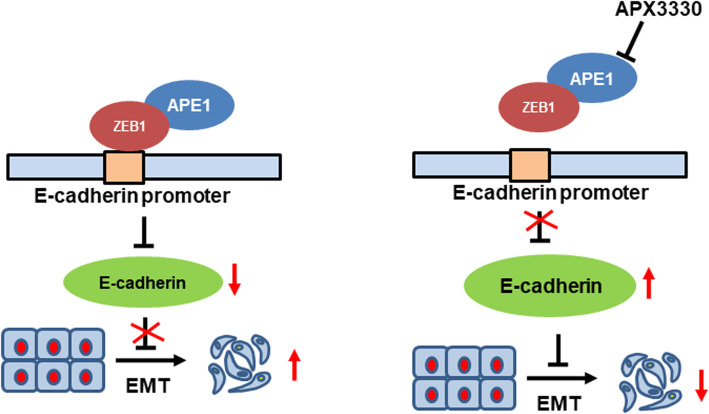
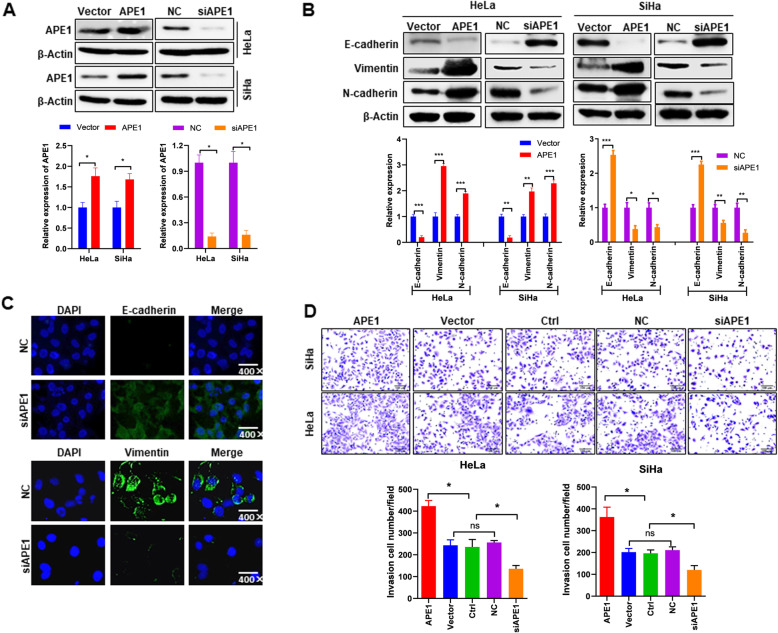
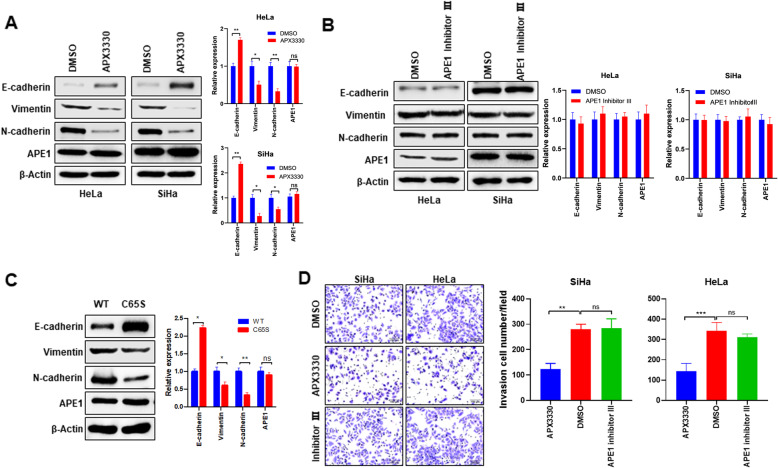
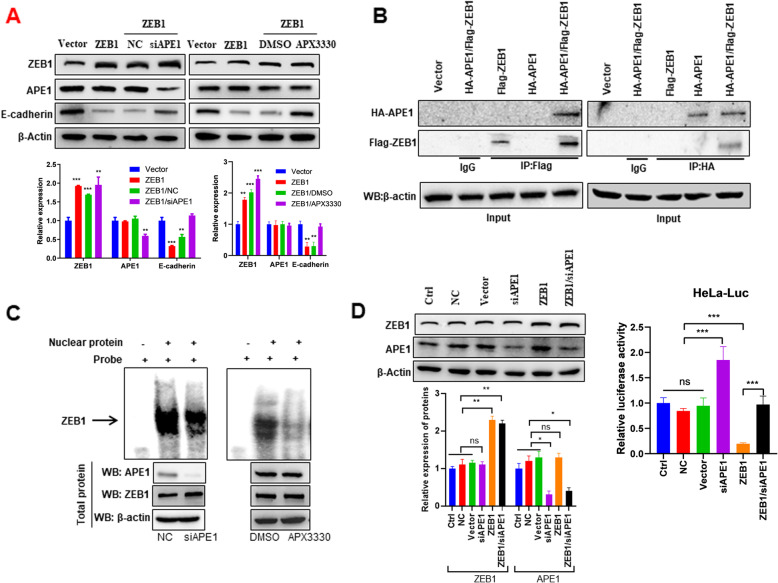
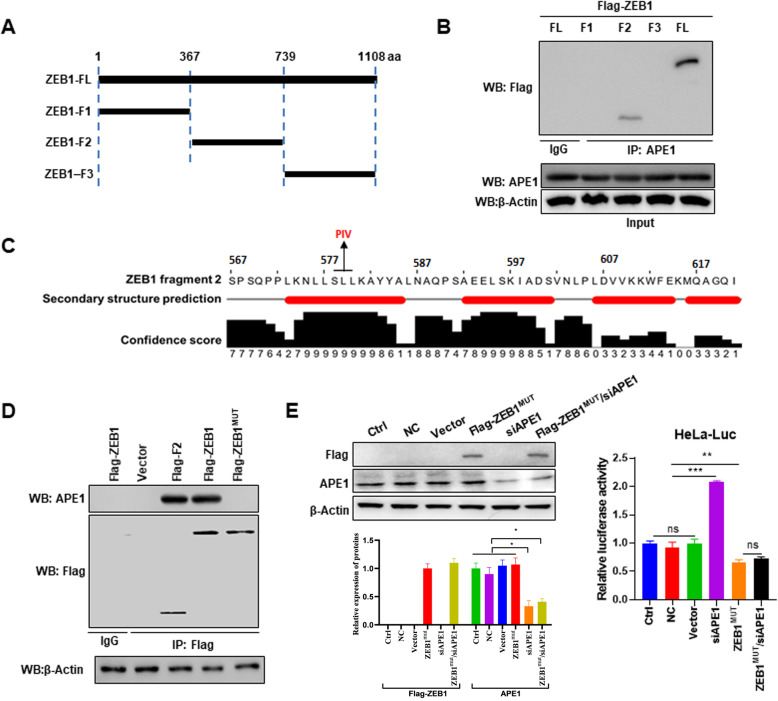
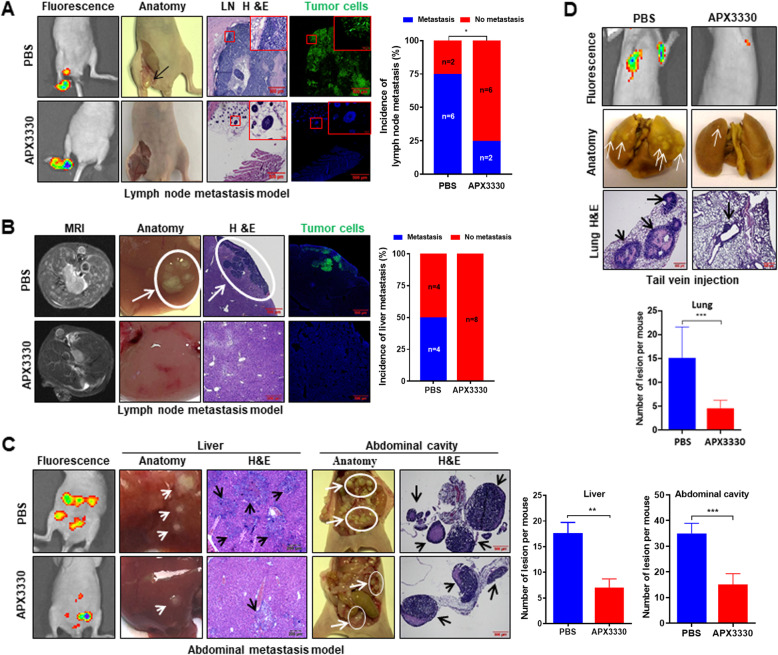
Clinical data showed that high expression of APE1 was associated with lymph node metastasis in cervical cancer patients. GSEA results showed that APE1 was associated with epithelial to mesenchymal transition (EMT) in cervical cancer. Ectopic expression of APE1 promoted EMT and invasion of cervical cancer cells, whereas inhibition of APE1 suppressed EMT and invasion of cervical cancer cells in a redox function-dependent manner. Notably, APE1 redox function inhibitor APX3330 treatment dramatically suppressed cervical cancer cell lymph node and distant metastasis in vivo. Furthermore, we found that APE1 enhanced the interaction between ZEB1 and the E-cadherin promoter by binding to ZEB1, thereby suppressing the expression of E-cadherin, a negative regulator of EMT.
Our findings help to elucidate the role played by APE1 in cervical cancer metastasis and targeting APE1 redox function may be a novel strategy for inhibiting cervical cancer metastasis.
转移是宫颈癌治疗的主要挑战。先前的研究表明,双功能蛋白脱嘌呤/脱嘧啶内切酶 1(APE1)促进肿瘤转移,在宫颈癌中过表达。然而,APE1 在宫颈癌转移中的生物学作用和机制很少被研究。
我们使用基因集富集分析(GSEA)来确定宫颈癌中与 APE1 相关的信号通路。为了研究 APE1 在宫颈癌转移和侵袭中的作用和机制,进行了免疫组织化学、免疫荧光、Western blot、二级结构预测、共免疫沉淀、荧光素酶报告基因和电泳迁移率变动分析。使用动物模型评估 APE1 氧化还原功能抑制剂 APX3330 对宫颈癌转移的抑制作用。
临床数据表明,APE1 的高表达与宫颈癌患者的淋巴结转移有关。GSEA 结果表明,APE1 与宫颈癌中的上皮间质转化(EMT)有关。APE1 的异位表达促进了宫颈癌细胞的 EMT 和侵袭,而 APE1 抑制物 APX3330 的抑制作用则以氧化还原功能依赖的方式抑制了宫颈癌细胞的 EMT 和侵袭。值得注意的是,APX3330 处理显著抑制了体内宫颈癌细胞的淋巴结和远处转移。此外,我们发现 APE1 通过与 ZEB1 结合增强了 ZEB1 与 E-钙粘蛋白启动子的相互作用,从而抑制了 EMT 的负调节因子 E-钙粘蛋白的表达。
我们的研究结果有助于阐明 APE1 在宫颈癌转移中的作用,靶向 APE1 氧化还原功能可能是抑制宫颈癌转移的一种新策略。