Luo Hao, Hu Bin, Gu Xiang-Rong, Chen Jing, Fan Xiao-Qing, Zhang Wei, Wang Ren-Tao, He Xian-Dong, Guo Wei, Dai Nan, Jian Dan, Li Qing, Xu Cheng-Xiong, Jin Hua
Department of Thoracic Surgery, Daping Hospital, Army Medical University, Chongqing, 400042, China.
School of Medicine, Chongqing University, Chongqing, 400030, China.
Mol Cancer. 2024 Dec 31;23(1):285. doi: 10.1186/s12943-024-02201-w.
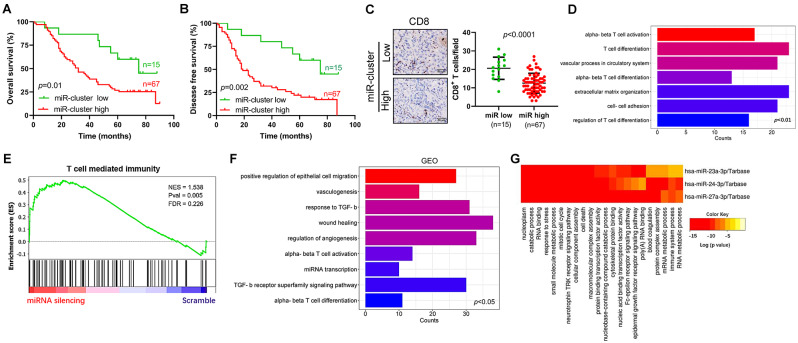
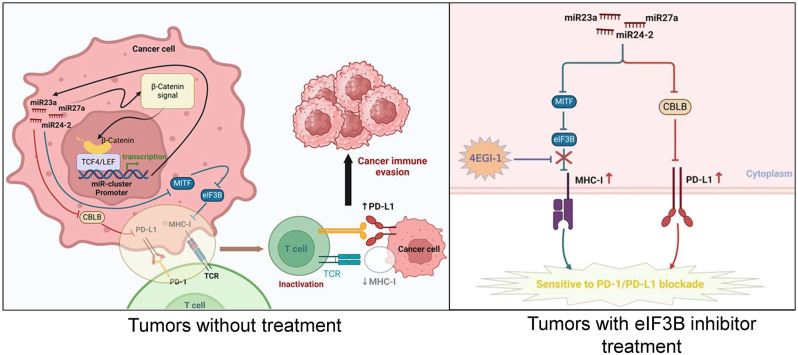
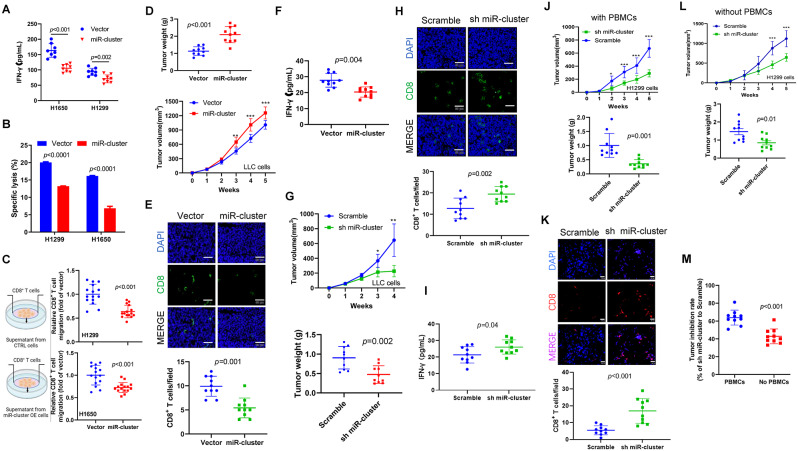
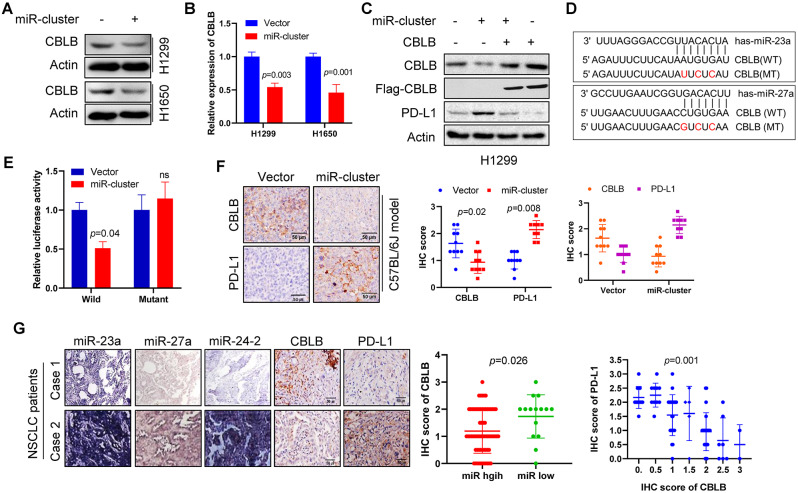
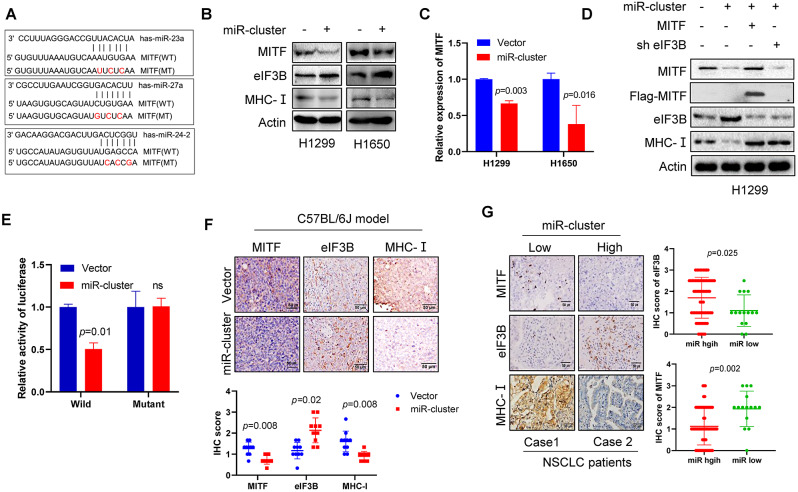
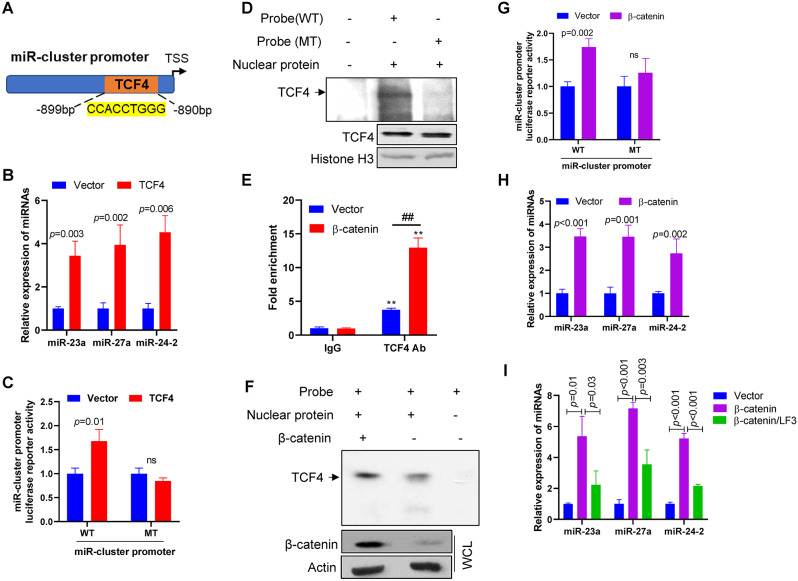
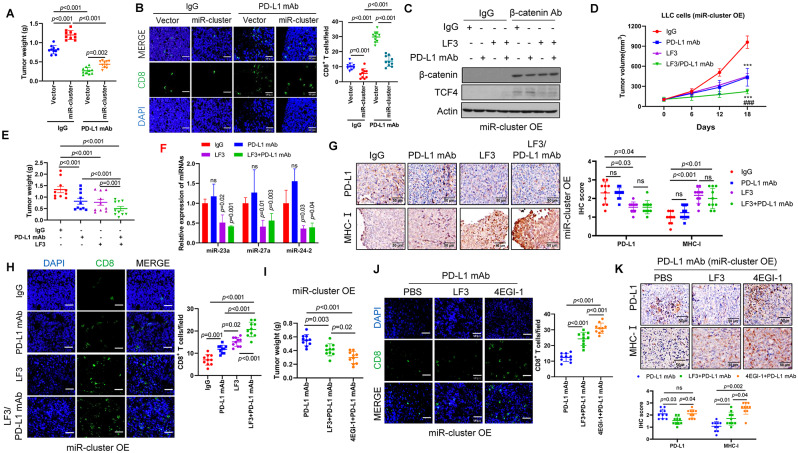
Programmed cell death protein ligand-1 (PD-L1) and major histocompatibility complex I (MHC-I) are key molecules related to tumor immune evasion and resistance to programmed cell death protein 1 (PD-1)/PD-L1 blockade. Here, we demonstrated that the upregulation of all miRNAs in the miR-23a/27a/24 - 2 cluster was correlated with poor survival, immune evasion and PD-1/PD-L1 blockade resistance in patients with non-small cell lung cancer (NSCLC). The overexpression of all miRNAs in the miR-23a/27a/24 - 2 cluster upregulated PD-L1 expression by targeting Cbl proto-oncogene B (CBLB) and downregulated MHC-I expression by increasing the level of eukaryotic initiation factor 3B (eIF3B) via the targeting of microphthalmia-associated transcription factor (MITF). In addition, we demonstrated that the expression of the miR-23a/27a/24 - 2 cluster of miRNAs is maintained in NSCLC through increased Wnt/β-catenin signaling-regulated interaction of transcription factor 4 (TCF4) and the miR-23a/27a/24 - 2 cluster promoter. Notably, pharmacologic targeting of the eIF3B pathway dramatically increased sensitivity to PD-1/PD-L1 blockade in patients with high expression of the miR-23a/27a/24 - 2 cluster in NSCLC. This effect was achieved by increasing MHC-I expression while maintaining high expression of PD-L1 induced by the miR-23a/27a/24 - 2 cluster. In summary, we elucidate the mechanism by which the miR-23a/27a/24 - 2 cluster miRNAs maintain their own expression and the molecular mechanism by which the miR-23a/27a/24 - 2 cluster miRNAs promote tumor immune evasion and PD-1/PD-L1 blockade resistance. In addition, we provide a novel strategy for the treatment of NSCLC expressing high levels of the miR-23a/27a/24 - 2 cluster.
程序性细胞死亡蛋白配体-1(PD-L1)和主要组织相容性复合体I(MHC-I)是与肿瘤免疫逃逸以及对程序性细胞死亡蛋白1(PD-1)/PD-L1阻断产生抗性相关的关键分子。在此,我们证明了miR-23a/27a/24-2簇中所有微小RNA(miRNA)的上调与非小细胞肺癌(NSCLC)患者的不良生存、免疫逃逸及PD-1/PD-L1阻断抗性相关。miR-23a/27a/24-2簇中所有miRNA的过表达通过靶向Cbl原癌基因B(CBLB)上调PD-L1表达,并通过靶向小眼相关转录因子(MITF)增加真核起始因子3B(eIF3B)水平来下调MHC-I表达。此外,我们证明了NSCLC中miR-23a/27a/24-2簇miRNA的表达通过转录因子4(TCF4)与miR-23a/27a/24-2簇启动子之间增加的Wnt/β-连环蛋白信号调节相互作用得以维持。值得注意的是,在NSCLC中miR-23a/27a/24-2簇高表达的患者中,对eIF3B途径进行药物靶向显著增加了对PD-1/PD-L1阻断的敏感性。这种效应是通过增加MHC-I表达同时维持miR-23a/27a/24-2簇诱导的PD-L1高表达来实现的。总之,我们阐明了miR-23a/27a/24-2簇miRNA维持自身表达的机制以及miR-23a/27a/24-2簇miRNA促进肿瘤免疫逃逸和PD-1/PD-L1阻断抗性的分子机制。此外,我们为治疗高表达miR-23a/27a/24-2簇的NSCLC提供了一种新策略。