Discipline of Occupational and Environmental Health, School of Nursing and Public Health, University of KwaZulu-Natal, Durban, South Africa.
Department of Medicine, University of Ibadan, Ibadan, 200284, Nigeria.
Environ Health. 2021 Jul 1;20(1):77. doi: 10.1186/s12940-021-00759-2.
Despite the recognition of the importance of indoor microbial exposures on children's health, the role of different microbial agents in development and aggravation of respiratory symptoms and diseases is only poorly understood. This study aimed to assess whether exposure to microbial aerosols within the indoor environment are associated with respiratory symptoms among children under-5 years of age.
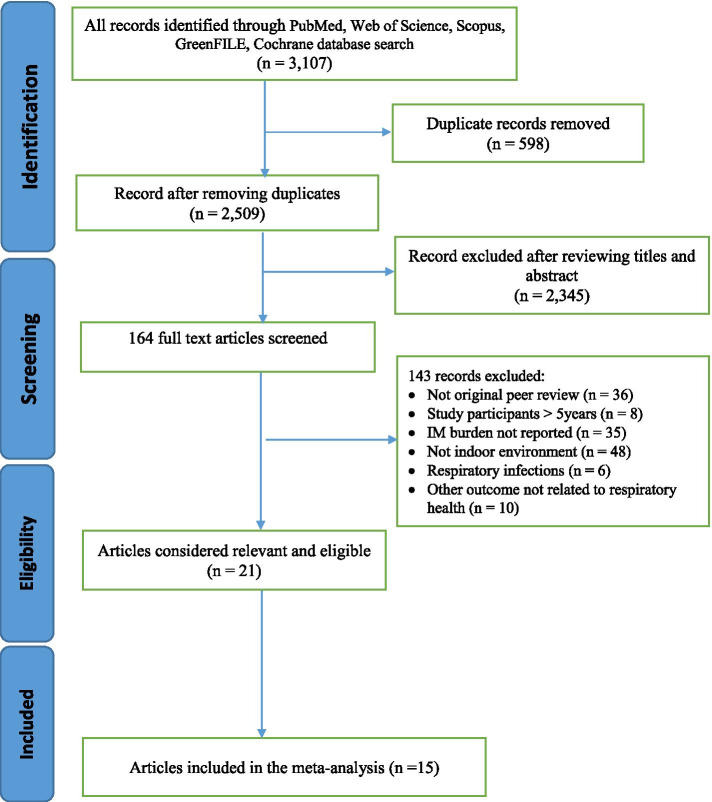
A systematic literature search was conducted on PubMed, Web of Science, GreenFILE, ScienceDirect, EMBASE and Cochrane library through February 2020. Studies that investigated the exposure-response relationship between components of the indoor microbial communities and respiratory symptoms among under-five children were eligible for inclusion. A random-effect meta-analysis was applied to estimate pooled relative risk (RR) and 95% confidence interval (CI) for study specific high versus low microbial exposures. The potential effect of individual studies on the overall estimate was evaluated using leave-one-out analysis, while heterogeneity was evaluated by I statistics using RevMan 5.3.
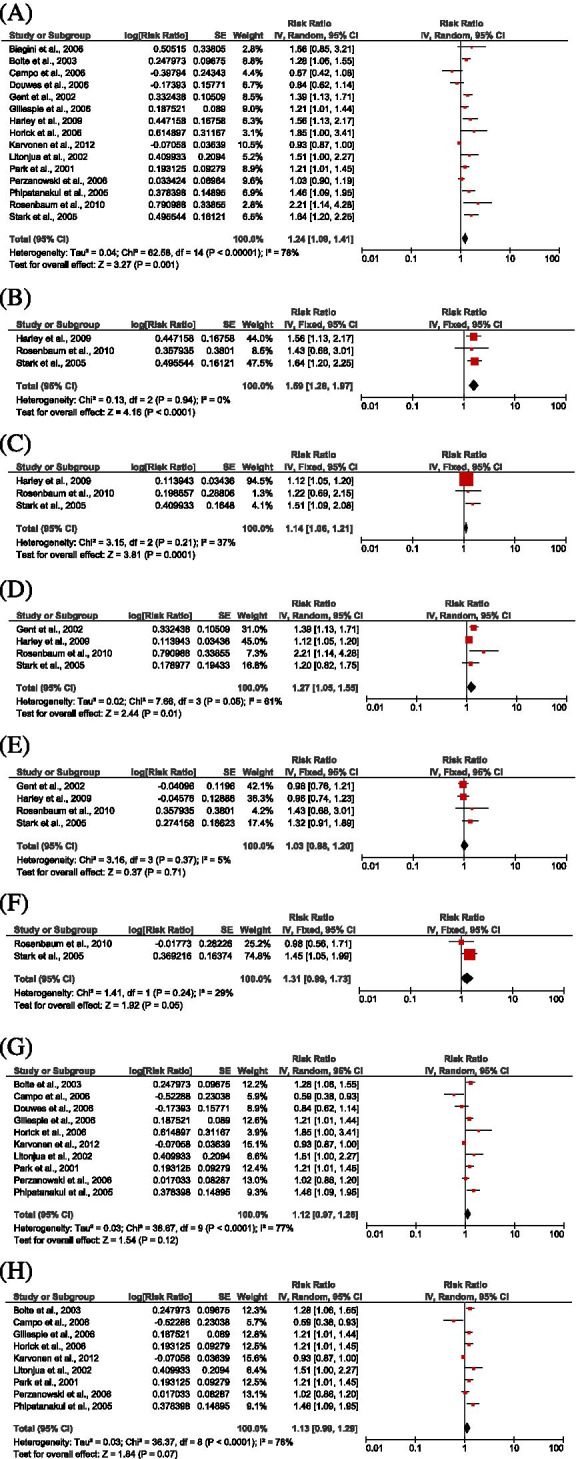
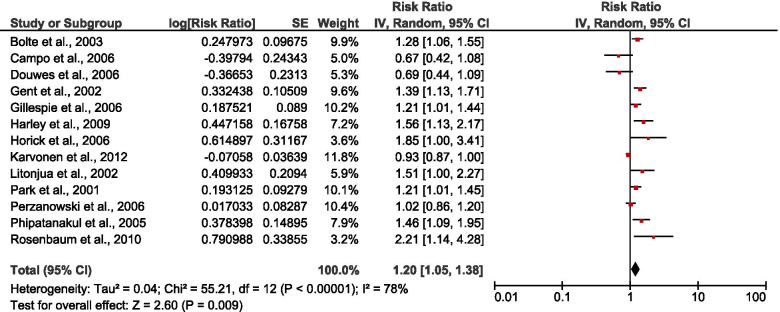
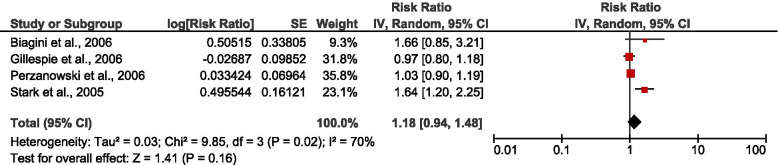
Fifteen studies were eligible for inclusion in a meta-analysis. The pooled risk estimate suggested that increased microbial exposure was associated with an increased risk of respiratory symptoms [pooled relative risk (RR): 1.24 (1.09, 1.41), P = 0.001]. The association was strongest with exposure to a combination of Aspergillus, Penicillium, Cladosporium and Alternaria species [pooled RR: 1.73 (1.30, 2.31), P = 0.0002]. Stratified analysis revealed an increased risk of wheeze [pooled RR: 1.20 (1.05, 1.37), P = 0.007 and allergic rhinitis [RR: 1.18 (0.94, 1.98), P = 0.16] from any microbial exposure.
Microbial exposures are, in general, associated with risk of respiratory symptoms. Future studies are needed to study the indoor microbiome more comprehensively, and to investigate the mechanism of these associations.
尽管人们已经认识到室内微生物暴露对儿童健康的重要性,但不同微生物因素在发展和加重呼吸道症状和疾病方面的作用仍知之甚少。本研究旨在评估室内环境中微生物气溶胶的暴露是否与 5 岁以下儿童的呼吸道症状有关。
通过 2020 年 2 月在 PubMed、Web of Science、GreenFILE、ScienceDirect、EMBASE 和 Cochrane library 上进行系统文献检索,筛选出调查室内微生物群落成分与 5 岁以下儿童呼吸道症状之间暴露-反应关系的研究。应用随机效应荟萃分析估计研究特异性高与低微生物暴露的汇总相对风险 (RR) 和 95%置信区间 (CI)。采用 leave-one-out 分析评估个别研究对总体估计的潜在影响,采用 RevMan 5.3 中的 I ²统计评估异质性。
共有 15 项研究符合荟萃分析的纳入标准。汇总风险估计表明,微生物暴露增加与呼吸道症状风险增加相关 [汇总相对风险 (RR):1.24(1.09, 1.41),P=0.001]。与曲霉属、青霉属、枝孢霉属和交链孢霉属等多种微生物暴露的关联最强 [汇总 RR:1.73(1.30, 2.31),P=0.0002]。分层分析显示,任何微生物暴露都与喘息 [汇总 RR:1.20(1.05, 1.37),P=0.007]和过敏性鼻炎 [RR:1.18(0.94, 1.98),P=0.16]的风险增加相关。
总的来说,微生物暴露与呼吸道症状的风险有关。需要进一步研究来更全面地研究室内微生物组,并研究这些关联的机制。