Department of Anthropology, University of Toronto Mississauga, Mississauga, L5L1C6, Canada.
Department of Psychology, Simon Fraser University, Burnaby, V5A1S6, Canada.
Sci Rep. 2021 Jul 1;11(1):13658. doi: 10.1038/s41598-021-92816-6.
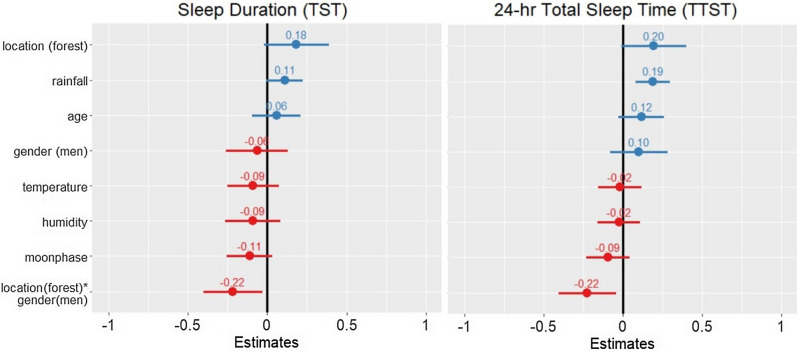
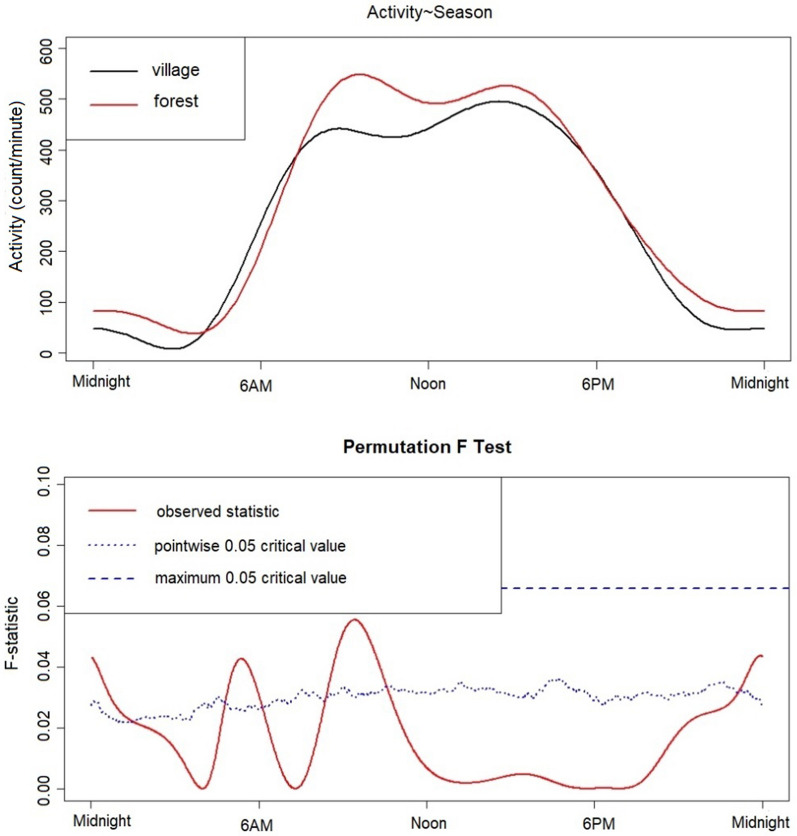
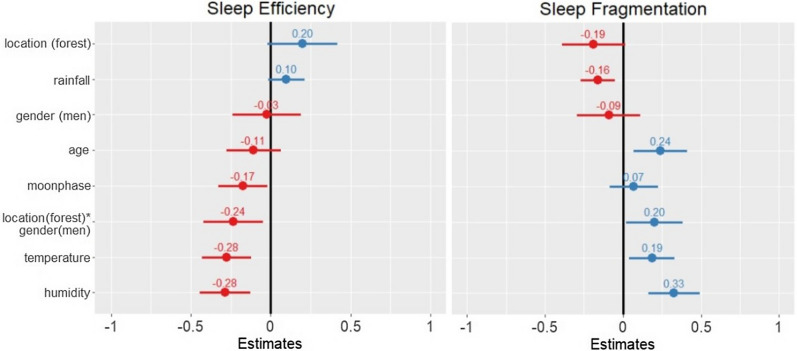
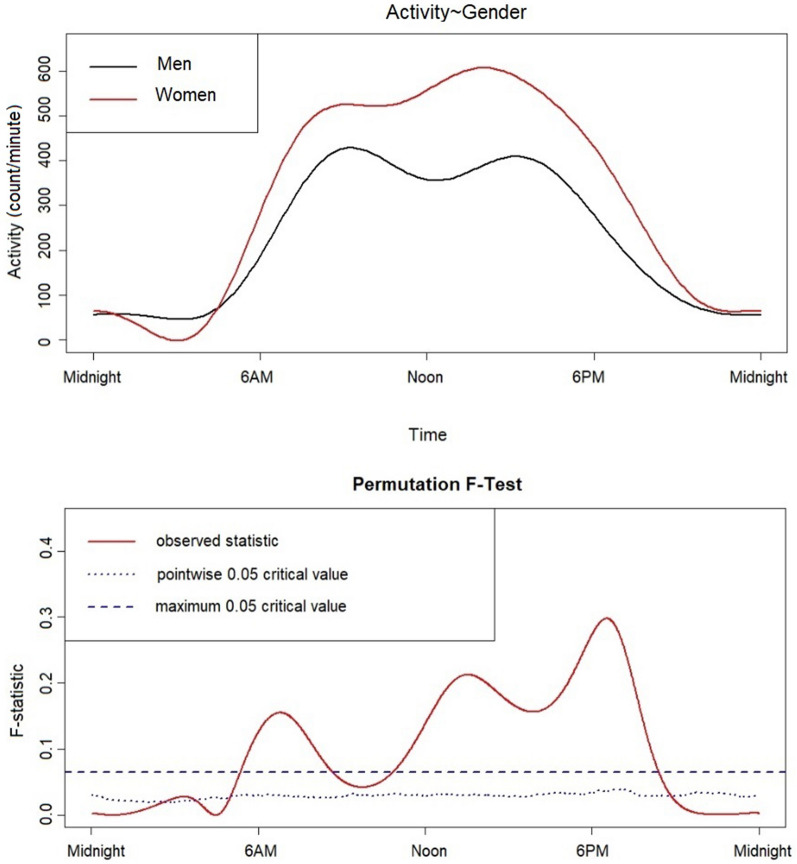
Sleep studies in small-scale subsistence societies have broadened our understanding of cross-cultural sleep patterns, revealing the flexibility of human sleep. We examined sleep biology among BaYaka foragers from the Republic of Congo who move between environmentally similar but socio-ecologically distinct locations to access seasonal resources. We analyzed the sleep-wake patterns of 51 individuals as they resided in a village location (n = 39) and a forest camp (n = 23) (362 nights total). Overall, BaYaka exhibited high sleep fragmentation (50.5) and short total sleep time (5.94 h), suggestive of segmented sleep patterns. Sleep duration did not differ between locations, although poorer sleep quality was exhibited in the village. Linear mixed effect models demonstrated that women's sleep differed significantly from men's in the forest, with longer total sleep time (β ± SE = - 0.22 ± 0.09, confidence interval (CI) = [- 0.4, - 0.03]), and higher sleep quality (efficiency; β ± SE = - 0.24 ± 0.09, CI = [- 0.42, - 0.05]). These findings may be due to gender-specific social and economic activities. Circadian rhythms were consistent between locations, with women exhibiting stronger circadian stability. We highlight the importance of considering intra-cultural variation in sleep-wake patterns when taking sleep research into the field.
小规模自给社会的睡眠研究拓宽了我们对跨文化睡眠模式的理解,揭示了人类睡眠的灵活性。我们研究了来自刚果共和国的巴雅卡觅食者的睡眠生物学,他们在环境相似但社会生态环境不同的地方之间移动,以获取季节性资源。我们分析了 51 个人在村庄(n=39)和森林营地(n=23)(总计 362 晚)的睡眠-觉醒模式。总体而言,巴雅卡人的睡眠碎片化程度很高(50.5),总睡眠时间很短(5.94 小时),提示存在分段睡眠模式。睡眠持续时间在不同地点没有差异,尽管在村庄中睡眠质量较差。线性混合效应模型表明,女性在森林中的睡眠与男性有显著差异,总睡眠时间更长(β±SE=-0.22±0.09,置信区间(CI)=-0.4,-0.03),睡眠质量更高(效率;β±SE=-0.24±0.09,CI=-0.42,-0.05)。这些发现可能归因于性别特定的社会和经济活动。昼夜节律在不同地点之间是一致的,女性表现出更强的昼夜稳定性。我们强调了在将睡眠研究带入现场时考虑睡眠-觉醒模式的文化内变异的重要性。