Department of Anthropology, Durham University, Durham, DH1 3LE, UK.
Department of Anthropology, Univesity of Utah, RM 4625, Salt Lake City, USA.
Sci Rep. 2023 Jan 19;13(1):1058. doi: 10.1038/s41598-023-28330-8.
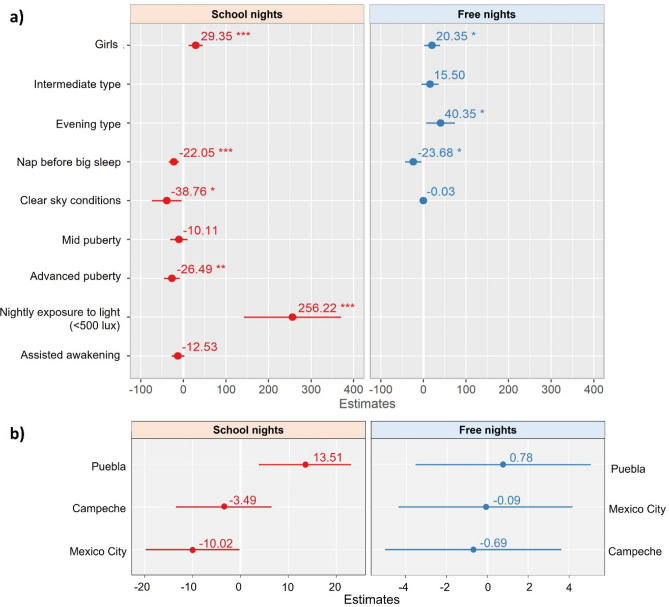
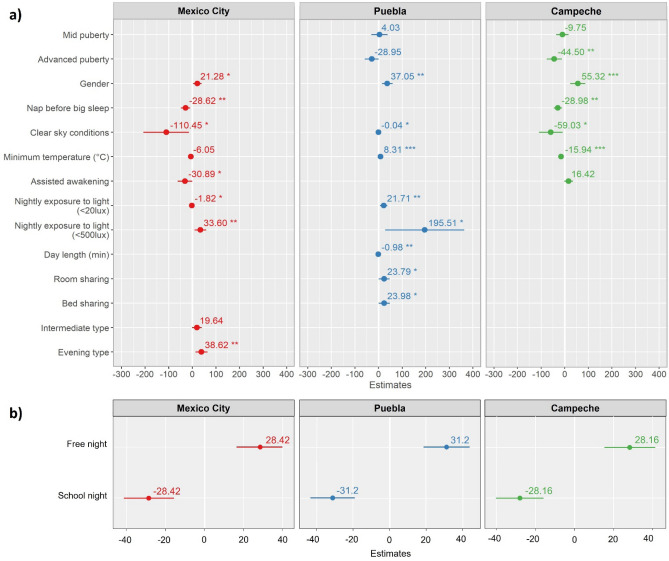
Comparing the nature of adolescent sleep across urban and more isolated, rural settings through an ecological, cross-cultural perspective represents one way to inform sleep nuances and broaden our understanding of human development, wellbeing and evolution. Here we tested the Social Jetlag Hypothesis, according to which contemporary, urban lifestyles and technological advances are associated with sleep insufficiency in adolescents. We documented the adolescent sleep duration (11-16 years old; X̅ = 13.7 ± 1.21; n = 145) in two small agricultural, indigenous and one densely urban context in Mexico to investigate whether adolescents in socio-ecologically distinct locations experience sleep deprivation. Sleep data was assembled with actigraphy, sleep diaries and standardized questionnaires. We employed multilevel models to analyze how distinct biological and socio-cultural factors (i.e., pubertal maturation, chronotype, napping, gender, working/schooling, access to screen-based devices, exposure to light, and social sleep practices) shape adolescent sleep duration. Results suggest that the prevalence of adolescent short sleep quotas is similar in rural, more traditional environments compared to highly urbanized societies, and highlight the influence of social activities on the expression of human sleep. This study challenges current assumptions about natural sleep and how adolescents slept before contemporary technological changes occurred.
从生态和跨文化的角度比较城市和较为偏远的农村地区青少年睡眠的本质,是一种了解睡眠细微差别并拓宽我们对人类发展、健康和进化的理解的方法。在这里,我们验证了社会时差假说,即现代城市生活方式和技术进步与青少年睡眠不足有关。我们记录了两个墨西哥小型农业、土著和一个密集城市地区的青少年(11-16 岁;X̅ = 13.7 ± 1.21;n = 145)的睡眠持续时间,以调查在社会生态环境截然不同的地区,青少年是否会经历睡眠剥夺。睡眠数据通过活动记录仪、睡眠日记和标准化问卷收集。我们采用多层模型分析了不同的生物和社会文化因素(即青春期成熟度、昼夜类型、午睡、性别、工作/上学、接触屏幕设备、光照暴露和社会睡眠习惯)如何影响青少年的睡眠持续时间。结果表明,与高度城市化社会相比,农村、更传统的环境中青少年睡眠不足的比例相似,这突出了社会活动对人类睡眠表现的影响。这项研究挑战了当前关于自然睡眠的假设,以及在现代技术变革之前青少年是如何睡眠的。