Vázquez-Mosquera Maria Eugenia, Fernández-Moreno Mercedes, Cortés-Pereira Estefanía, Relaño Sara, Dalmao-Fernández Andrea, Ramos-Louro Paula, Durán Sotuela Alejandro, Rego-Pérez Ignacio, Blanco Francisco J
Unidad de Genómica, Grupo de Investigación en Reumatología (GIR), Instituto de Investigación Biomédica de A Coruña (INIBIC), Complexo Hospitalario Universitario de A Coruña (CHUAC), Universidade da Coruña (UDC), A Coruña, Spain.
Centro de Investigación Biomédica en Red de Bioingeniería, Biomateriales y Nanomedicina (CIBER-BBN), Madrid, Spain.
Front Physiol. 2021 Jun 15;12:670753. doi: 10.3389/fphys.2021.670753. eCollection 2021.
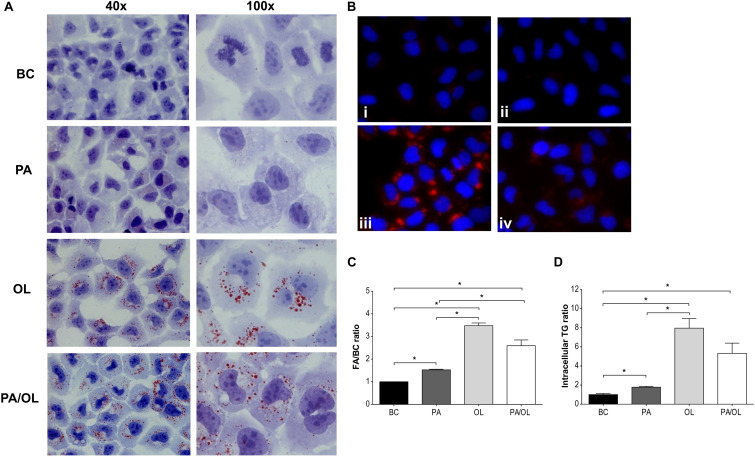
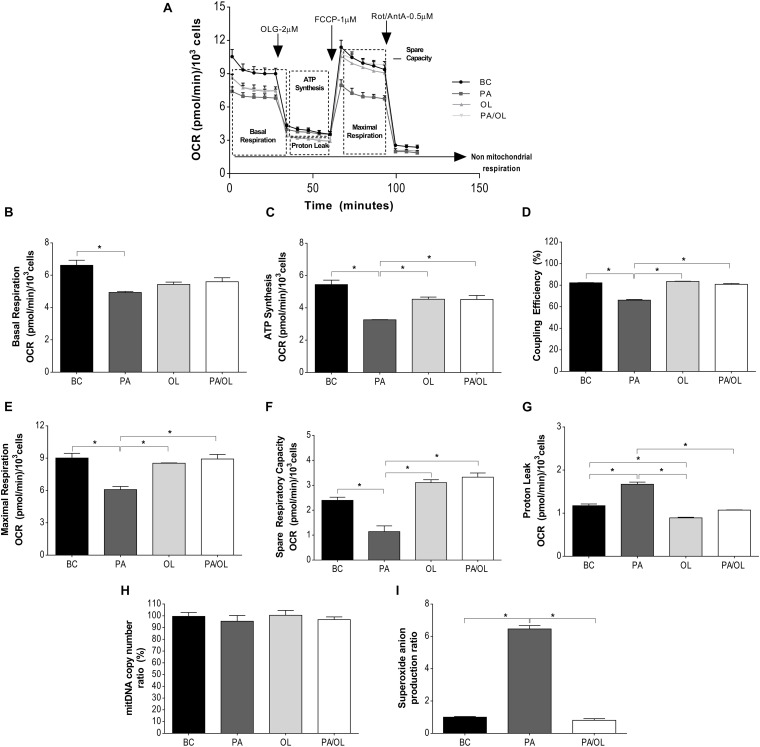
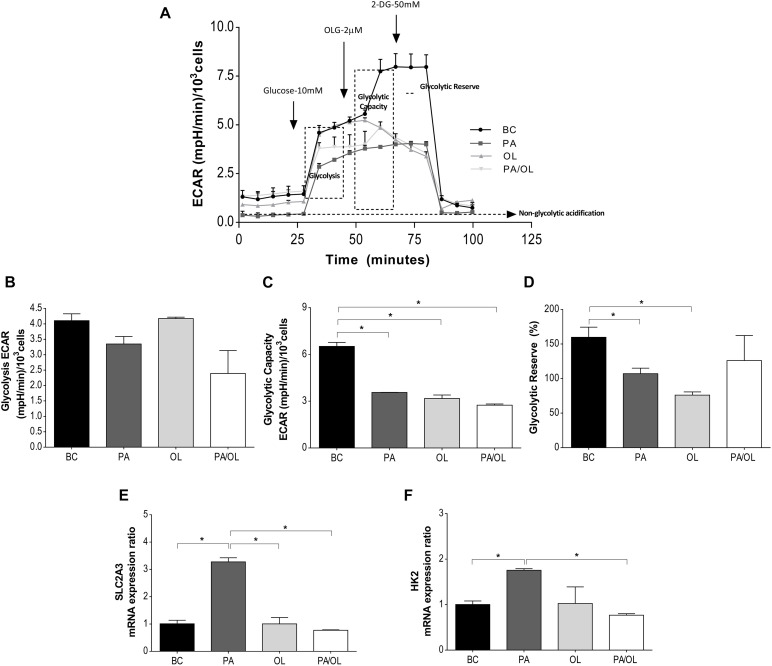
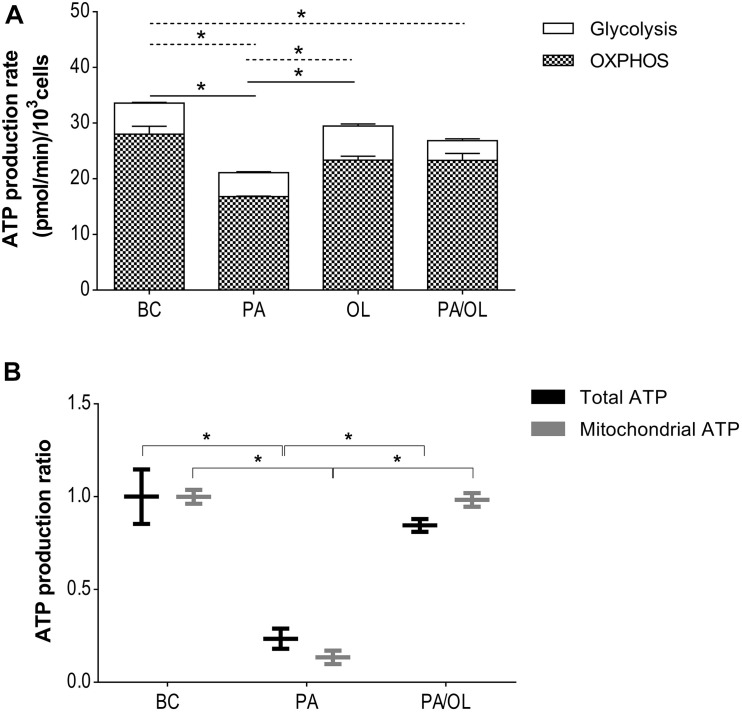
The association between obesity and osteoarthritis (OA) in joints not subjected to mechanical overload, together with the relationship between OA and metabolic syndrome, suggests that there are systemic factors related to metabolic disorders that are involved in the metabolic phenotype of OA. The aim of this work is study the effects of palmitate and oleate on cellular metabolism in an "" model of human chondrocytes. The TC28a2 chondrocyte cell line was used to analyze the effect of palmitate and oleate on mitochondrial and glycolytic function, Adenosine triphosphate (ATP) production and lipid droplets accumulation. Palmitate, but not oleate, produces mitochondrial dysfunction observed with a lower coupling efficiency, maximal respiration and spare respiratory capacity. Glycolytic function showed lower rates both glycolytic capacity and glycolytic reserve when cells were incubated with fatty acids (FAs). The production rate of total and mitochondrial ATP showed lower values in chondrocytes incubated with palmitic acid (PA). The formation of lipid droplets increased in FA conditions, being significantly higher when the cells were incubated with oleic acid (OL). These results may help explain, at least in part, the close relationship of metabolic pathologies with OA, as well as help to elucidate some of the factors that can define a metabolic phenotype in OA.
在未承受机械负荷的关节中,肥胖与骨关节炎(OA)之间的关联,以及OA与代谢综合征之间的关系,表明存在与代谢紊乱相关的全身因素参与了OA的代谢表型。本研究的目的是在人软骨细胞的“”模型中研究棕榈酸酯和油酸酯对细胞代谢的影响。使用TC28a2软骨细胞系来分析棕榈酸酯和油酸酯对线粒体和糖酵解功能、三磷酸腺苷(ATP)生成以及脂滴积累的影响。棕榈酸酯而非油酸酯会导致线粒体功能障碍,表现为偶联效率、最大呼吸和备用呼吸能力降低。当细胞与脂肪酸(FAs)一起孵育时,糖酵解功能显示糖酵解能力和糖酵解储备率均降低。在与棕榈酸(PA)孵育的软骨细胞中,总ATP和线粒体ATP的生成率显示较低值。在脂肪酸条件下脂滴的形成增加,当细胞与油酸(OL)一起孵育时显著更高。这些结果可能至少部分有助于解释代谢性疾病与OA的密切关系,以及有助于阐明一些可定义OA代谢表型的因素。