Department of Molecular Medicine and Metabolism, Research Institute of Environmental Medicine, Nagoya University, Nagoya, Japan.
Department of Nephrology, Nagoya University Graduate School of Medicine, Nagoya, Japan.
Front Immunol. 2021 Jun 15;12:650856. doi: 10.3389/fimmu.2021.650856. eCollection 2021.
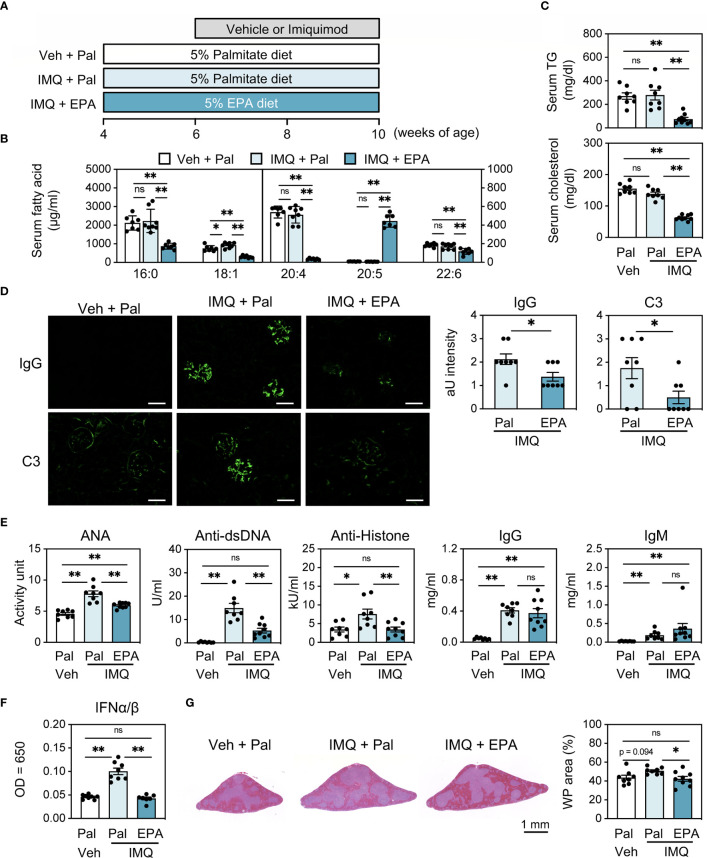
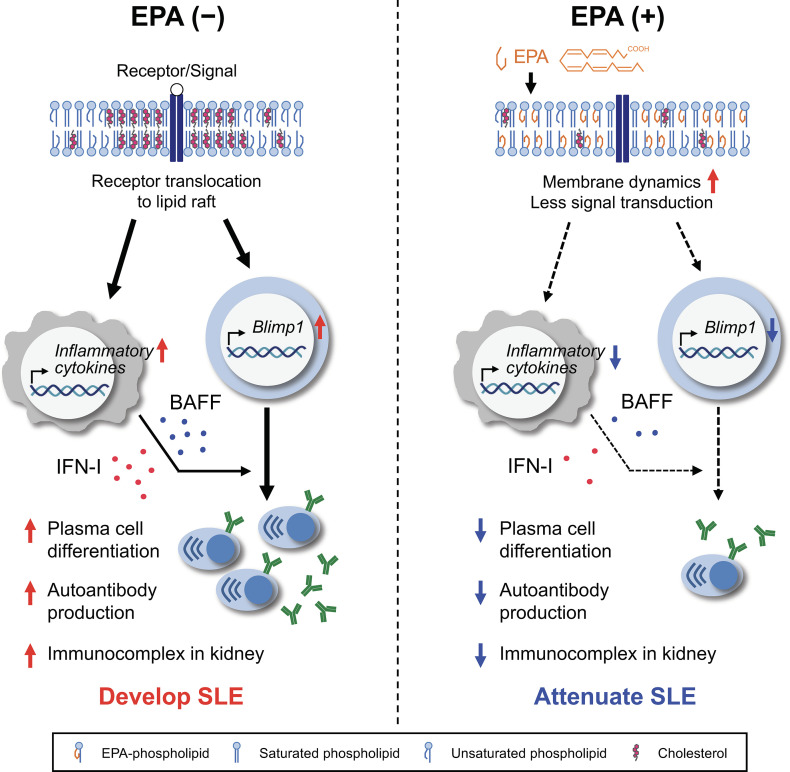
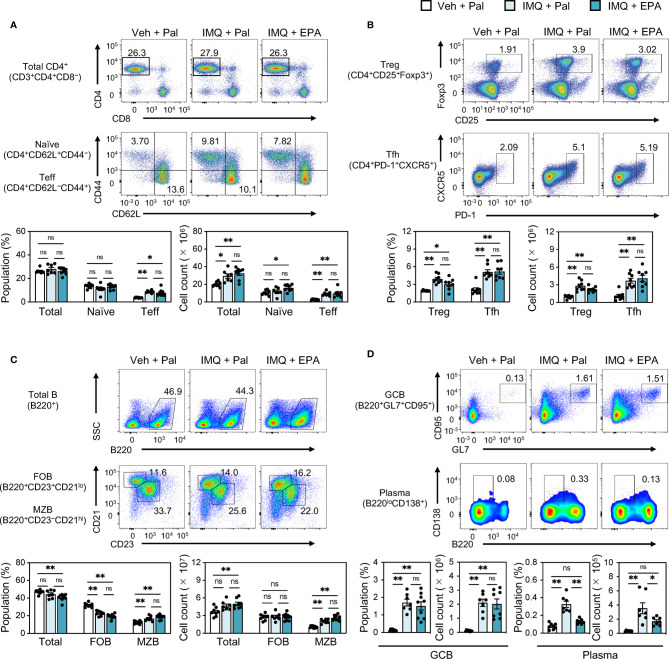
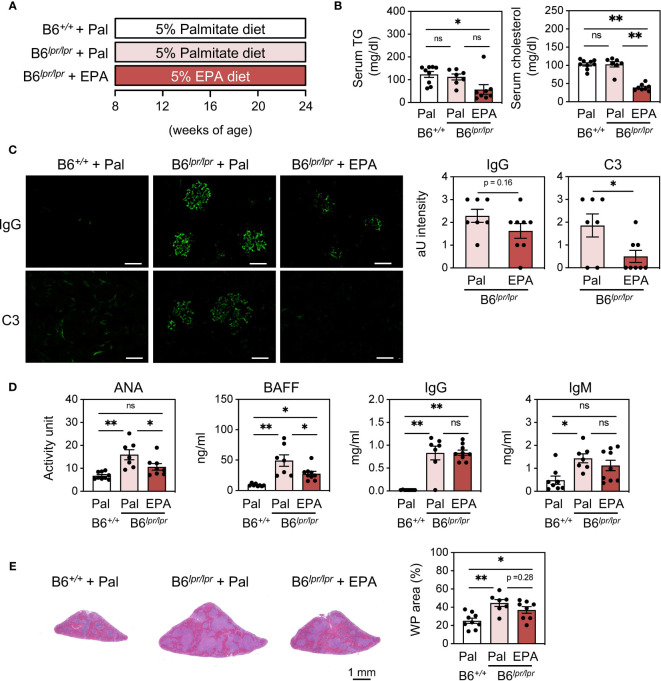
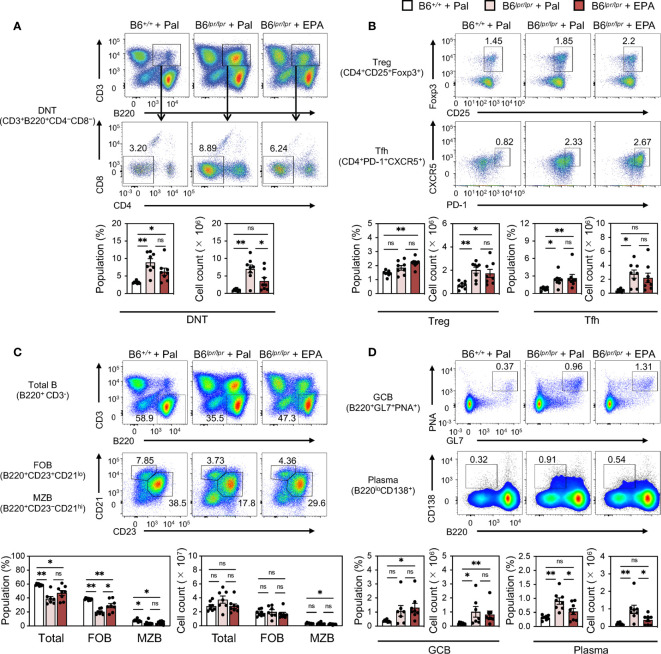
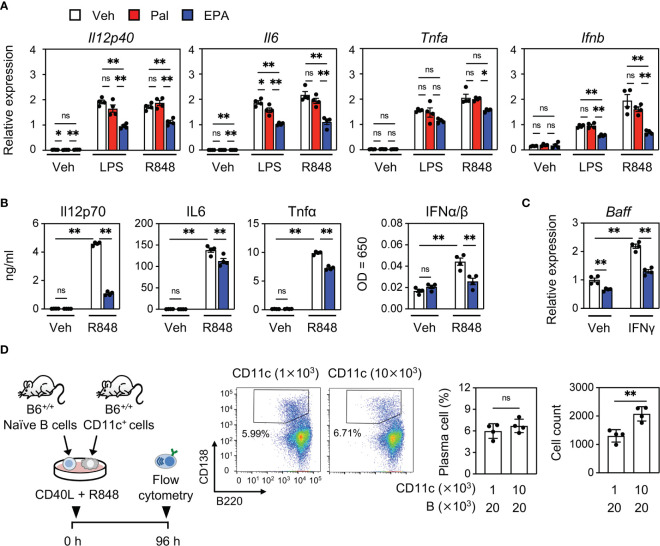
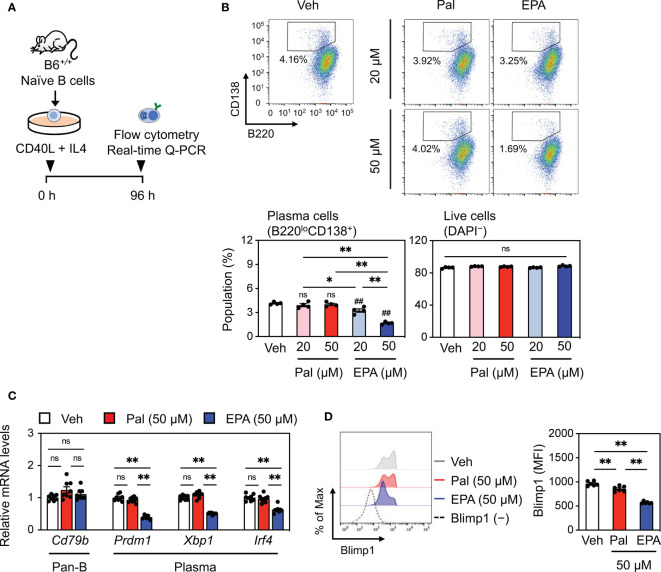
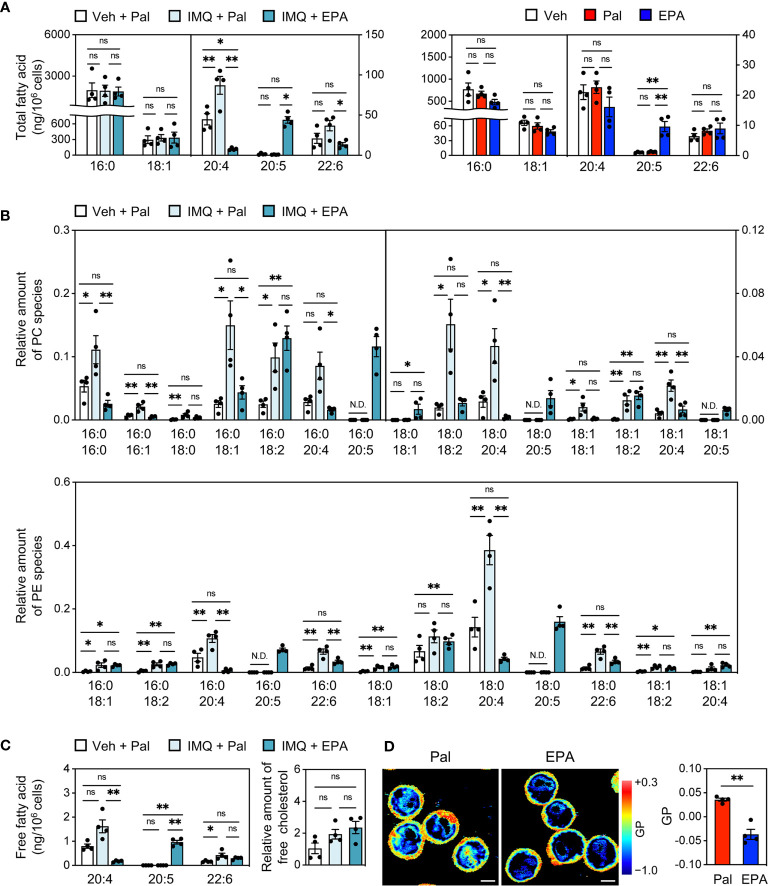
Accumulating evidence suggests that cholesterol accumulation in leukocytes is causally associated with the development of autoimmune diseases. However, the mechanism by which fatty acid composition influences autoimmune responses remains unclear. To determine whether the fatty acid composition of diet modulates leukocyte function and the development of systemic lupus erythematosus, we examined the effect of eicosapentaenoic acid (EPA) on the pathology of lupus in drug-induced and spontaneous mouse models. We found that dietary EPA supplementation ameliorated representative lupus manifestations, including autoantibody production and immunocomplex deposition in the kidneys. A combination of lipidomic and membrane dynamics analyses revealed that EPA remodels the lipid composition and fluidity of B cell membranes, thereby preventing B cell differentiation into autoantibody-producing plasma cells. These results highlight a previously unrecognized mechanism by which fatty acid composition affects B cell differentiation into autoantibody-producing plasma cells during autoimmunity, and imply that EPA supplementation may be beneficial for therapy of lupus.
越来越多的证据表明,白细胞中的胆固醇积累与自身免疫性疾病的发展有关。然而,脂肪酸组成如何影响自身免疫反应的机制尚不清楚。为了确定饮食中的脂肪酸组成是否会调节白细胞功能和系统性红斑狼疮的发展,我们研究了二十碳五烯酸 (EPA) 对诱导和自发性狼疮小鼠模型中狼疮病理的影响。我们发现,饮食中补充 EPA 可改善狼疮的代表性表现,包括自身抗体的产生和肾脏中的免疫复合物沉积。脂质组学和膜动力学分析的组合表明,EPA 重塑了 B 细胞膜的脂质组成和流动性,从而防止 B 细胞分化为产生自身抗体的浆细胞。这些结果强调了脂肪酸组成影响自身免疫期间 B 细胞分化为产生自身抗体的浆细胞的一个先前未被认识的机制,并暗示 EPA 补充可能对狼疮的治疗有益。