Department of Family Medicine and Rural Health, Faculty of Health Sciences, Walter Sisulu University, Mthatha.
Afr J Prim Health Care Fam Med. 2021 Jun 24;13(1):e1-e8. doi: 10.4102/phcfm.v13i1.2889.
Unnecessary blood transfusion exposes recipients to potential harms.
The aim of this study was to describe blood transfusion practice and explore doctors' attitudes towards transfusion.
A hospital providing level 1 and 2 services.
A mixed-methods study design was used. In the cross-sectional descriptive component, a sample was taken from patients transfused over a 2-month period. Blood use was categorised as for medical anaemia or haemorrhage, and appropriate or not. The qualitative component comprised a purposeful sample for focus group and individual semi-structured interviews.
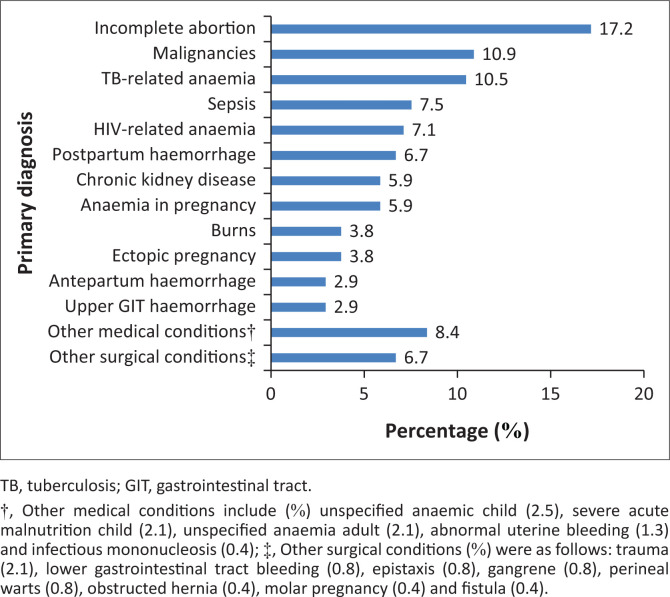
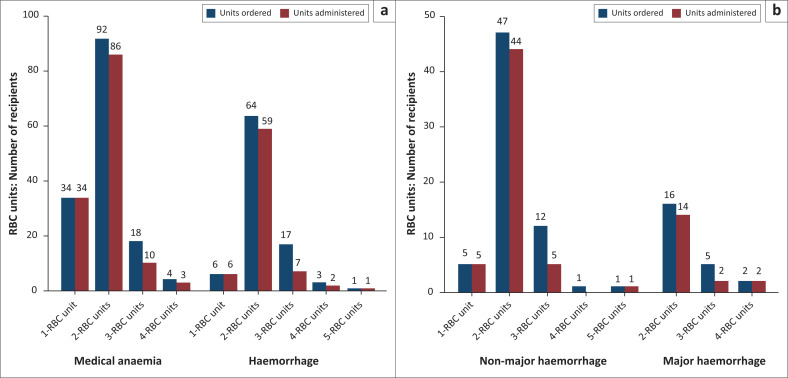
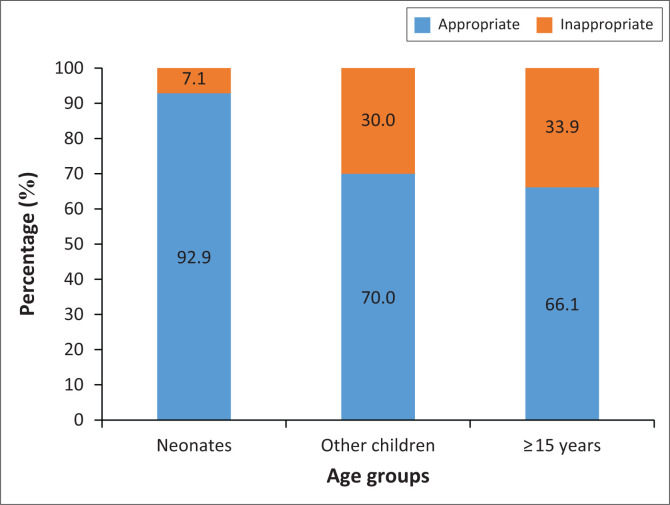
Of 239 patients sampled, 62% were transfused for medical anaemia and 38% for haemorrhage. In the medical anaemia group, compliance with age-appropriate transfusion thresholds was 69%. In medical anaemia and haemorrhage, 114 (77%) and 85 (93.4%) of recipients had orders for ≥ 2 red blood cell (RBC) units, respectively. In adults ≥ 18 years old with medical anaemia, 47.1% of orders would have resulted in a haemoglobin (Hb) 8 g/dL. Six doctors participated in focus group and eleven in individual interviews. There was a lack of awareness of institutional transfusion guidelines, disagreement on appropriate RBC transfusion thresholds and comments that more than one RBC unit should always be transfused. Factors informing decisions to transfuse included advice from senior colleagues, relieving symptoms of anaemia and high product costs.
Most orders were for two or more units. In medical anaemia, doctors' compliance with RBC transfusion thresholds was reasonable; however, almost half of the orders would have resulted in overtransfusion. The attitudes of doctors sampled suggest that their transfusion practice is influenced more by institutional values than formal guidelines.
不必要的输血会使受血者面临潜在的危害。
本研究旨在描述输血实践,并探讨医生对输血的态度。
提供 1 级和 2 级服务的医院。
采用混合方法研究设计。在横断面描述性部分,对在两个月期间接受输血的患者进行了抽样。将血液使用情况分为因医学性贫血或出血而输血,以及是否合理输血。定性部分包括为焦点小组和个别半结构访谈选择的目的样本。
在抽样的 239 名患者中,62%因医学性贫血而输血,38%因出血而输血。在医学性贫血组中,符合年龄相关输血阈值的比例为 69%。在医学性贫血和出血中,分别有 114(77%)和 85(93.4%)名受血者的医嘱中规定输注≥2 个单位的红细胞(RBC)。在≥18 岁有医学性贫血的成年人中,47.1%的医嘱会导致血红蛋白(Hb)达到 8g/dL。6 名医生参加了焦点小组,11 名医生参加了个别访谈。医生们缺乏对机构输血指南的认识,对适当的 RBC 输血阈值存在分歧,并认为应该始终输注不止一个 RBC 单位。影响输血决策的因素包括来自资深同事的建议、缓解贫血症状以及高产品成本。
大多数医嘱是输注两个或更多单位。在医学性贫血中,医生对 RBC 输血阈值的遵守情况是合理的;然而,近一半的医嘱会导致过度输血。抽样医生的态度表明,他们的输血实践更多地受到机构价值观的影响,而不是正式指南。