MOE Joint International Research Laboratory of Animal Health and Food Safety, College of Veterinary Medicine, Nanjing Agricultural University, 210095 Nanjing, PR China.
College of Veterinary Medicine, Henan Agricultural University, 450046 Zhengzhou, PR China.
Parasite. 2021;28:55. doi: 10.1051/parasite/2021053. Epub 2021 Jul 2.
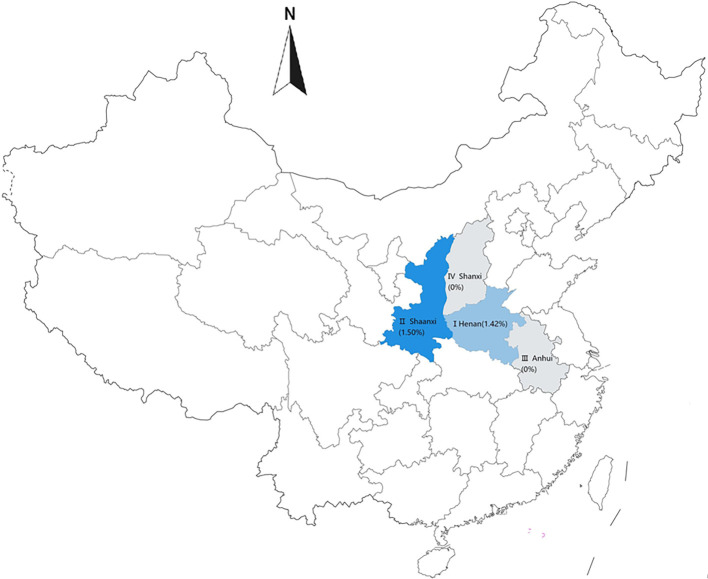
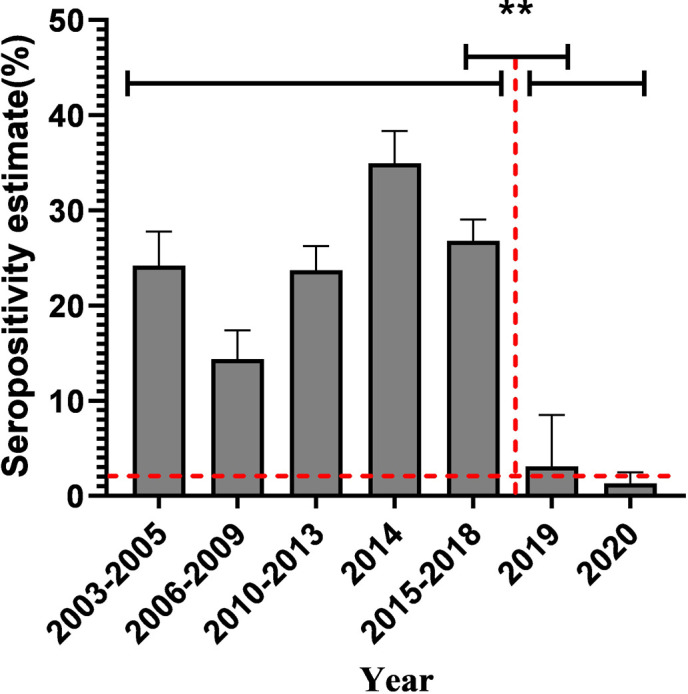
Toxoplasma gondii is widespread worldwide and can infect swine. This study evaluated the seroprevalence of T. gondii in swine from central China after an outbreak of African swine fever (ASF). A total of 2683 swine serum samples were collected from farms in four provinces. Of the serum samples, 1.42% (38/2683) (95% CI, 1.03-1.94) tested positive for T. gondii IgG antibody by a modified agglutination test (MAT) (cut-off: 1:25). Comparing with the results of previous studies, specifically our survey from before the outbreak, the seroprevalence of T. gondii in swine from central China was significantly decreased after the occurrence of ASF (OR = 7.679, 2015-2017 vs. 2019-2020). In general, the proportion of seropositive animals increased with the age of the swine, indicating post-natal transmission of T. gondii. Furthermore, there was a significant difference in seroprevalence between suckling pigs and weaned pigs (p < 0.05). This is the first large-scale investigation of T. gondii infection in swine after an ASF outbreak in China. The lower seroprevalence of T. gondii in swine after ASF may be due to stricter biosecurity measures on the farms, but results indicated swine exposure to zoonotic parasites despite these measures. This highlights that pigs must be considered a potential source of human T. gondii infections.
刚地弓形虫广泛分布于全球,可感染猪。本研究评估了非洲猪瘟(ASF)爆发后中国中部地区猪的弓形虫血清流行率。共采集来自四个省的农场的 2683 份猪血清样本。通过改良凝集试验(MAT)检测,有 1.42%(38/2683)(95%CI,1.03-1.94)的血清样本对弓形虫 IgG 抗体呈阳性。与之前的研究结果相比,特别是我们在疫情爆发前的调查结果相比,中国中部地区猪的弓形虫血清流行率在 ASF 发生后显著降低(OR=7.679,2015-2017 年比 2019-2020 年)。一般来说,血清阳性动物的比例随着猪的年龄增长而增加,表明弓形虫存在后天传播。此外,哺乳仔猪和断奶仔猪之间的血清阳性率存在显著差异(p<0.05)。这是中国 ASF 爆发后首次对猪弓形虫感染进行的大规模调查。ASF 后猪弓形虫的血清流行率较低可能是由于农场采取了更严格的生物安全措施,但结果表明尽管采取了这些措施,猪仍接触到了人畜共患寄生虫。这突出表明猪必须被视为人类弓形虫感染的潜在来源。