Institute of Virology, Faculty of Medicine and University Hospital Cologne, University of Cologne, Cologne, Germany.
Methods in Medical Informatics, Department of Computer Science, University of Tübingen, Tübingen, Germany.
J Clin Microbiol. 2021 Aug 18;59(9):e0089621. doi: 10.1128/JCM.00896-21.
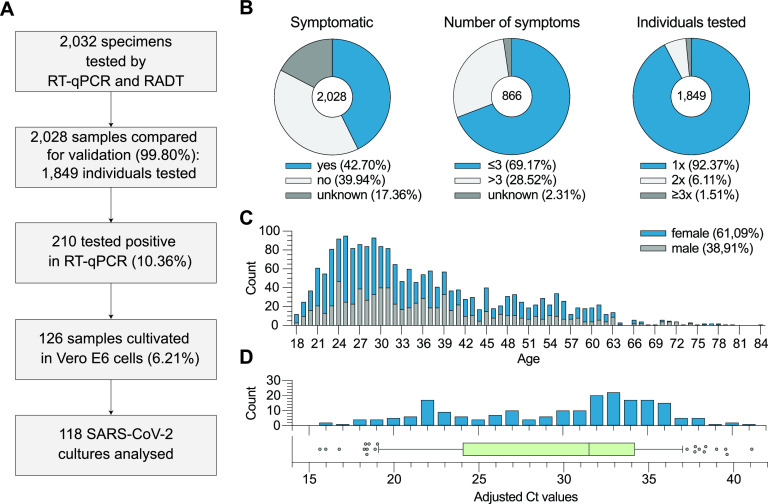
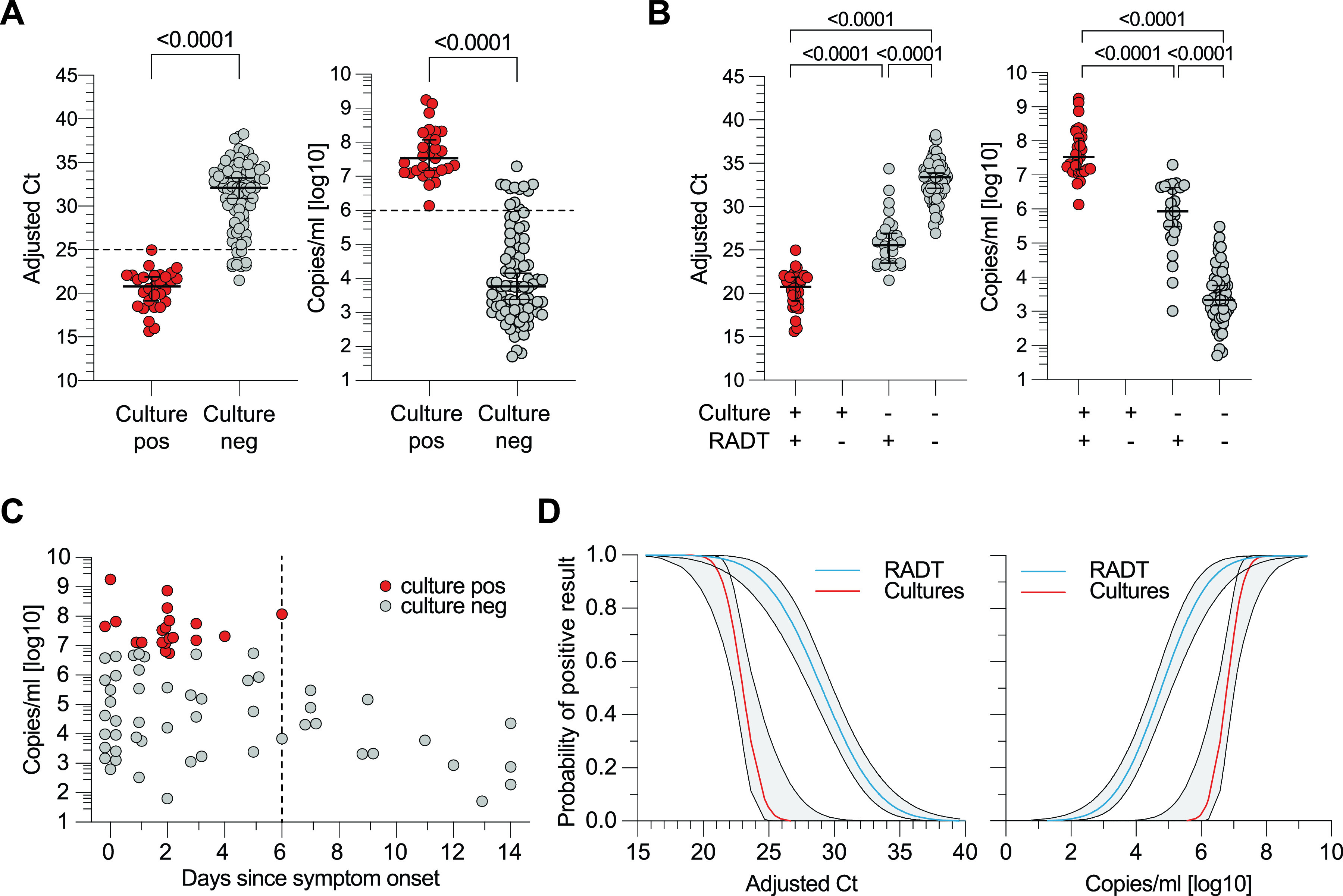
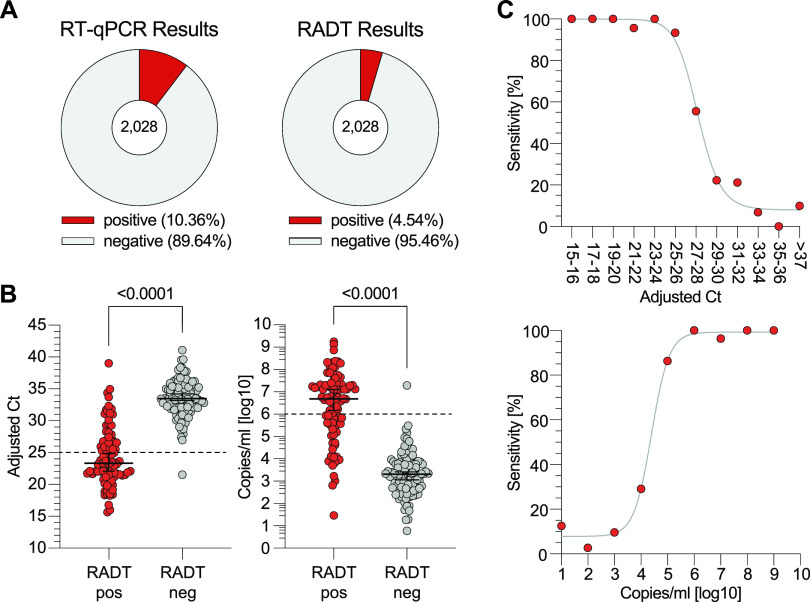
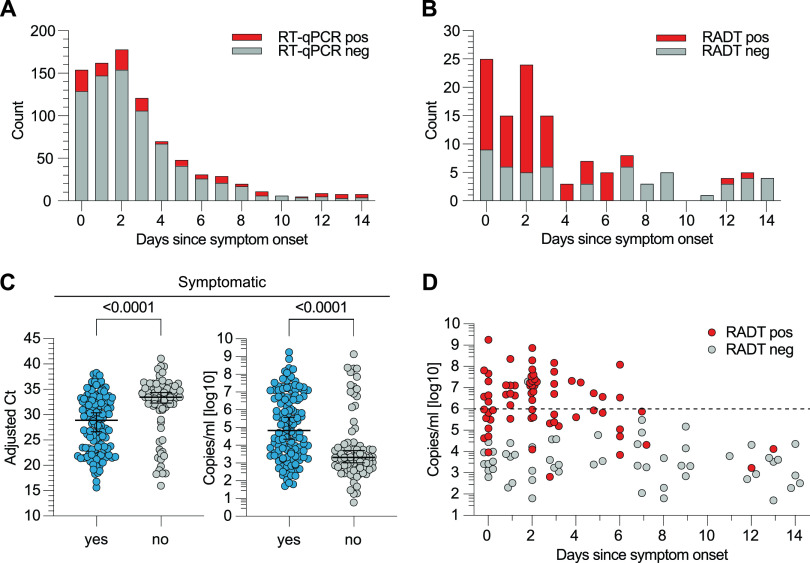
The identification and isolation of highly infectious SARS-CoV-2-infected individuals is an important public health strategy. Rapid antigen detection tests (RADT) are promising tools for large-scale screenings due to timely results and feasibility for on-site testing. Nonetheless, the diagnostic performance of RADT in detecting infectious individuals is not yet fully determined. In this study, RT-qPCR and virus culture of RT-qPCR-positive samples were used to evaluate and compare the performance of the Standard Q COVID-19 Ag test in detecting SARS-CoV-2-infected and possibly infectious individuals. To this end, two combined oro- and nasopharyngeal swabs were collected at a routine SARS-CoV-2 diagnostic center. A total of 2,028 samples were tested, and 118 virus cultures were inoculated. SARS-CoV-2 infection was detected in 210 samples by RT-qPCR, representing a positive rate of 10.36%. The Standard Q COVID-19 Ag test yielded a positive result in 92 (4.54%) samples resulting in an overall sensitivity and specificity of 42.86 and 99.89%, respectively. For adjusted values of <20 ( = 14), <25 ( = 57), and <30 ( = 88), the RADT reached sensitivities of 100, 98.25, and 88.64%, respectively. All 29 culture-positive samples were detected by the RADT. Although the overall sensitivity was low, the Standard Q COVID-19 Ag test reliably detected patients with high RNA loads. In addition, negative RADT results fully corresponded with the lack of viral cultivability in Vero E6 cells. These results indicate that RADT can be a valuable tool for the detection of individuals with high RNA loads that are likely to transmit SARS-CoV-2.
识别和隔离具有高度传染性的 SARS-CoV-2 感染者是一项重要的公共卫生策略。由于结果及时且便于现场检测,快速抗原检测 (RADT) 是大规模筛查的有前途的工具。然而,RADT 检测感染个体的诊断性能尚未完全确定。在这项研究中,使用 RT-qPCR 和 RT-qPCR 阳性样本的病毒培养来评估和比较 Standard Q COVID-19 Ag 测试在检测 SARS-CoV-2 感染和可能感染个体方面的性能。为此,在常规 SARS-CoV-2 诊断中心收集了两个组合的口咽和鼻咽拭子。共检测了 2028 个样本,并接种了 118 个病毒培养物。通过 RT-qPCR 在 210 个样本中检测到 SARS-CoV-2 感染,阳性率为 10.36%。Standard Q COVID-19 Ag 测试在 92 个样本中产生阳性结果,阳性率为 4.54%,总灵敏度和特异性分别为 42.86%和 99.89%。对于 <20( = 14)、<25( = 57)和 <30( = 88)的调整值,RADT 的灵敏度分别为 100%、98.25%和 88.64%。RADT 检测到所有 29 个培养阳性样本。尽管总体灵敏度较低,但 Standard Q COVID-19 Ag 测试可靠地检测到具有高 RNA 载量的患者。此外,RADT 的阴性结果完全对应于在 Vero E6 细胞中缺乏病毒可培养性。这些结果表明,RADT 可作为检测具有高 RNA 载量且可能传播 SARS-CoV-2 的个体的有价值的工具。