Department of Hematology, Peking University First Hospital, No. 8 Xishiku Street, Beijing, 100034, China.
Stem Cell Res Ther. 2021 Jul 2;12(1):378. doi: 10.1186/s13287-021-02459-7.
Idiopathic pneumonia syndrome (IPS) is a non-infectious fatal complication characterized by a massive infiltration of leukocytes in lungs and diffuse pulmonary injury after allogeneic hematopoietic stem cell transplantation (allo-HSCT). Conventional immunosuppressive treatments for IPS have poor therapeutic effects. Safe and effective treatments are not yet available and under explorations. Our previous study demonstrated that mesenchymal stem cells (MSCs) can alleviate IPS, but the mechanisms remain unclear.
Co-cultured pre-activated T cells and MSCs in vitro to observe the changes in the CCR2-CCL2 axis. By establishing an IPS mouse model and administering MSCs to further verify the results of in vitro experiments.
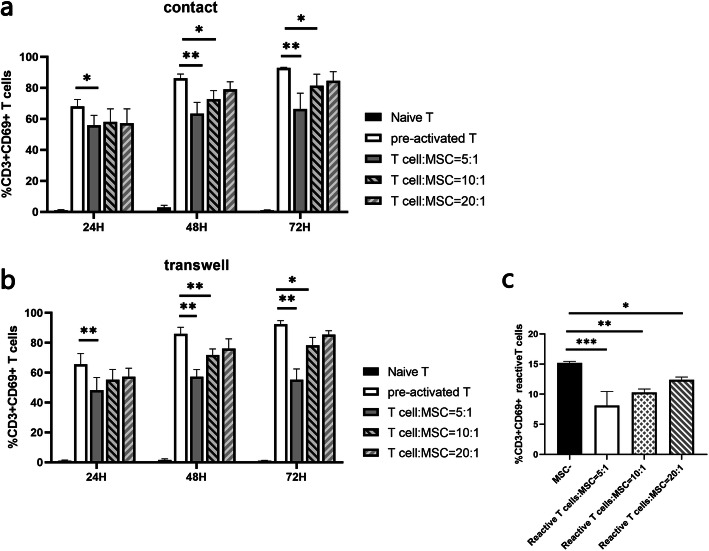
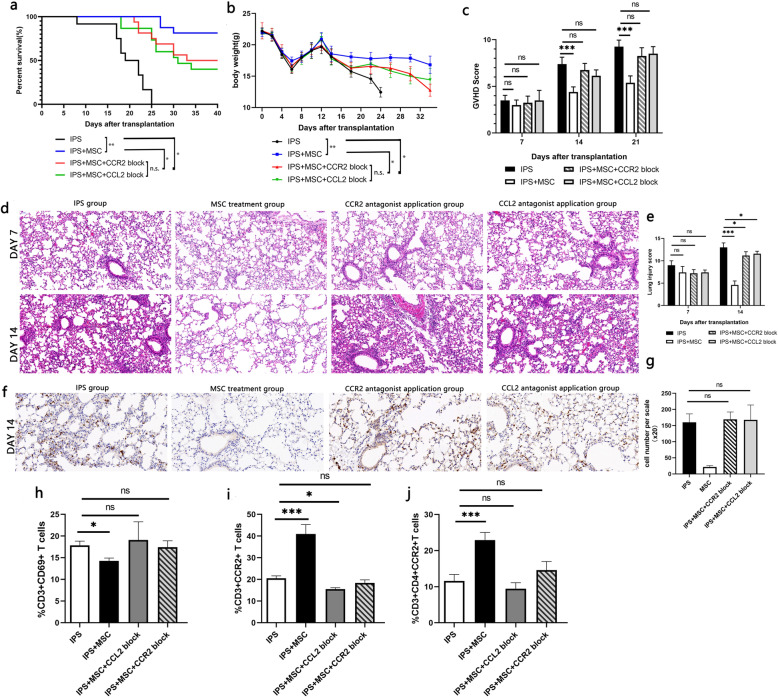
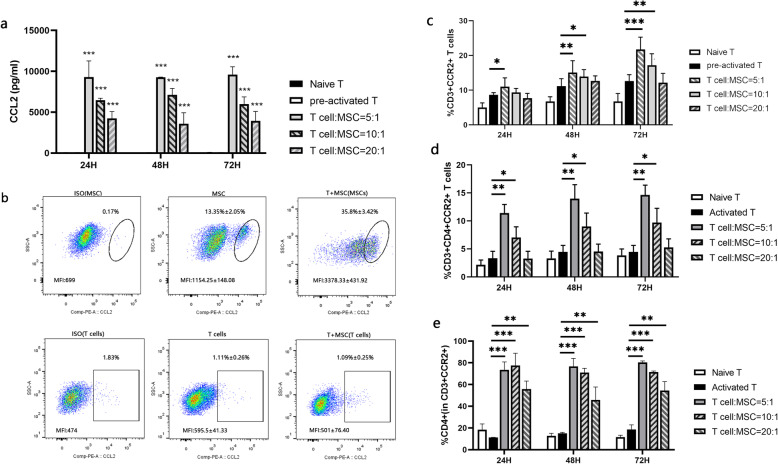
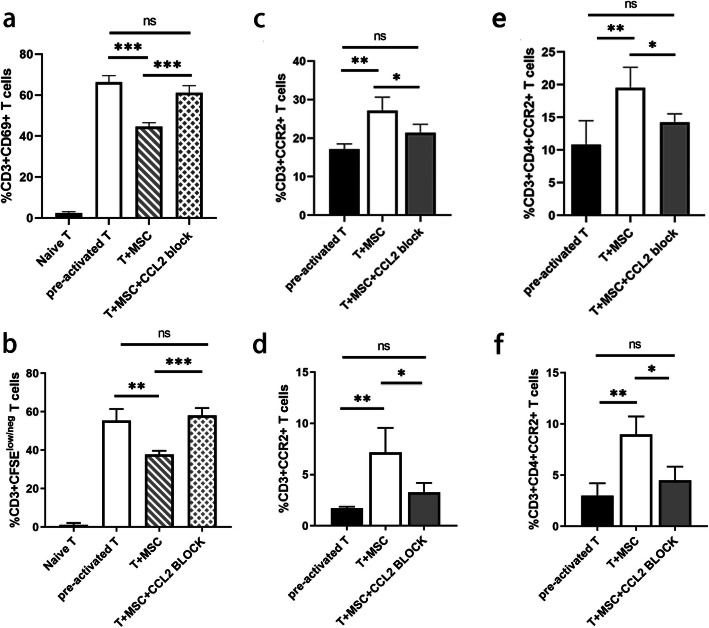
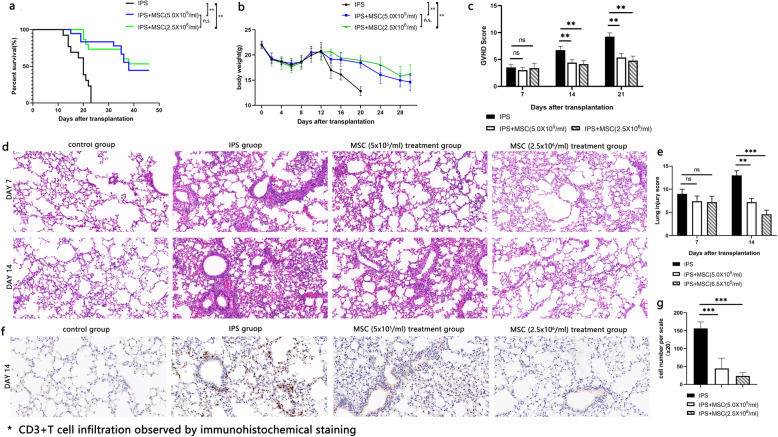
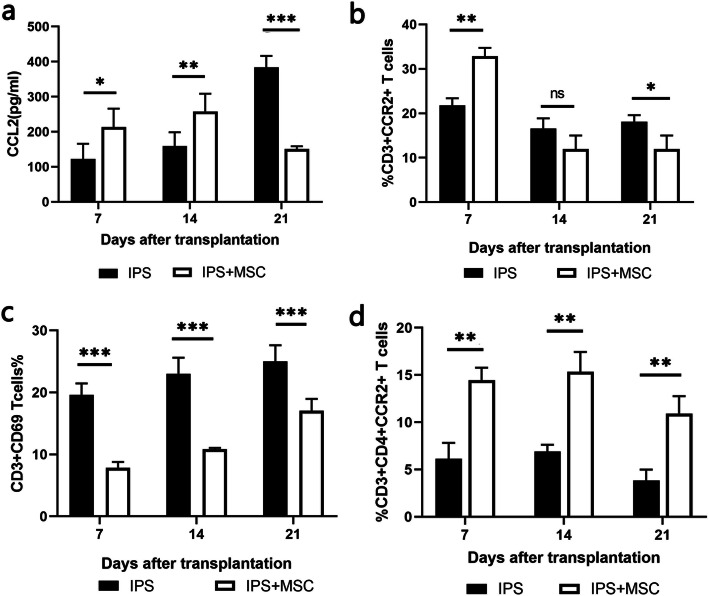
Co-culture of pre-activated T cells with MSCs in vitro modulated the CCR2-CCL2 axis, resulting in quiescent T cells and polarization toward CCR2CD4 T cell subsets. Blocking CCR2-CCL2 interaction abolished the immunoregulatory effect of MSCs, leading to re-activation of T cells and partial reversion of polarizing toward CCR2CD4 T cells. In IPS mouse model, application of MSCs prolonged the survival and reduced the pathological damage and T cell infiltration into lung tissue. Activation of CCR2-CCL2 axis and production of CCR2CD4 T cells were observed in the lungs treated with MSCs. The prophylactic effect of MSCs on IPS was significantly attenuated by the administration of CCR2 or CCL2 antagonist in MSC-treated mice.
We demonstrated an important role of CCR2-CCL2 axis in modulating T cell function which is one of the mechanisms of the prophylactic effect of MSCs on IPS.
特发性肺炎综合征(IPS)是一种非传染性致命并发症,其特征是异体造血干细胞移植(allo-HSCT)后肺部白细胞大量浸润和弥漫性肺损伤。IPS 的常规免疫抑制治疗效果不佳,尚无安全有效的治疗方法正在探索中。我们之前的研究表明间充质干细胞(MSCs)可以缓解 IPS,但机制尚不清楚。
在体外共培养预激活的 T 细胞和 MSCs,观察 CCR2-CCL2 轴的变化。通过建立 IPS 小鼠模型并给予 MSCs 进一步验证体外实验结果。
体外共培养预激活的 T 细胞和 MSCs 可调节 CCR2-CCL2 轴,使 T 细胞静止并向 CCR2CD4 T 细胞亚群极化。阻断 CCR2-CCL2 相互作用会消除 MSCs 的免疫调节作用,导致 T 细胞重新激活,并部分逆转向 CCR2CD4 T 细胞的极化。在 IPS 小鼠模型中,给予 MSCs 可延长生存时间,减轻肺部病理损伤和 T 细胞浸润。在给予 MSCs 的肺部组织中观察到 CCR2-CCL2 轴的激活和 CCR2CD4 T 细胞的产生。在 MSC 治疗的小鼠中给予 CCR2 或 CCL2 拮抗剂可显著减弱 MSCs 对 IPS 的预防作用。
我们证明了 CCR2-CCL2 轴在调节 T 细胞功能中的重要作用,这是 MSCs 对 IPS 预防作用的机制之一。