Faculty of Health Sciences, University of Maribor, Žitna ulica 15, 2000, Maribor, Slovenia.
Department of Gastroenterology, Hepatology and Nutrition, University Children's Hospital, University Medical Centre Ljubljana, Bohoričeva 20, 1000, Ljubljana, Slovenia.
J Health Popul Nutr. 2021 Jul 2;40(1):29. doi: 10.1186/s41043-021-00250-1.
Vending machines represent one way of offering food, but they are overlooked in the efforts to improve people's eating habits. The aim of our study was to analyse the variety and nutritional values of beverages offered in vending machines in social and health care institution in Slovenia.
The available beverages were quantitatively assessed using traffic light profiling and the model for nutrient profiling used by Food Standards Australia New Zealand. Vending machines in 188 institutions were surveyed, resulting in 3046 different beverages consisting of 162 unique product labels.
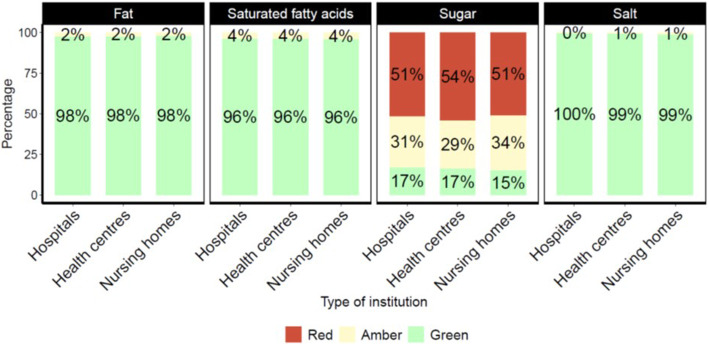
Between 51 and 54% of beverages were categorised as unhealthy with regard to sugar content. Water accounted for only 13.7% of all beverages in vending machines. About 82% of beverages in vending machines were devoted to sugar-sweetened beverages, the majority (58.9%) presented in 500-ml bottles. The average sugar content and average calories in beverages sold in vending machines are slightly lower than in beverages sold in food stores.
We suggest that regulatory guidelines should be included in the tender conditions for vending machines in health and social care institutions, to ensure healthy food and beverage choices.
自动售货机是提供食物的一种方式,但在改善人们饮食习惯的努力中往往被忽视。我们的研究目的是分析斯洛文尼亚社会和医疗机构自动售货机中提供的饮料种类和营养价值。
使用红绿灯标识法和澳大利亚新西兰食品标准局使用的营养成分标识模型对现有的饮料进行定量评估。调查了 188 个机构中的自动售货机,共涉及 3046 种不同的饮料,包含 162 个不同的产品标签。
约 51%至 54%的饮料含糖量不健康。自动售货机中仅 13.7%的饮料为水。约 82%的自动售货机饮料为含糖饮料,其中大多数(58.9%)为 500 毫升瓶装。自动售货机销售的饮料的平均糖含量和平均卡路里略低于食品店销售的饮料。
我们建议在卫生和社会保健机构的自动售货机招标条件中纳入监管指南,以确保提供健康的食品和饮料选择。