Medizinische Klinik und Poliklinik 1, Universitätsklinikum Carl Gustav Carus an der TU Dresden, Dresden, Germany.
AgenDix, Angewandte molekulare Diagnostik mbH, Dresden, Germany.
Leukemia. 2021 Oct;35(10):2752-2758. doi: 10.1038/s41375-021-01337-8. Epub 2021 Jul 2.
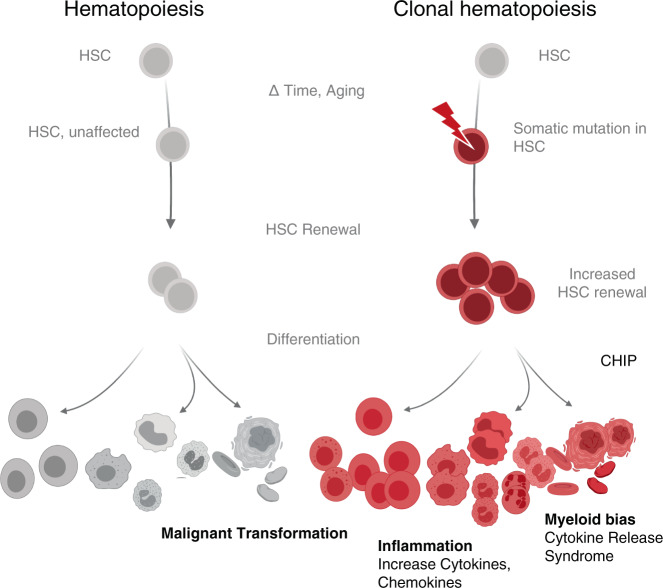
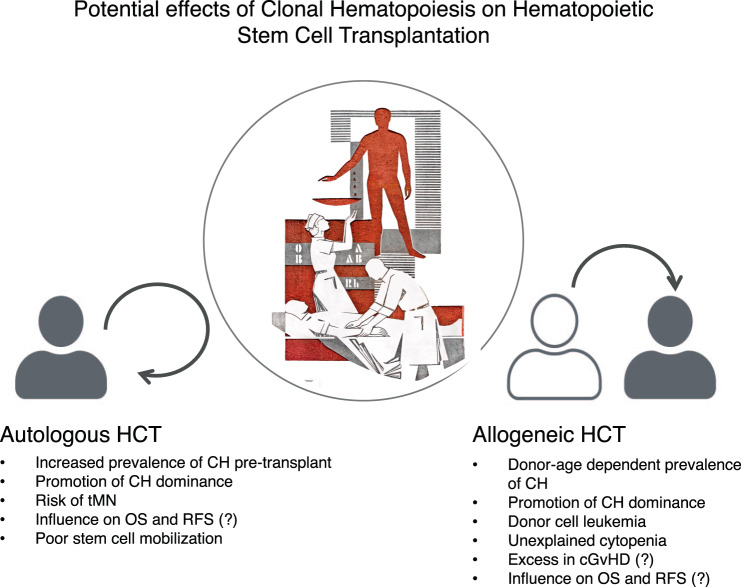
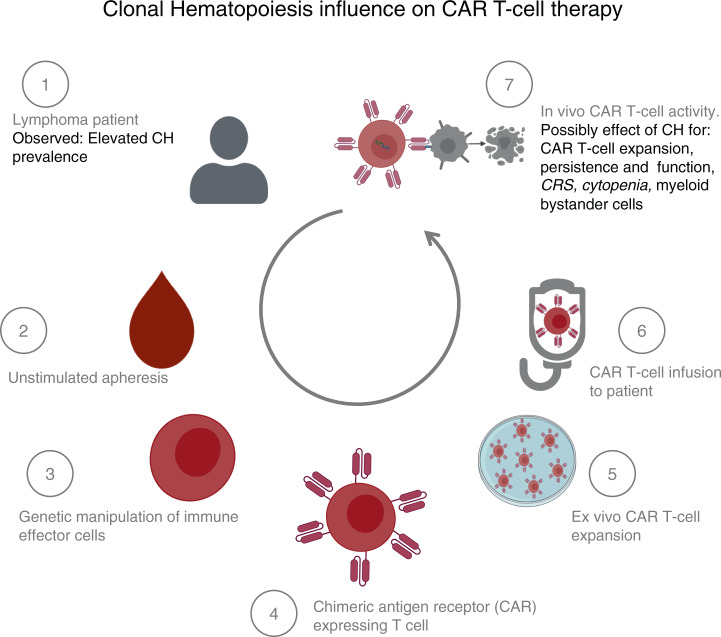
The accumulation of somatic mutations in hematopoietic stem cells during aging, leading to clonal expansion, is linked to a higher risk of cardiovascular mortality and hematologic malignancies. Clinically, clonal hematopoiesis is associated with a pro-inflammatory phenotype of hematopoietic cells and their progeny, inflammatory conditions and a poor outcome for patients with hematologic neoplasms and solid tumors. Here, we review the relevance and complications of clonal hematopoiesis for the treatment of hematologic malignancies with cell therapeutic approaches. In autologous and allogeneic hematopoietic stem cell transplantation native hematopoietic and immune effector cells of clonal origin are transferred, which may affect outcome of the procedure. In chimeric antigen receptor modified T-cell therapy, the effectiveness may be altered by preexisting somatic mutations in genetically modified effector cells or by unmodified bystander cells harboring clonal hematopoiesis. Registry studies and carefully designed prospective trials will be required to assess the relative roles of donor- and recipient-derived individual clonal events for autologous and allogeneic cell therapies and to incorporate novel insights into therapeutic strategies.
造血干细胞在衰老过程中积累体细胞突变,导致克隆性扩张,与心血管死亡率和血液恶性肿瘤风险增加相关。临床上,克隆性造血与造血细胞及其后代的促炎表型、炎症状态以及血液恶性肿瘤和实体瘤患者的不良预后相关。在这里,我们回顾了克隆性造血与细胞治疗方法治疗血液恶性肿瘤的相关性和并发症。在自体和同种异体造血干细胞移植中,会转移来源于克隆的造血和免疫效应细胞,这可能会影响该过程的结果。嵌合抗原受体修饰 T 细胞治疗中,由于预先存在的体细胞突变或未被修饰的带有克隆性造血的旁观者细胞,可能会改变遗传修饰效应细胞的有效性。需要进行登记研究和精心设计的前瞻性试验,以评估供体和受体内个体克隆事件在自体和同种异体细胞治疗中的相对作用,并将新的见解纳入治疗策略中。