Pediatric Neurosurgery, Charité Universitätsmedizin Berlin, Augustenburger Platz 1, 13353, Berlin, Germany.
Department of Neonatology, Charité Universitätsmedizin Berlin, Berlin, Germany.
Childs Nerv Syst. 2021 Nov;37(11):3541-3548. doi: 10.1007/s00381-021-05272-y. Epub 2021 Jul 3.
Neuroendoscopic procedures for treatment of term and preterm newborn infants, such as endoscopic lavage for posthemorrhagic hydrocephalus, are gaining popularity despite sparse data. This single-institution report compiles all neuroendoscopic surgical procedures performed in neonates during a 10-year period.
Charts and electronic records were reviewed of all consecutive newborns who underwent a neuroendoscopic procedure before reaching a postmenstrual age of 44 weeks between 09/2010 and 09/2020. Available documentation was reviewed regarding the performed neuroendoscopic procedure, course of disease, complications, and all re-operations throughout the first year of life.
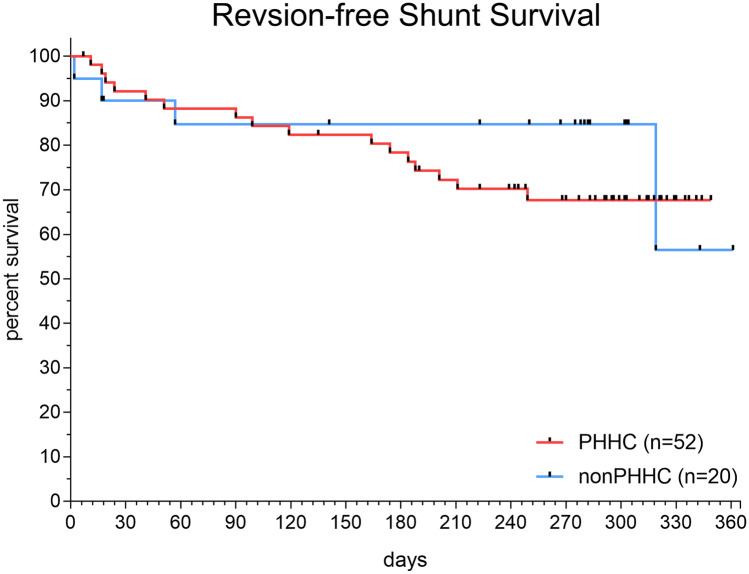
During the 10-year study period, 116 infants (median gestational age at birth: 29 /7 weeks) underwent a total of 153 neuroendoscopic procedures (median postmenstrual age at surgery: 35 /7 weeks). The most common indication at the time of the neuroendoscopic procedures (n = 153) was intraventricular hemorrhage (IVH, n = 119), intraventricular infection (n = 15), congenital malformation (n = 8), isolated 4th ventricle (n = 7), multiloculated hydrocephalus (n = 3), and tumor (n = 1). Thirty-eight of 116 children (32.8%) underwent 43 operative revisions after 153 neuroendoscopic procedure (28.1%). Observed complications requiring surgical revision were secondary infection (n = 11), CSF fistula (n = 9), shunt dysfunction (n = 8), failure of ETV (n = 6), among others. 72 children (62%) of 116 children required permanent CSF diversion via a shunt. The respective shunt rates per diagnosis were 47 of 80 (58.8%) for previously untreated IVH, 11 of 13 (84.6%) for intraventricular infection. Shunt survival rate for the first year of life was 74% for the whole cohort.
The experience with this large cohort of neonates demonstrates the feasibility of neuroendoscopic technique for the treatment of posthemorrhagic or postinfectious hydrocephalus. Rate and type of complications after neuroendoscopic procedures were within the expected range. Assessing the potential long-term benefits of neuroendoscopic techniques has to await results of ongoing studies.
尽管数据稀少,但神经内镜手术治疗足月和早产儿,如内镜冲洗治疗出血后脑积水,越来越受欢迎。本单中心报告汇总了 2010 年 9 月至 2020 年 9 月期间在新生儿中进行的所有神经内镜手术。
回顾了 2010 年 9 月至 2020 年 9 月期间,所有接受神经内镜手术且术后达到 44 周龄的连续新生儿的图表和电子记录。回顾了所有已行神经内镜手术、疾病过程、并发症和出生后第一年所有再手术的可用资料。
在 10 年的研究期间,116 名婴儿(出生时的中位胎龄为 29/7 周)共接受了 153 次神经内镜手术(手术时的中位孕龄为 35/7 周)。神经内镜手术时最常见的指征(n=153)是脑室出血(IVH,n=119)、脑室感染(n=15)、先天性畸形(n=8)、孤立第四脑室(n=7)、多房性脑积水(n=3)和肿瘤(n=1)。116 例患儿中有 38 例(32.8%)在 153 次神经内镜手术后行 43 次手术修正(28.1%)。需要手术修正的观察到的并发症包括继发感染(n=11)、CSF 瘘(n=9)、分流管功能障碍(n=8)、ETV 失败(n=6)等。116 例患儿中有 72 例(62%)需要通过分流管进行永久性 CSF 引流。根据不同的诊断,相应的分流率分别为未治疗 IVH 80 例中的 47 例(58.8%)和脑室感染 13 例中的 11 例(84.6%)。整个队列的第一年分流存活率为 74%。
对大量新生儿的经验表明,神经内镜技术治疗出血性或感染性脑积水是可行的。神经内镜手术后的并发症发生率和类型在预期范围内。评估神经内镜技术的潜在长期益处还需要等待正在进行的研究结果。