Department of Sociology, The Ohio State University, 236 Townshend Hall, 1885 Neil Avenue Mall, Columbus, OH, 43201, USA.
Department of Sociology, Purdue University, 700 W. State St, West Lafayette, IN, 47907, USA.
Drug Alcohol Depend. 2021 Sep 1;226:108843. doi: 10.1016/j.drugalcdep.2021.108843. Epub 2021 Jun 24.
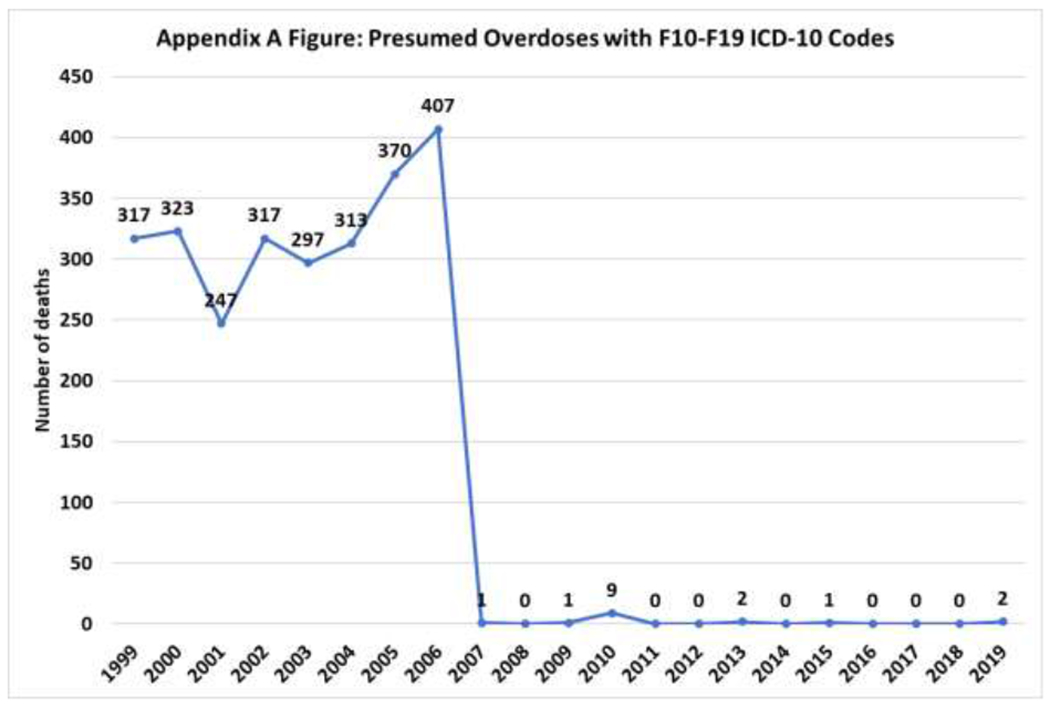
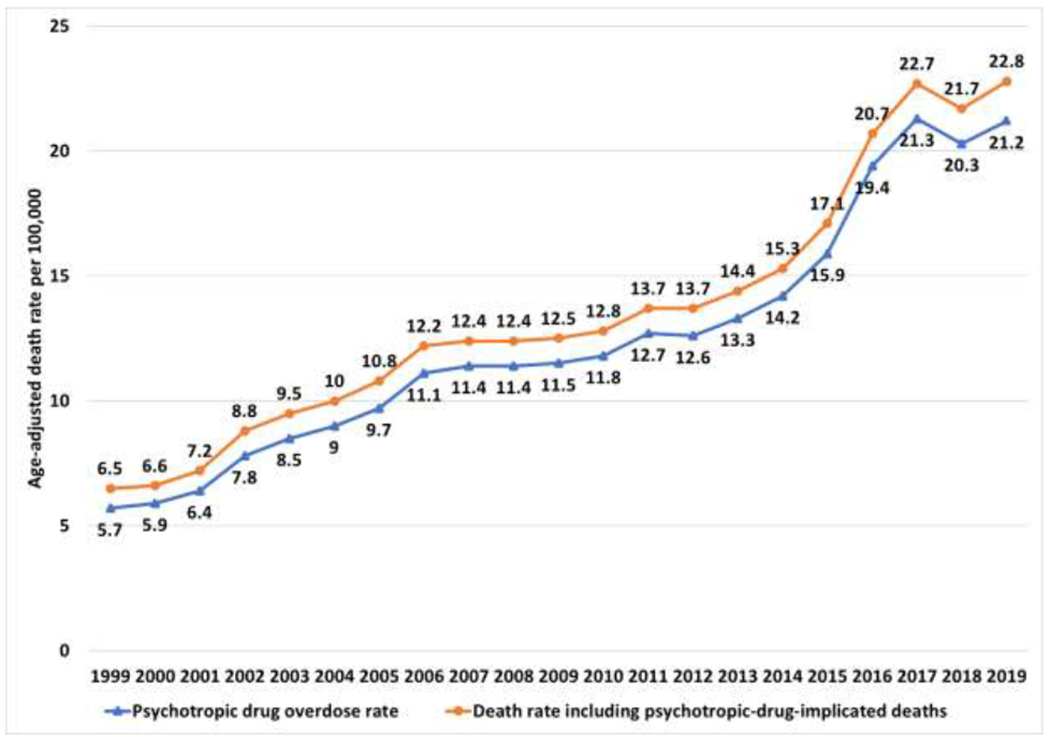
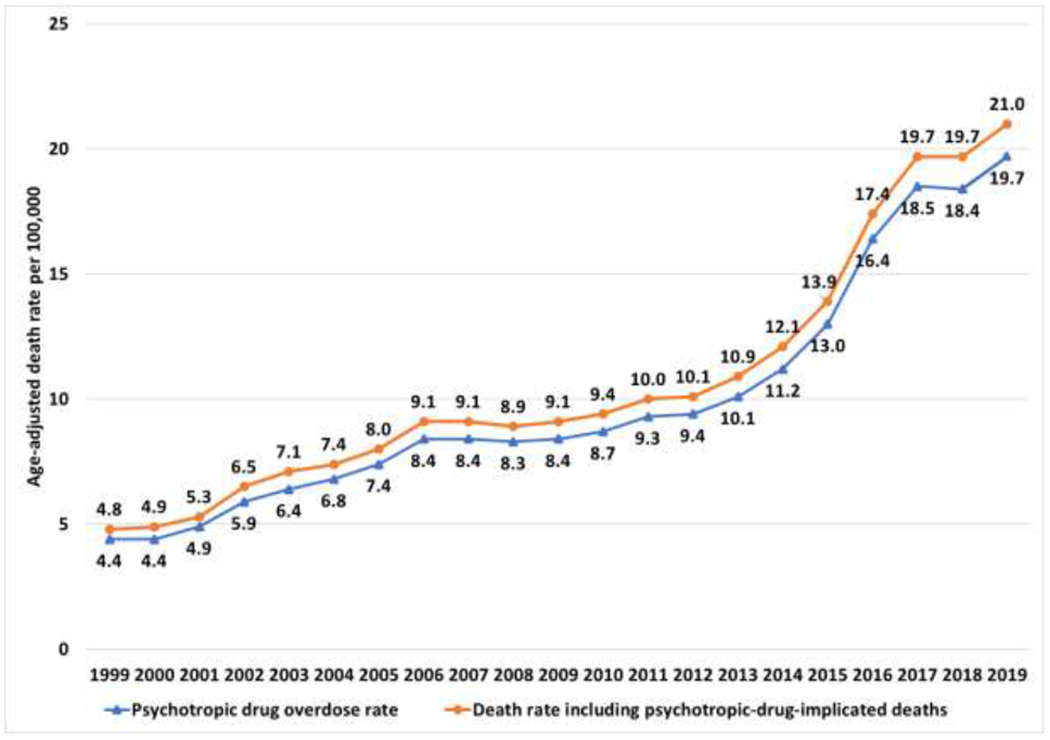
Drug overdoses have contributed to considerable years of life lost. However, focusing solely on drug overdoses, whereby drug poisoning defines the underlying cause of death, obscures the wider burden of the drug mortality crisis. We aim to describe 21 years of trends in "psychotropic-drug-implicated deaths," those where psychotropic drugs are a contributing (but not the underlying) cause of death.
We analyze deaths extracted from CDC WONDER from 1999-2019 to generate annual counts and rates for psychotropic-drug-implicated deaths in the United States, including by underlying cause of death and drug implicated.
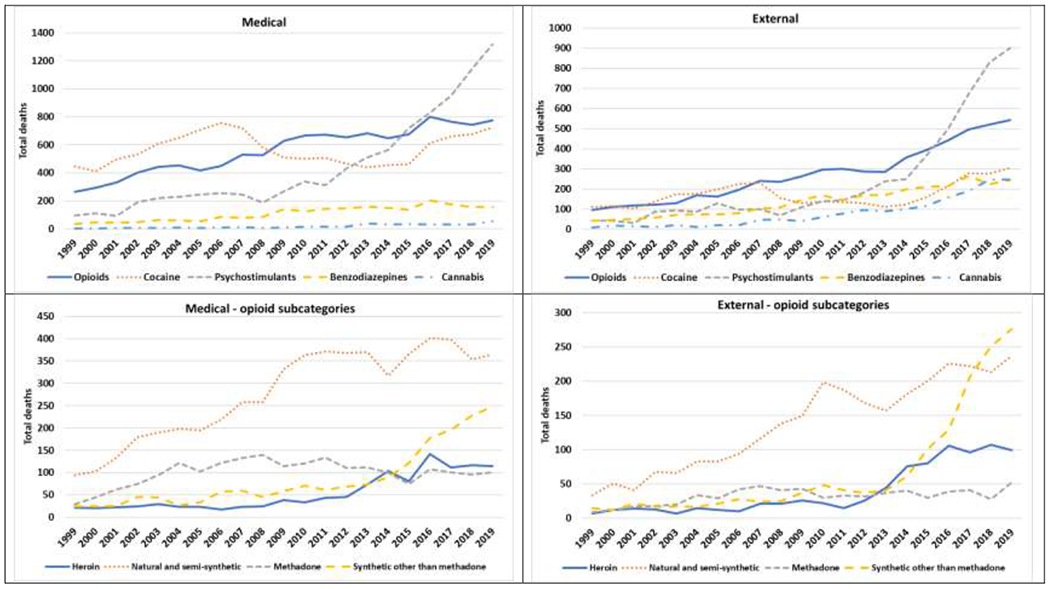
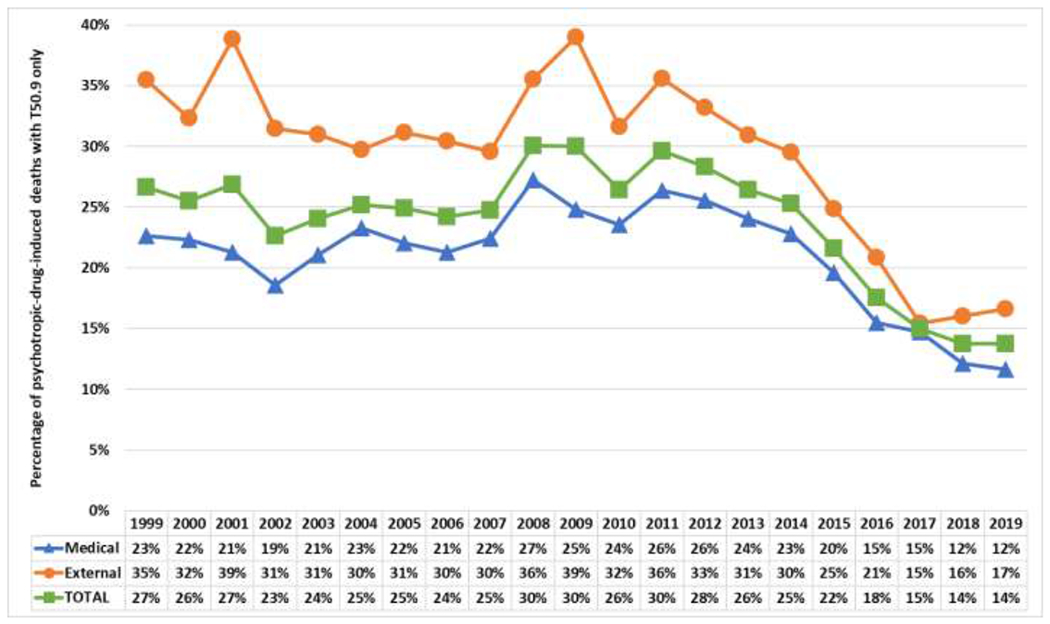
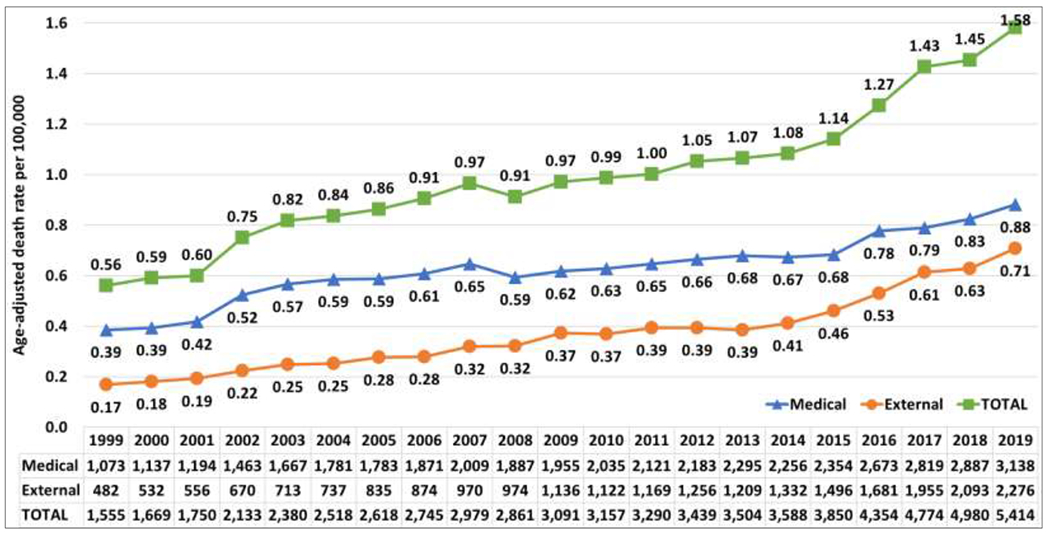
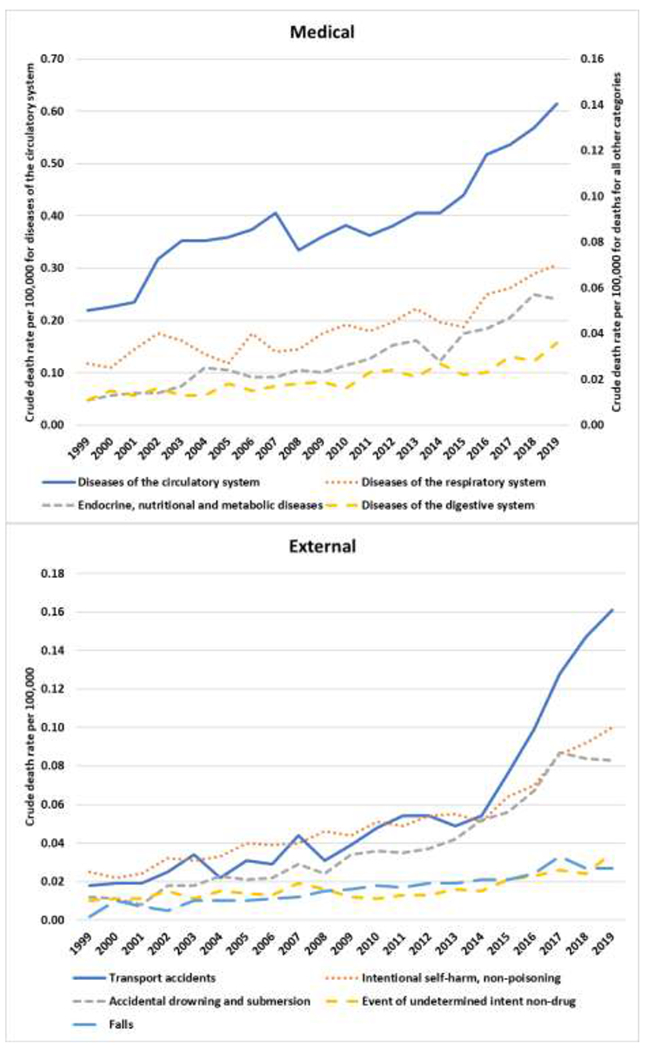
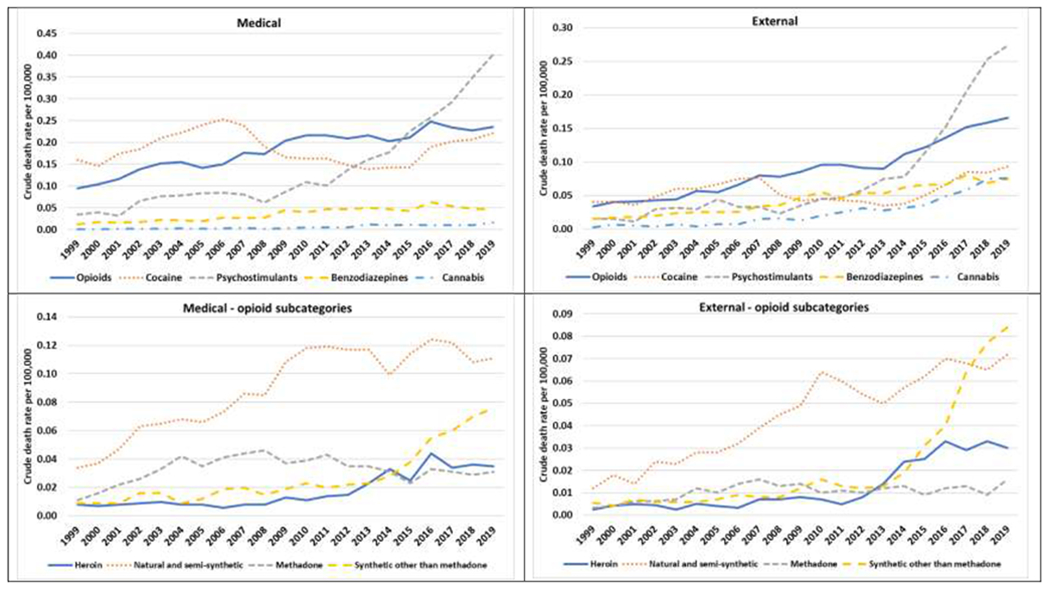
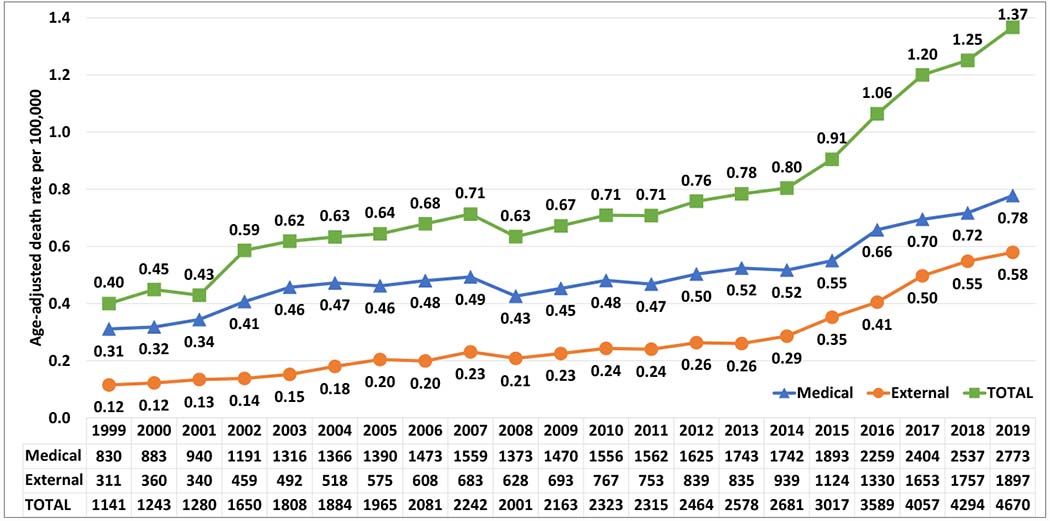
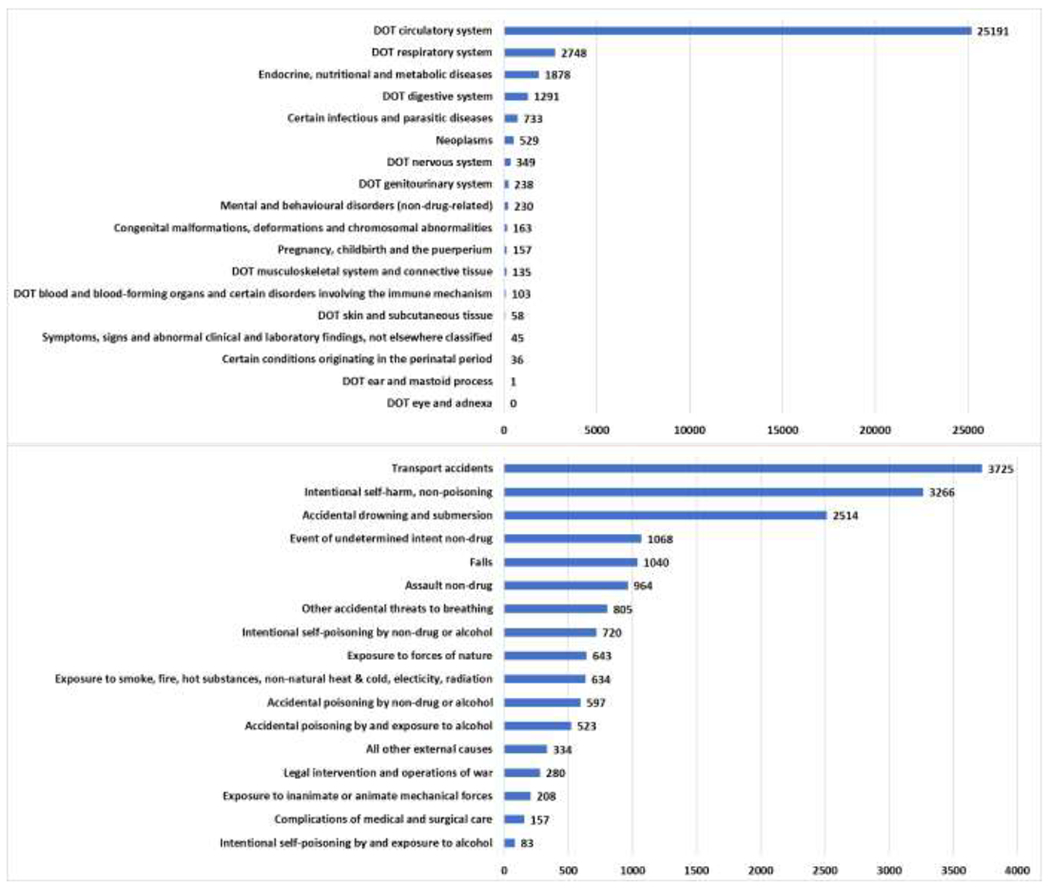
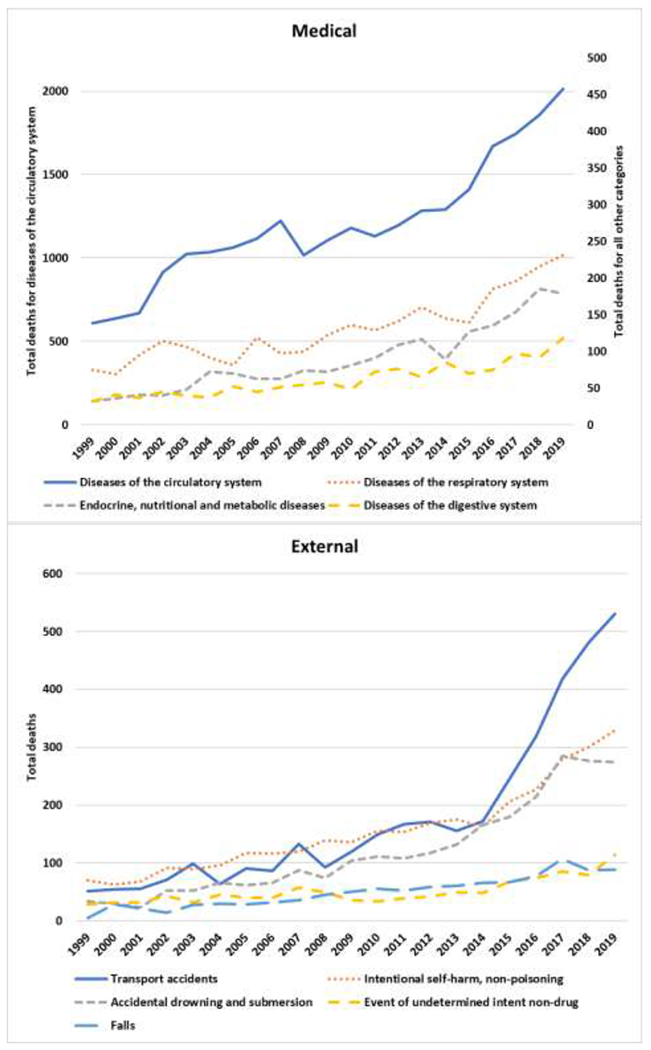
Over 21 years, 51,446 psychotropic-drug-implicated deaths occurred (33,885 medical; 17,561 external). Both medical and external psychotropic-drug-implicated deaths rose dramatically, increasing 2.5 and 5.0 times, respectively. Diseases of the circulatory system predominated underlying causes of medical deaths (74 %). Non-drug suicide, transport accidents, and drownings constitute 54 % of external underlying causes. Among the various underlying causes of death, psychotropic-drug-implicated deaths represent a considerable proportion, especially among external causes, with the proportion greatly increasing over the observation period. The drug implicated evolves from cocaine to opioids to psychostimulants, with the latter rising considerably.
The drug mortality crisis extends beyond overdose and may temper improvements observed within other causes of mortality, such as cardiovascular disease, transport accidents, and drownings. As with overdoses, psychotropic-drug-implicated deaths have risen dramatically during the 21 century. They include striking increases for drugs, such as psychostimulants, receiving less attention with overdoses. Research is needed to address prevention, intervention, and policy for psychotropic-drug-implicated deaths beyond overdose mortality.
药物过量已导致相当多年的生命损失。然而,仅仅关注药物过量,即药物中毒是导致死亡的根本原因,这掩盖了药物死亡率危机的更广泛负担。我们旨在描述 21 年来“与精神药物相关的死亡”趋势,这些死亡是精神药物是导致死亡的一个促成因素(但不是根本原因)。
我们分析了从 1999 年至 2019 年从 CDC WONDER 中提取的死亡数据,以生成美国与精神药物相关的死亡的年度计数和比率,包括根本死因和药物的参与情况。
在 21 年期间,发生了 51446 例与精神药物相关的死亡(33885 例医疗;17561 例外部)。医疗和外部与精神药物相关的死亡都急剧增加,分别增加了 2.5 倍和 5.0 倍。循环系统疾病是医疗死亡的主要根本原因(74%)。非药物自杀、交通意外和溺水占外部根本原因的 54%。在各种根本死因中,与精神药物相关的死亡占相当大的比例,特别是在外部原因中,在观察期间,这一比例大大增加。涉及的药物从可卡因演变为阿片类药物再到精神兴奋剂,后者的比例大幅上升。
药物死亡率危机超出了过量用药的范围,可能会削弱心血管疾病、交通意外和溺水等其他死因死亡率观察到的改善。与过量用药一样,与精神药物相关的死亡在 21 世纪急剧增加。其中包括可卡因、阿片类药物和精神兴奋剂等药物的惊人增长,而这些药物在过量用药中受到的关注较少。需要研究如何解决除过量用药死亡率之外的与精神药物相关的死亡的预防、干预和政策问题。