Institute for Cardiovascular Physiology, Goethe-University, Frankfurt Am Main, Germany; German Center for Cardiovascular Research (DZHK), Partner Site Rhein Main, Frankfurt Am Main, Germany.
German Center for Cardiovascular Research (DZHK), Partner Site Rhein Main, Frankfurt Am Main, Germany; Institute of Cardiovascular Regeneration, Centre for Molecular Medicine, Goethe University Frankfurt, Germany.
Redox Biol. 2021 Sep;45:102050. doi: 10.1016/j.redox.2021.102050. Epub 2021 Jun 18.
The NADPH oxidase Nox4 is an important source of HO. Nox4-derived HO limits vascular inflammation and promotes smooth muscle differentiation. On this basis, the role of Nox4 for restenosis development was determined in the mouse carotid artery injury model.
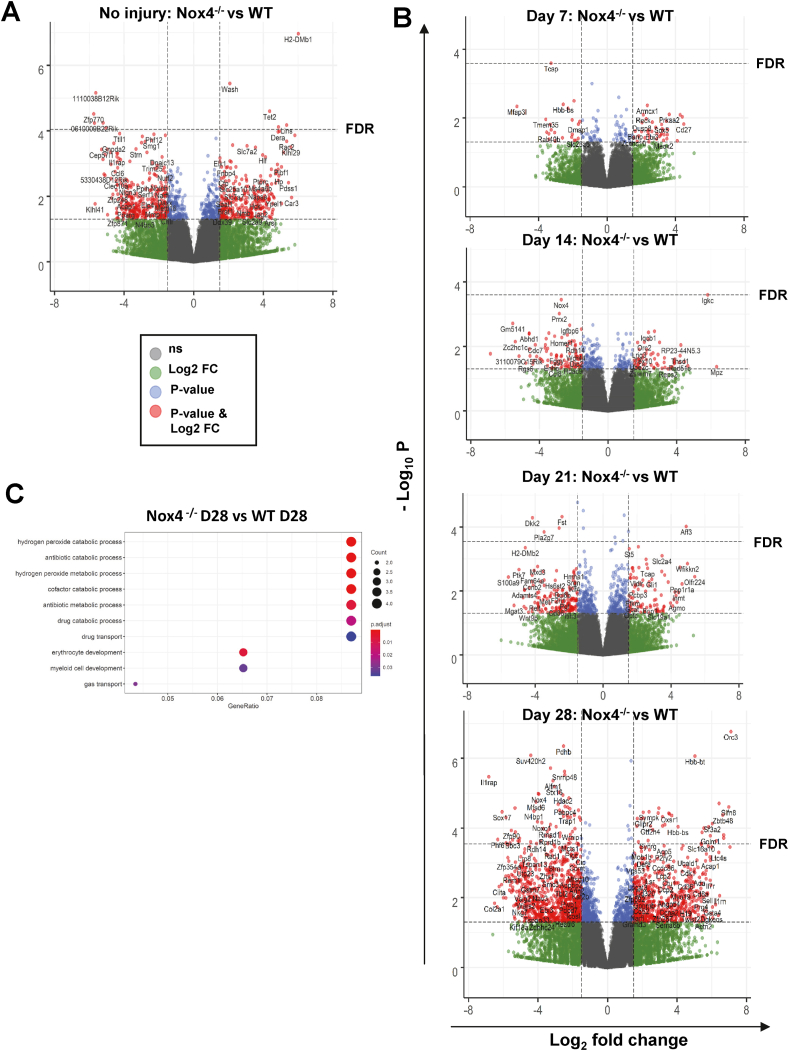
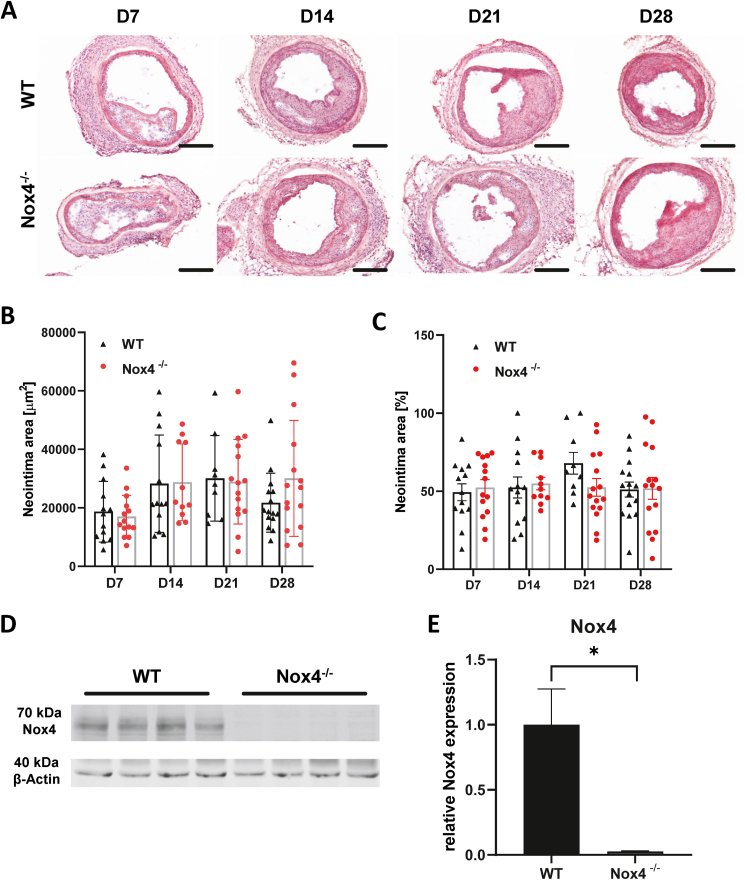
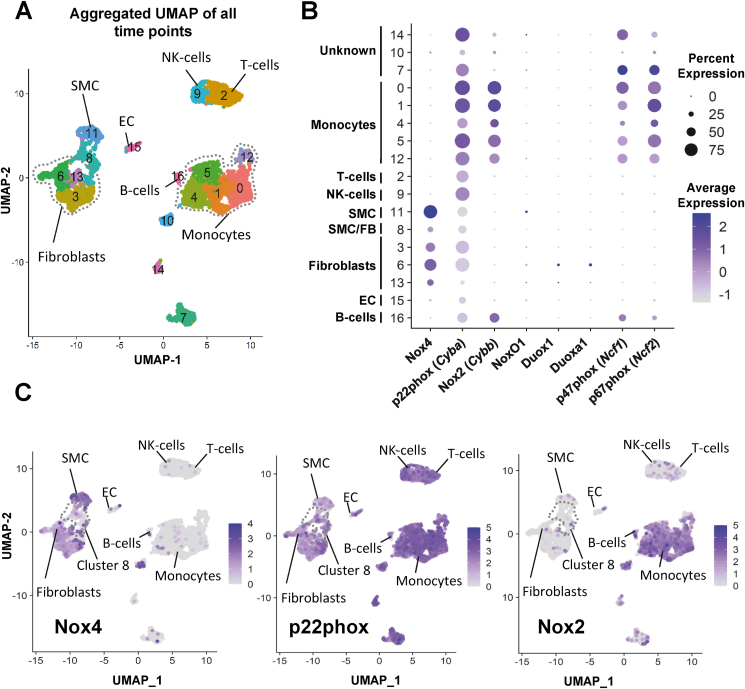
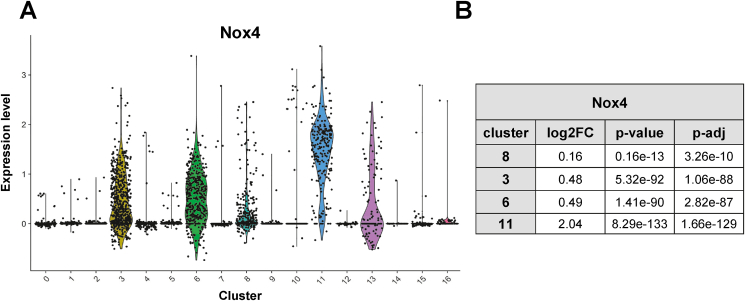
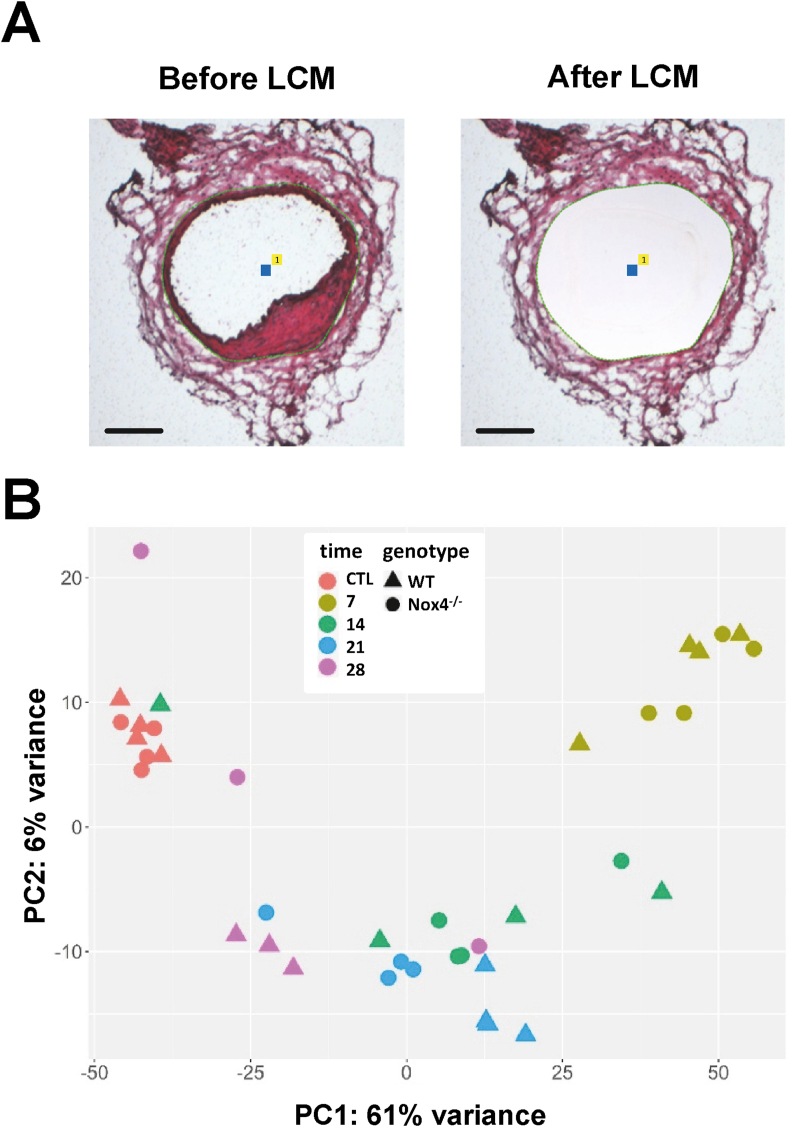
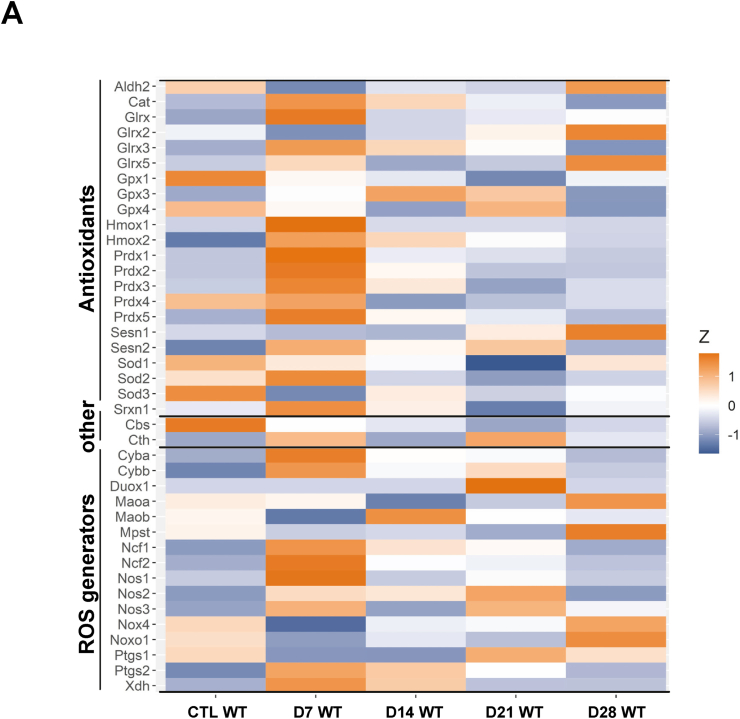
Genetic deletion of Nox4 by a tamoxifen-activated Cre-Lox-system did not impact on neointima formation in the carotid artery wire injury model. To understand this unexpected finding, time-resolved single-cell RNA-sequencing (scRNAseq) from injured carotid arteries of control mice and massive-analysis-of-cDNA-ends (MACE)-RNAseq from the neointima harvested by laser capture microdissection of control and Nox4 knockout mice was performed. This revealed that resting smooth muscle cells (SMCs) and fibroblasts exhibit high Nox4 expression, but that the proliferating de-differentiated SMCs, which give rise to the neointima, have low Nox4 expression. In line with this, the first weeks after injury, gene expression was unchanged between the carotid artery neointimas of control and Nox4 knockout mice.
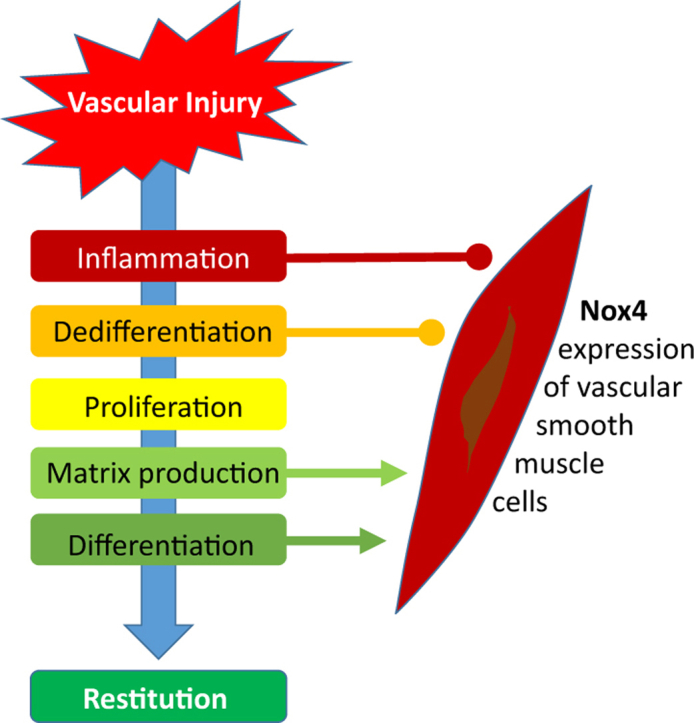
Upon vascular injury, Nox4 expression is transiently lost in the cells which comprise the neointima. NADPH oxidase 4 therefore does not interfere with restenosis development after wire-induced vascular injury.
NADPH 氧化酶 Nox4 是 HO 的重要来源。Nox4 衍生的 HO 可限制血管炎症并促进平滑肌分化。在此基础上,在小鼠颈动脉硬化损伤模型中确定了 Nox4 对再狭窄发展的作用。
通过他莫昔芬激活的 Cre-Lox 系统对 Nox4 进行基因缺失不会影响颈动脉丝损伤模型中的新生内膜形成。为了了解这一意外发现,对对照小鼠损伤颈动脉的时间分辨单细胞 RNA 测序(scRNAseq)和通过激光捕获显微切割收集的对照和 Nox4 敲除小鼠新生内膜的大规模 cDNA 末端分析(MACE-RNAseq)进行了大规模分析。这表明静止的平滑肌细胞(SMC)和成纤维细胞表现出高 Nox4 表达,但增殖去分化的 SMC 产生新生内膜,其 Nox4 表达水平较低。与此一致的是,在损伤后的最初几周,对照和 Nox4 敲除小鼠颈动脉新生内膜之间的基因表达没有变化。
血管损伤后,构成新生内膜的细胞中 Nox4 表达短暂丧失。因此,NADPH 氧化酶 4 不会干扰血管损伤后导致的再狭窄发展。