Lester Sophie, Cornacchia Leonardo, Corbier Camille, Hurst Katherine, Ayed Charfedinne, Taylor Moira A, Fisk Ian
Division of Food Nutrition and Dietetics, School of Biosciences, University of Nottingham, Sutton Bonington Campus, Loughborough LE12 5RD, United Kingdom.
Danone Nutricia Research, Uppsalalaan 12, 3584 CT Utrecht, the Netherlands.
Food Qual Prefer. 2021 Jul;91:104212. doi: 10.1016/j.foodqual.2021.104212.
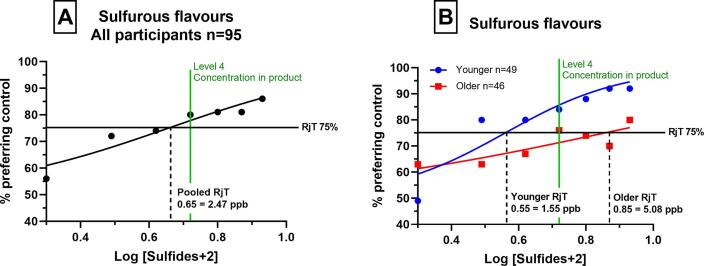
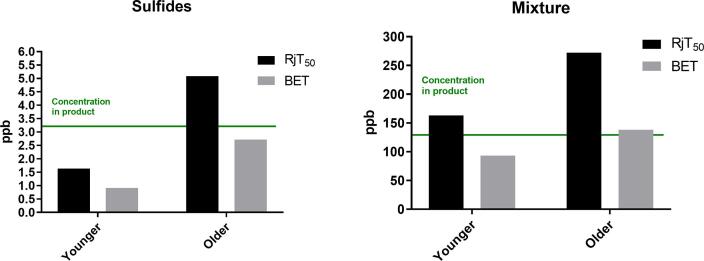
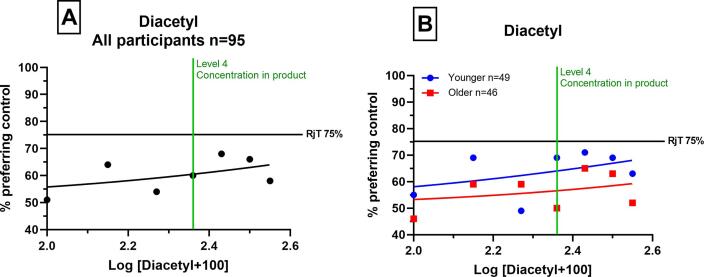
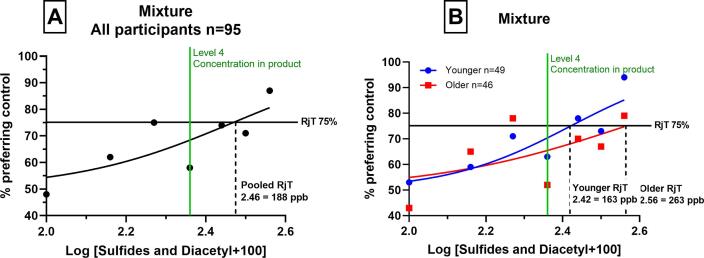
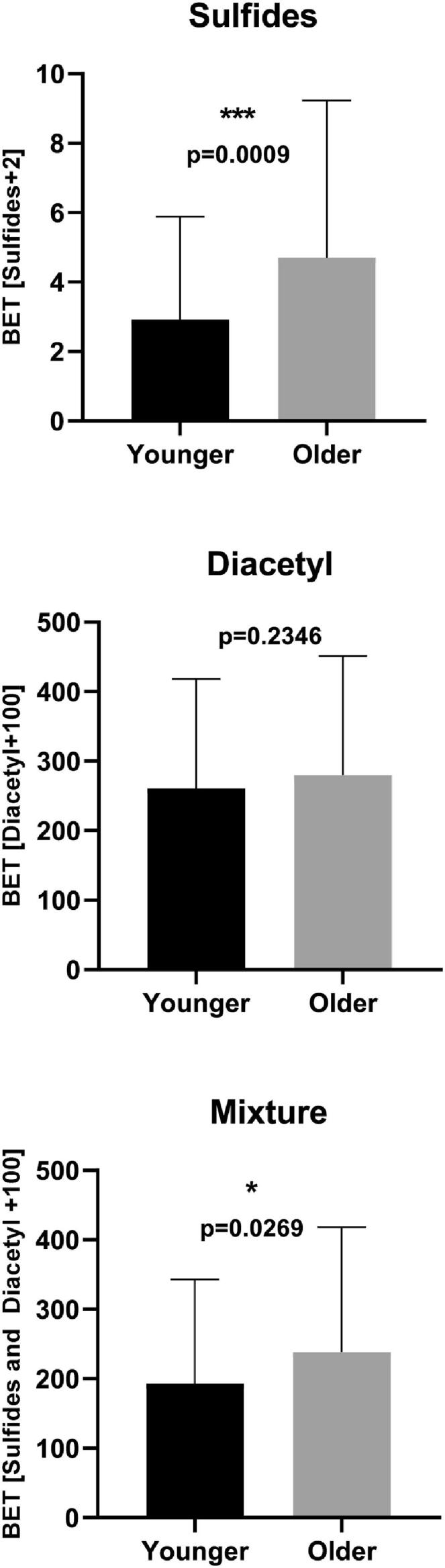
Many older adults fail to meet their daily protein requirements, potentially due to social, physical and medical factors, including sensory and appetite changes. Additionally, our previous research has identified potential sulfurous off-flavours, originating from heat-treatment of protein ingredients, which could play a role in consumer acceptance. This study aims to determine the hedonic impact of these potential off-flavours when added to a dairy beverage, identify the specific off-flavour concentrations which cause rejection by consumers, and lastly investigate difference in acceptance between older and younger consumers. A rejection threshold (RjT) protocol was used, in combination with Best Estimate Thresholds (BET), whereby sulfurous flavours (dimethyl sulfide, dimethyl disulfide and dimethyl trisulfide), and diacetyl were added to create a range of concentrations. 95 participants (younger n = 49, 18-38 years; older n = 46, 60-79 years) tasted 7 pairs of samples (one blank and one with ascending off-flavour concentration) and selected their preferred samples. Sulfurous flavours negatively impacted consumer acceptance, however, the extent to which they impart a negative effect differs between age groups. Younger adults rejected samples containing low concentrations of sulfurous off-flavours (1.55 ppb), however, older adults rejected samples with concentrations over 3 times higher (5.08 ppb). When combined with sulfurous flavours, diacetyl increased the rejection threshold for both groups. In conclusion, these observations imply that a greater quantity of off-flavour may be present before acceptance is reduced in the older consumer group. Moreover, diacetyl demonstrates partial masking abilities of sulfurous off-flavours, and BET gave a more conservative estimate of acceptability. This knowledge will help guide sensory innovation of high-protein beverages for older consumers to support product acceptance and optimal intake.
许多老年人无法满足其每日蛋白质需求,这可能是由于社会、身体和医学因素,包括感官和食欲变化。此外,我们之前的研究已经确定了潜在的含硫异味,这些异味源自蛋白质成分的热处理,可能会影响消费者的接受度。本研究旨在确定这些潜在异味添加到乳制饮料中时的享乐影响,确定导致消费者拒绝的特定异味浓度,最后调查老年消费者和年轻消费者在接受度上的差异。采用了拒绝阈值(RjT)方案,并结合最佳估计阈值(BET),即添加含硫异味(二甲基硫醚、二甲基二硫醚和二甲基三硫醚)和双乙酰来创建一系列浓度。95名参与者(年轻组n = 49,18 - 38岁;老年组n = 46,60 - 79岁)品尝了7对样品(一对空白样品和一对异味浓度递增的样品),并选择他们更喜欢的样品。含硫异味对消费者接受度有负面影响,然而,它们产生负面影响的程度在不同年龄组之间有所不同。年轻成年人会拒绝含有低浓度含硫异味(1.55 ppb)的样品,然而,老年人会拒绝浓度高出3倍多(5.08 ppb)的样品。当与含硫异味混合时,双乙酰提高了两组的拒绝阈值。总之,这些观察结果表明,在老年消费者群体中,可能在接受度降低之前存在更多的异味。此外,双乙酰表现出对含硫异味的部分掩盖能力,并且BET对可接受性给出了更保守的估计。这些知识将有助于指导针对老年消费者的高蛋白饮料的感官创新,以支持产品接受度和最佳摄入量。