Zhao Hui, Liu Xiaoxian, Qi Chunhui
Faculty of Education, Henan Normal University, Xinxiang, China.
Front Psychol. 2021 Jun 17;12:697822. doi: 10.3389/fpsyg.2021.697822. eCollection 2021.
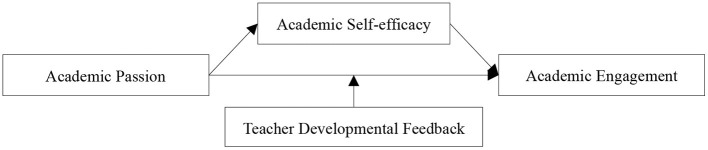
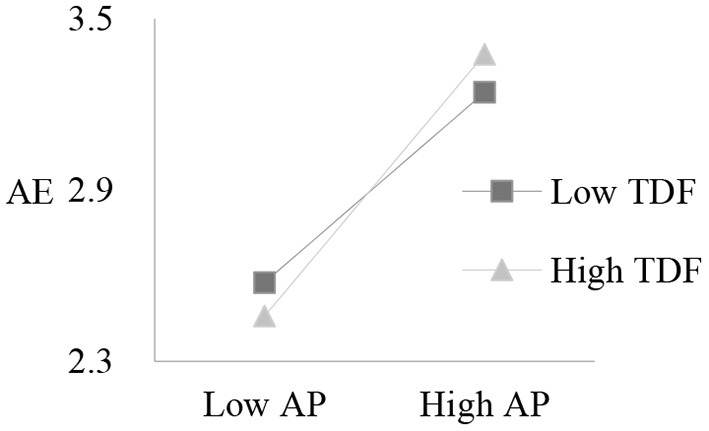
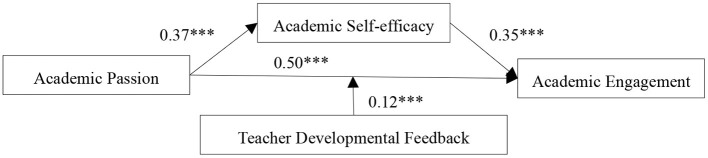
Although research exists on the relationship between passion and engagement among employees, the mechanisms of academic passion on academic engagement among students needs to be elucidated. Guided by the broaden-and-build and situated cognition theories, we explored the positive effect of academic passion on academic engagement, the mediating effect of academic self-efficacy, and the role of teacher developmental feedback as a moderator in the relationship between academic passion and academic engagement. Based on a sample of 1,029 college students from universities in the Henan Province of China, the results showed that academic passion was positively related to academic engagement, academic self-efficacy partially mediated the relationship between academic passion and academic engagement, and teacher developmental feedback effectively moderated the relationship between academic passion and academic engagement. These findings explained the mechanism underlying the relationship between academic passion and academic engagement. Moreover, the findings highlighted important factors that promote college students' academic engagement.
虽然已有关于员工热情与敬业度之间关系的研究,但学术热情对学生学业投入的影响机制仍有待阐明。以拓展与建构理论和情境认知理论为指导,我们探讨了学术热情对学业投入的积极影响、学术自我效能感的中介作用,以及教师发展性反馈在学术热情与学业投入关系中作为调节变量的作用。基于对中国河南省高校1029名大学生的抽样调查,结果表明,学术热情与学业投入呈正相关,学术自我效能感在学术热情与学业投入之间起部分中介作用,教师发展性反馈有效地调节了学术热情与学业投入之间的关系。这些发现解释了学术热情与学业投入之间关系的潜在机制。此外,这些发现突出了促进大学生学业投入的重要因素。