Wang Junwen, Zhang Jing, Li Jing, Dawuda Mohammed Mujitaba, Ali Basharat, Wu Yue, Yu Jihua, Tang Zhongqi, Lyu Jian, Xiao Xuemei, Hu Linli, Xie Jianming
College of Horticulture, Gansu Agricultural University, Lanzhou, China.
Department of Horticulture, FoA, University for Development Studies, Tamale, Ghana.
Front Plant Sci. 2021 Jun 9;12:683868. doi: 10.3389/fpls.2021.683868. eCollection 2021.
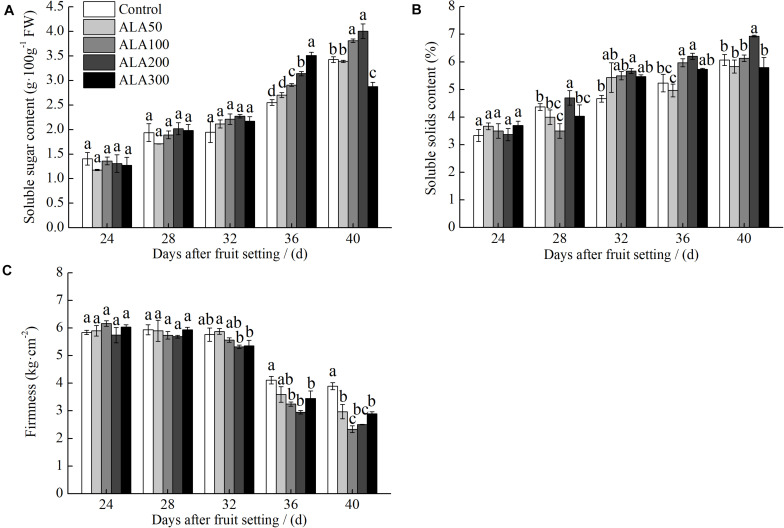
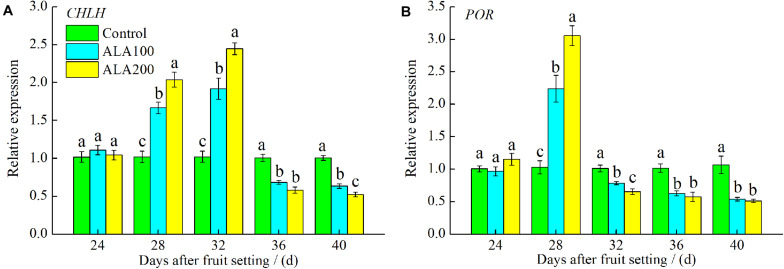
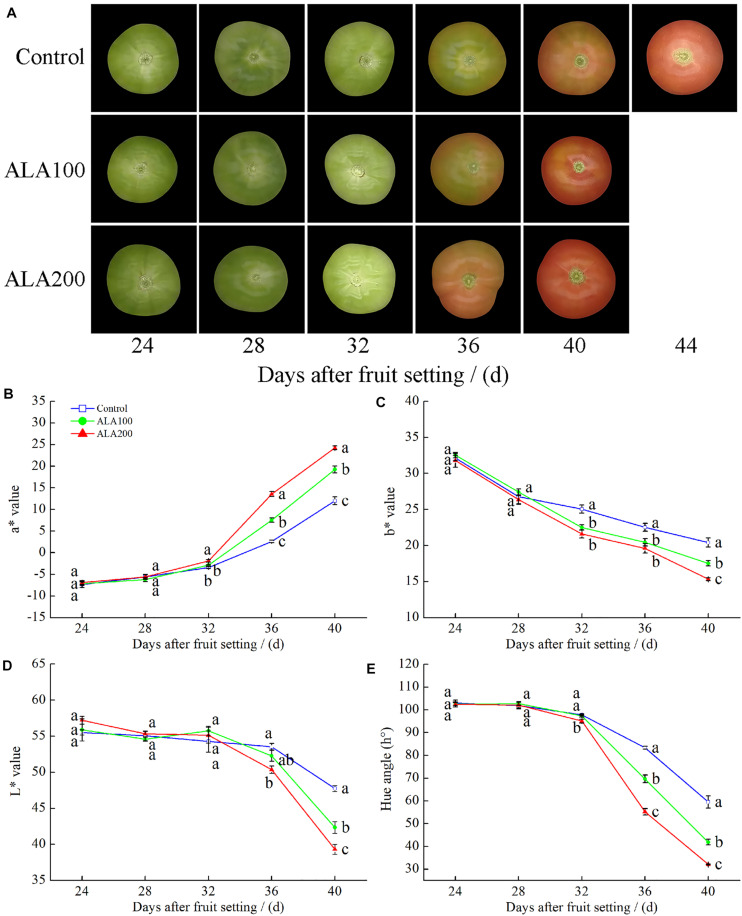
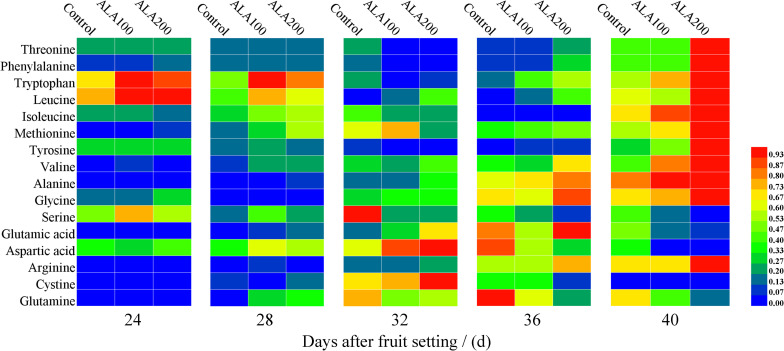
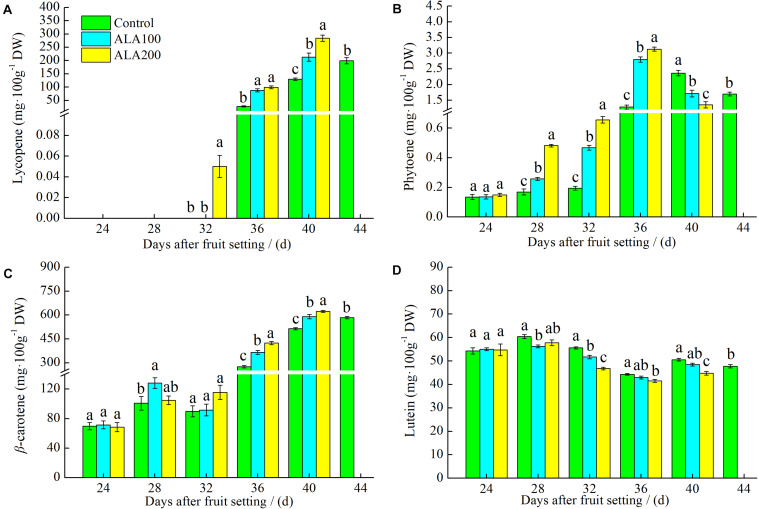
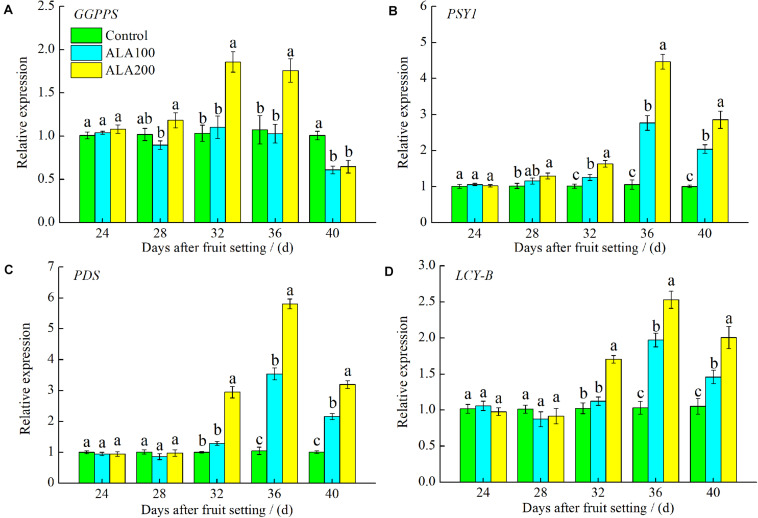
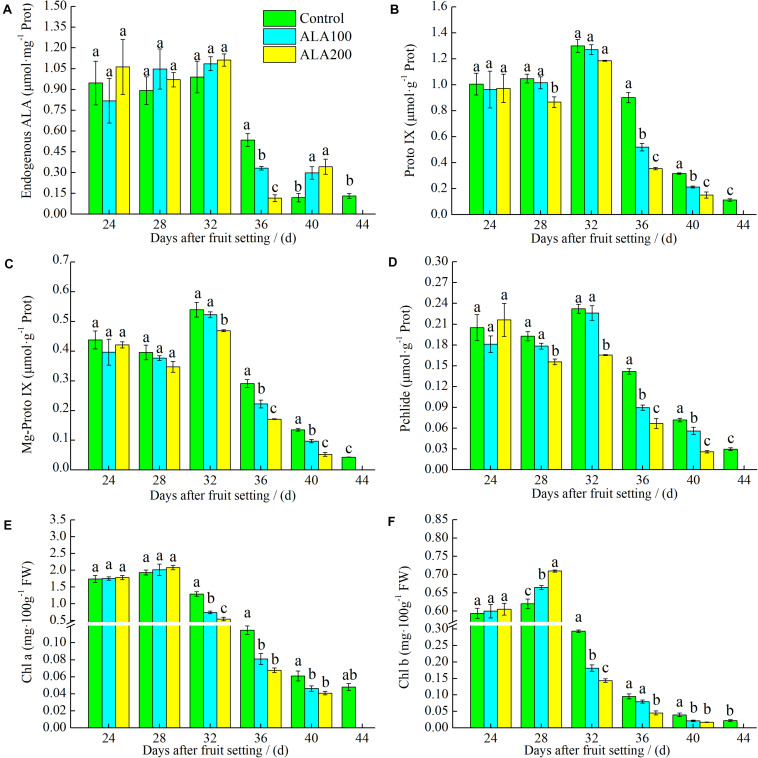
5-Aminolevulinic acid (ALA) plays an important role in plant growth and development. It can also be used to enhance crop resistance to environmental stresses and improve the color and internal quality of fruits. However, there are limited reports regarding the effects of ALA on tomato fruit color and its regulatory mechanisms. Therefore, in this study, the effects of exogenous ALA on the quality and coloration of tomato fruits were examined. Tomato ( "Yuanwei No. 1") fruit surfaces were treated with different concentrations of ALA (0, 100, and 200 mg⋅L) on the 24th day after fruit setting (mature green fruit stage), and the content of soluble sugar, titratable acid, soluble protein, vitamin C, and total free amino acids, as well as amino acid components, intermediates of lycopene synthetic and metabolic pathways, and ALA metabolic pathway derivatives were determined during fruit ripening. The relative expression levels of genes involved in lycopene synthesis and metabolism and those involved in ALA metabolism were also analyzed. The results indicated that exogenous ALA (200 mg⋅L) increased the contents of soluble sugars, soluble proteins, total free amino acids, and vitamin C as well as 11 kinds of amino acid components in tomato fruits and reduced the content of titratable acids, thus improving the quality of tomato fruits harvested 4 days earlier than those of the control plants. In addition, exogenous ALA markedly improved carotenoid biosynthesis by upregulating the gene expression levels of geranylgeranyl diphosphate synthase, phytoene synthase 1, phytoene desaturase, and lycopene β-cyclase. Furthermore, exogenous ALA inhibited chlorophyll synthesis by downregulating the genes expression levels of Mg-chelatase and protochlorophyllide oxidoreductase. These findings suggest that supplementation with 200 mg⋅L ALA not only enhances the nutritional quality and color of the fruit but also promotes early fruit maturation in tomato.
5-氨基乙酰丙酸(ALA)在植物生长发育中起着重要作用。它还可用于增强作物对环境胁迫的抗性,并改善果实的色泽和内在品质。然而,关于ALA对番茄果实颜色的影响及其调控机制的报道有限。因此,在本研究中,检测了外源ALA对番茄果实品质和着色的影响。在坐果后第24天(绿熟果期),用不同浓度的ALA(0、100和200 mg·L)处理番茄(“原味一号”)果实表面,并在果实成熟过程中测定可溶性糖、可滴定酸、可溶性蛋白、维生素C和总游离氨基酸的含量,以及氨基酸组成、番茄红素合成和代谢途径的中间产物和ALA代谢途径衍生物。还分析了参与番茄红素合成和代谢以及ALA代谢的基因的相对表达水平。结果表明,外源ALA(200 mg·L)增加了番茄果实中可溶性糖、可溶性蛋白、总游离氨基酸和维生素C的含量以及11种氨基酸组成,降低了可滴定酸的含量,从而提高了比对照植株提前4天收获的番茄果实的品质。此外,外源ALA通过上调牻牛儿基牻牛儿基二磷酸合酶、八氢番茄红素合酶1、八氢番茄红素脱氢酶和番茄红素β-环化酶的基因表达水平,显著促进了类胡萝卜素的生物合成。此外,外源ALA通过下调镁螯合酶和原叶绿素酸氧化还原酶的基因表达水平抑制了叶绿素的合成。这些发现表明,补充200 mg·L ALA不仅能提高果实的营养品质和色泽,还能促进番茄果实的早熟。