Dasgan Hayriye Yildiz, Aksu Kahraman S, Zikaria Kamran, Gruda Nazim S
Department of Horticulture, Faculty of Agriculture, University of Cukurova, Adana 01330, Turkey.
Institute of Plant Sciences and Resource Conservation, Division of Horticultural Sciences, University of Bonn, 53113 Bonn, Germany.
Plants (Basel). 2024 Sep 15;13(18):2587. doi: 10.3390/plants13182587.
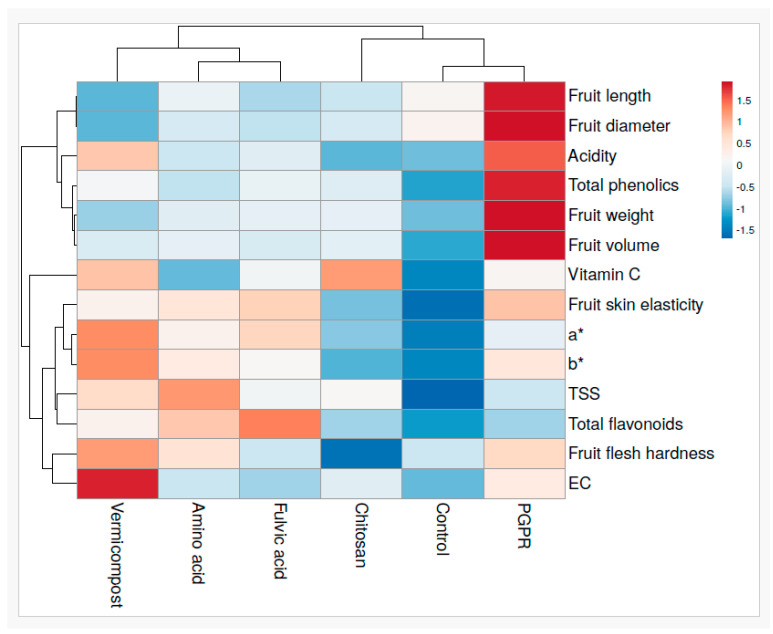
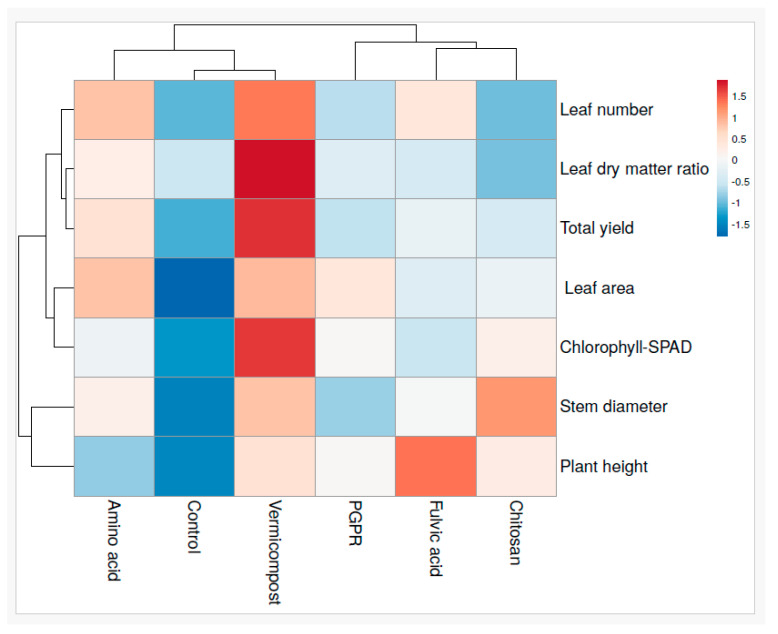
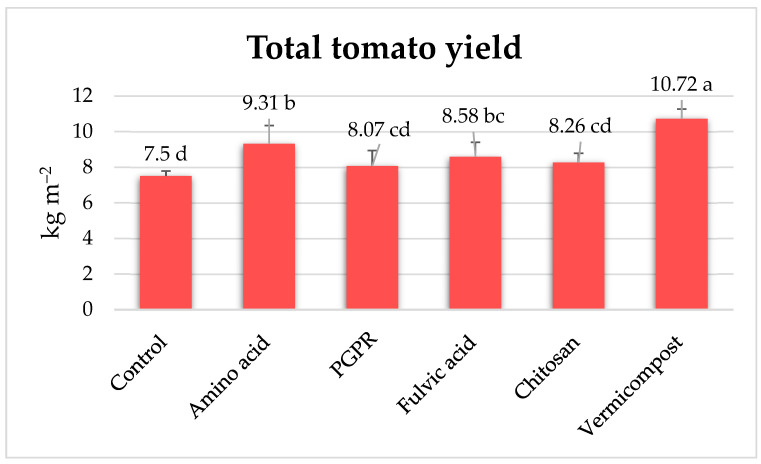
The application of biostimulants in vegetable cultivation has emerged as a promising approach to enhance the nutritional quality of crops, particularly in controlled environment agriculture and soilless culture systems. In this study, we employed a rigorous methodology, applying various biostimulants amino acids, Plant Growth-Promoting Rhizobacteria (PGPR), fulvic acid, chitosan, and vermicompost along with mineral fertilizers, both foliar and via the roots, to soilless greenhouse tomatoes during spring cultivation. The experiment, conducted in a coir pith medium using the 'Samyeli F1' tomato cultivar, demonstrated that plants treated with biostimulants performed better than control plants. Notable variations in nutritional components were observed across treatments. PGPR had the best effects on the physical properties of the tomato fruit, showing the highest fruit weight, fruit length, equatorial diameter, fruit volume, fruit skin elasticity, and fruit flesh hardness while maintaining high color parameters L, a, and b. PGPR and fulvic acid demonstrated significant enhancements in total phenolics and flavonoids, suggesting potential boosts in antioxidant properties. Amioacid and vermicompost notably elevated total soluble solids, indicating potential fruit sweetness and overall taste improvements. On the other hand, vermicompost stood out for its ability to elevate total phenolics and flavonoids while enhancing vitamin C content, indicating a comprehensive enhancement of nutritional quality. In addition, vermicompost had the most significant impact on plant growth parameters and total yield, achieving a 43% increase over the control with a total yield of 10.39 kg/m. These findings underline the specific nutritional benefits of different biostimulants, offering valuable insights for optimizing tomato cultivation practices to yield produce with enhanced health-promoting properties.
生物刺激素在蔬菜种植中的应用已成为一种有前景的方法,可提高作物的营养品质,特别是在可控环境农业和无土栽培系统中。在本研究中,我们采用了严格的方法,在春季种植期间,将各种生物刺激素(氨基酸、植物促生根际细菌(PGPR)、黄腐酸、壳聚糖和蚯蚓堆肥)与矿物肥料一起,通过叶面和根部施用于无土温室番茄。该实验在椰糠介质中使用“Samyeli F1”番茄品种进行,结果表明,用生物刺激素处理的植株比对照植株表现更好。各处理间在营养成分上观察到显著差异。PGPR对番茄果实的物理性质影响最佳,表现为果实重量、果实长度、赤道直径、果实体积、果皮弹性和果肉硬度最高,同时保持较高的颜色参数L、a和b。PGPR和黄腐酸在总酚和类黄酮方面有显著提高,表明抗氧化性能可能增强。氨基酸和蚯蚓堆肥显著提高了总可溶性固形物,表明果实甜度和整体口感可能得到改善。另一方面,蚯蚓堆肥因其能够提高总酚和类黄酮含量,同时提高维生素C含量而脱颖而出,表明营养品质得到全面提升。此外,蚯蚓堆肥对植物生长参数和总产量的影响最为显著,比对照增产43%,总产量为10.39 kg/m。这些发现强调了不同生物刺激素的特定营养益处,为优化番茄种植实践以生产具有增强健康促进特性的产品提供了有价值的见解。