Department of Thoracic Surgery, Shanghai Chest Hospital, Shanghai Jiao Tong University, Shanghai, 200030, People's Republic of China.
Institute for Thoracic Oncology, Shanghai Chest Hospital, Shanghai Jiao Tong University, Shanghai, 200030, People's Republic of China.
EBioMedicine. 2021 Jul;69:103457. doi: 10.1016/j.ebiom.2021.103457. Epub 2021 Jul 3.
Histone acetylation/deacetylase process is one of the most studied epigenetic modifications. Histone deacetylase inhibitors (HDACis) have shown clinical benefits in haematological malignancies but failed in solid tumours due to the lack of biomarker-driven stratification.
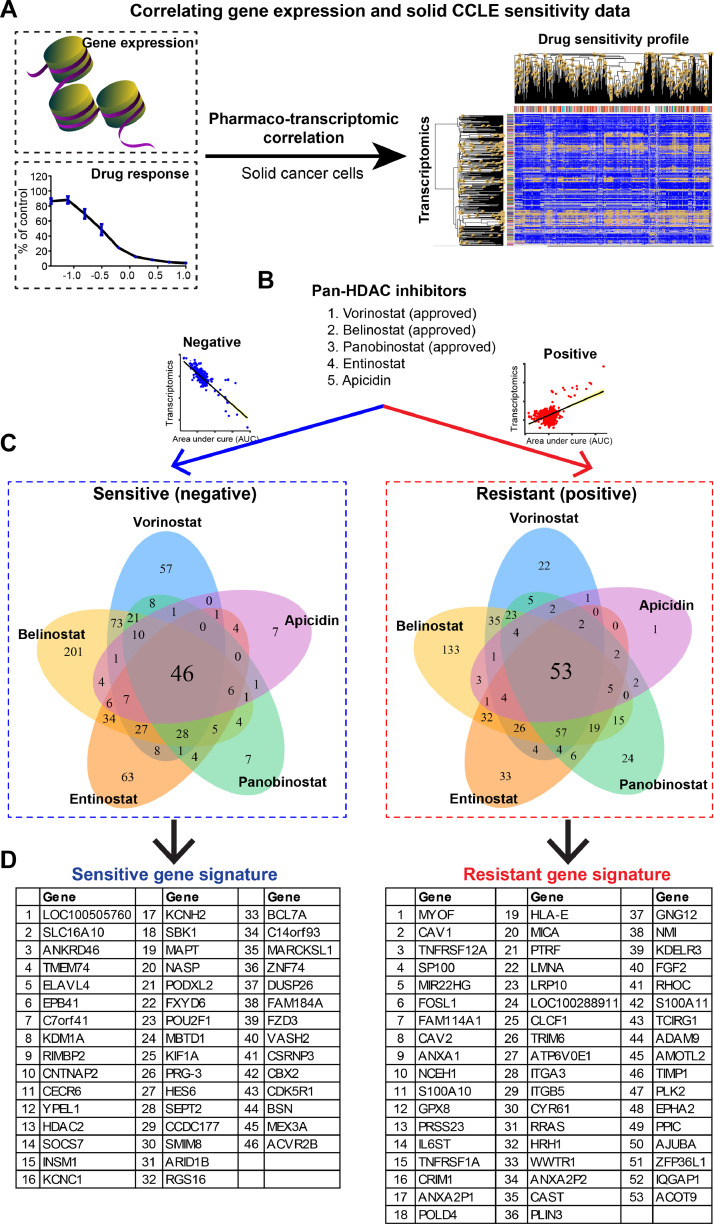
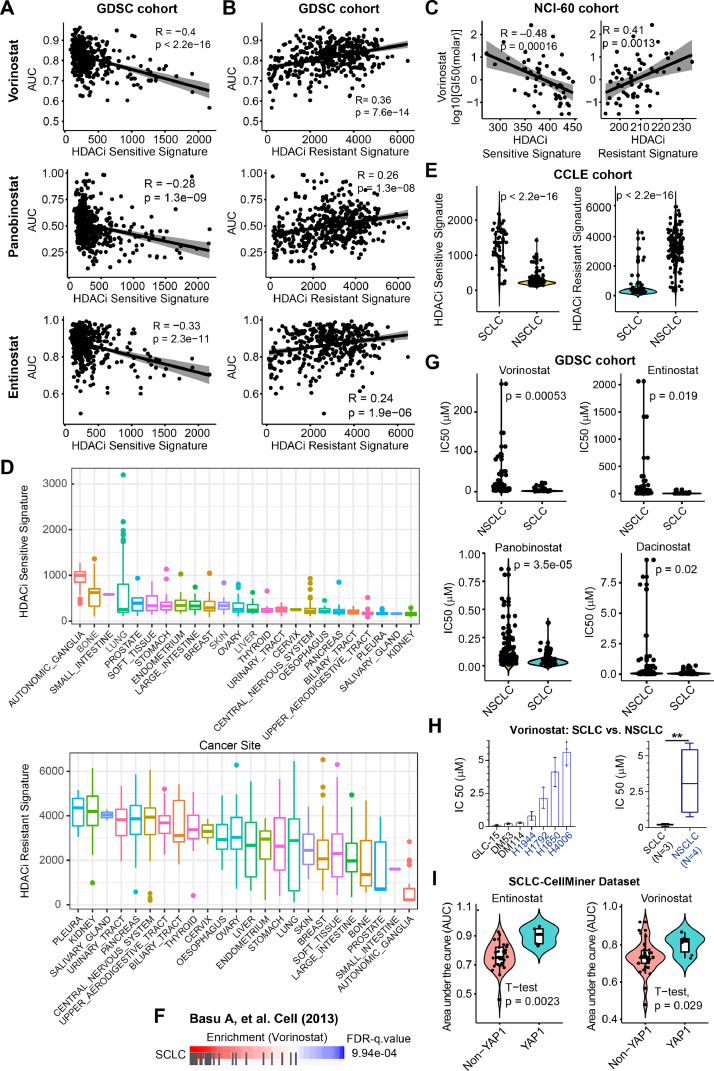
We perform integrative pharmaco-transcriptomic analysis by correlating drug response profiles of five pan-HDACis with transcriptomes of solid cancer cell lines (n=659) to systematically identify generalizable gene signatures associated with HDACis sensitivity and resistance. The established signatures are then applied to identify cancer subtypes that are potentially sensitive or resistant to HDACis, and drugs that enhance the efficacy of HDACis. Finally, the reproductivity of the established HDACis signatures is evaluated by multiple independent drug response datasets and experimental assays.
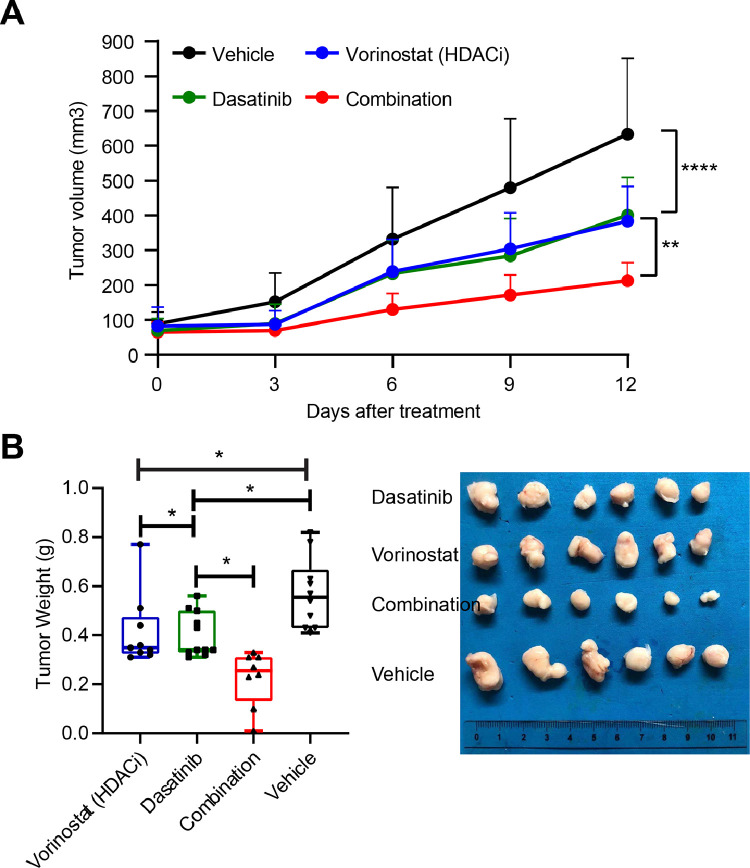
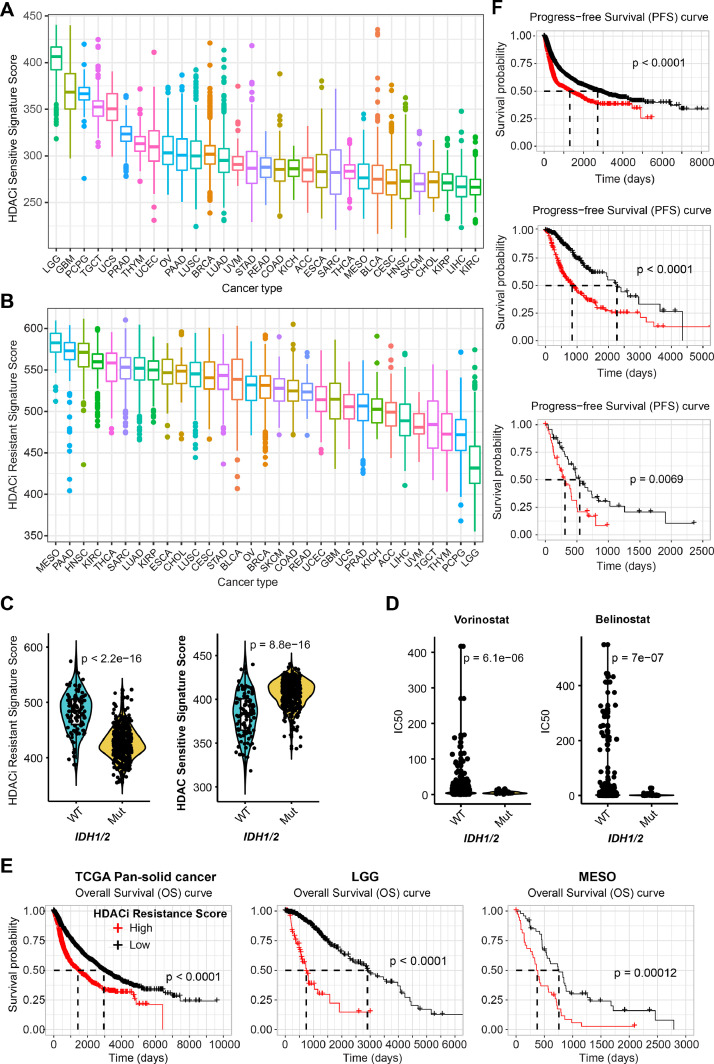
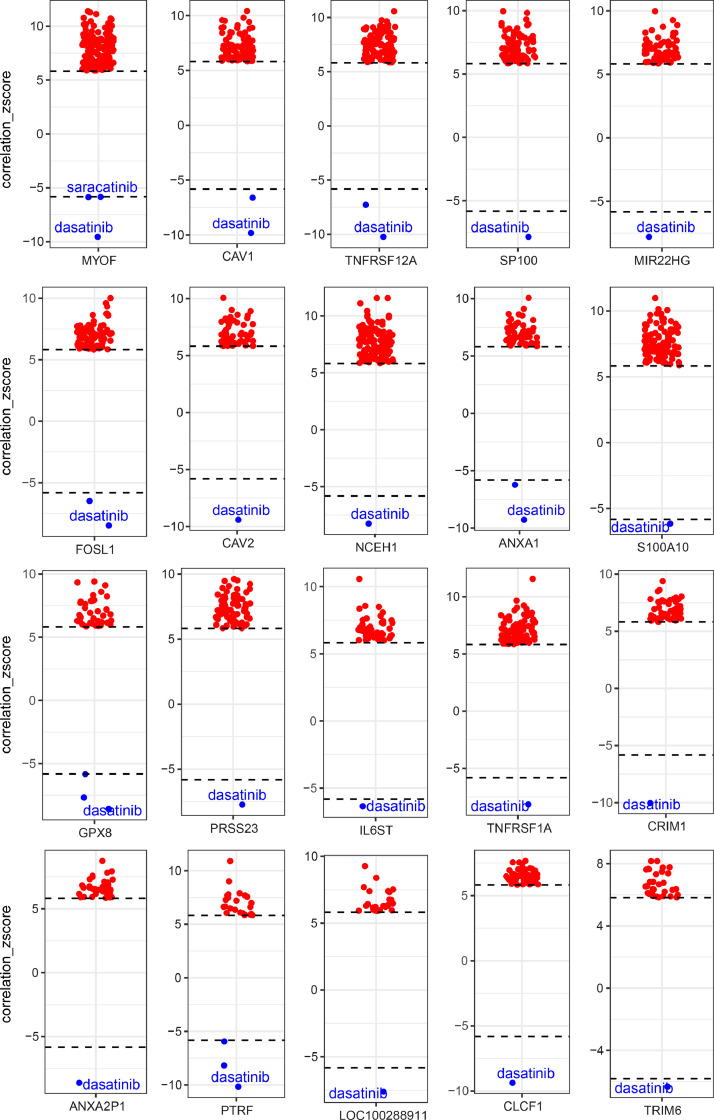
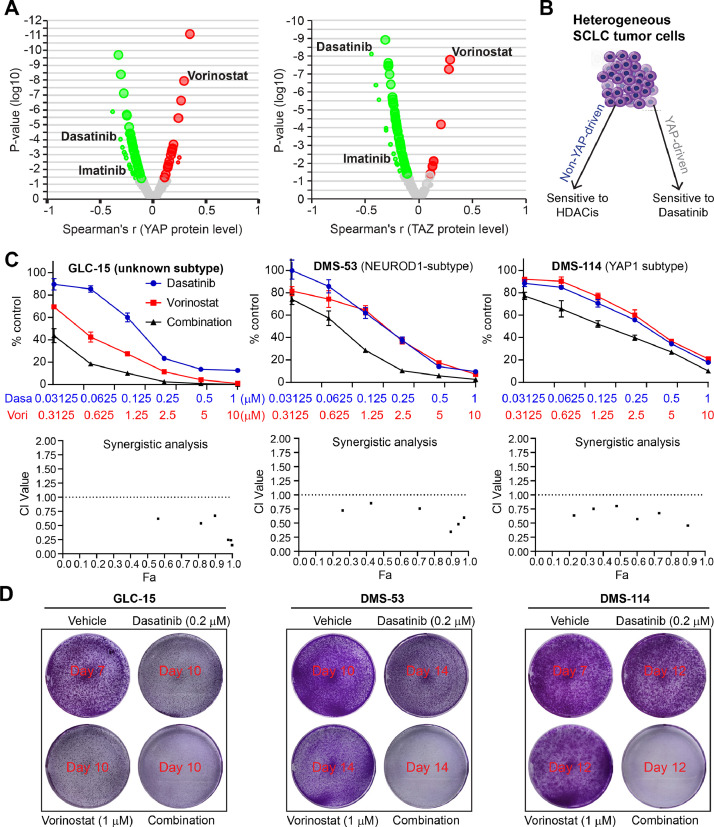
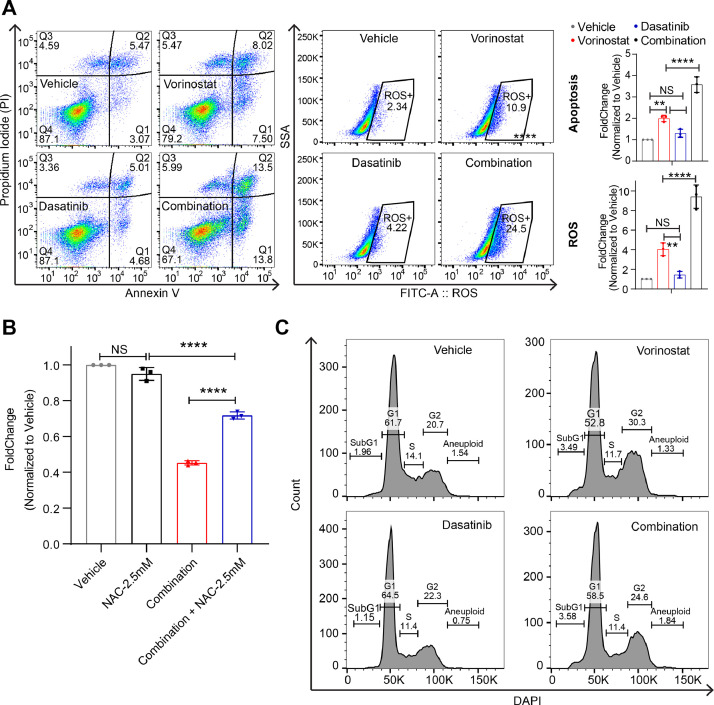
We successfully delineate generalizable gene signatures predicting sensitivity (containing 46 genes) and resistance (containing 53 genes) to all five HDACis, with their reproductivity confirmed by multiple external sources and independent internal assays. Using the gene signatures, we identify low-grade glioma harbouring isocitrate dehydrogenase 1/2 (IDH1/2) mutation and non-YAP1-driven subsets of small-cell lung cancer (SCLC) that particularly benefit from HDACis monotherapy. Further, based on the resistance gene signature, we identify clinically-approved Dasatinib as a synthetic lethal drug with HDACi, synergizing in inducing apoptosis and reactive oxygen species on a panel of SCLC. Finally, Dasatinib significantly enhances the therapeutic efficacy of Vorinostat in SCLC xenografts.
Our work establishes robust gene signatures predicting HDACis sensitivity/resistance in solid cancer and uncovers combined Dasatinib/HDACi as a synthetic lethal combination therapy for SCLC.
This work was supported by the National Natural Science Foundation of China (82072570 to F. Yao; 82002941 to B. Sun).
组蛋白乙酰化/去乙酰化过程是研究最多的表观遗传修饰之一。组蛋白去乙酰化酶抑制剂(HDACi)在血液恶性肿瘤中显示出临床获益,但由于缺乏基于生物标志物的分层,在实体瘤中失败。
我们通过将五种泛 HDACi 的药物反应谱与实体癌细胞系的转录组相关联,进行综合药物转录组学分析,系统地识别与 HDACi 敏感性和耐药性相关的可推广基因特征。然后将建立的特征应用于识别潜在对 HDACi 敏感或耐药的癌症亚型以及增强 HDACi 疗效的药物。最后,通过多个独立的药物反应数据集和实验测定来评估已建立的 HDACi 特征的再现性。
我们成功描绘了可推广的基因特征,可预测对所有五种 HDACi 的敏感性(包含 46 个基因)和耐药性(包含 53 个基因),其重现性通过多个外部来源和内部独立测定得到证实。使用基因特征,我们确定了携带异柠檬酸脱氢酶 1/2(IDH1/2)突变和非 YAP1 驱动的小细胞肺癌(SCLC)亚组特别受益于 HDACi 单药治疗。此外,基于耐药基因特征,我们鉴定出临床批准的达沙替尼作为与 HDACi 具有合成致死作用的药物,在一系列 SCLC 中协同诱导细胞凋亡和活性氧。最后,达沙替尼显著增强了 Vorinostat 在 SCLC 异种移植中的治疗效果。
我们的工作建立了预测实体瘤中 HDACi 敏感性/耐药性的稳健基因特征,并揭示了联合达沙替尼/HDACi 作为 SCLC 的合成致死联合治疗方法。
本工作得到国家自然科学基金(82072570 给 F. Yao;82002941 给 B. Sun)的支持。