Shin Hyun-Seock, Choi Juwhan, Lee Jinhwan, Lee Sung Yong
Cancer Research Institute, Korea University College of Medicine, Seoul, Korea.
Division of Pulmonary, Allergy, and Critical Care Medicine, Department of Internal Medicine, Korea University Guro Hospital, Seoul, Korea.
Cancer Res Treat. 2022 Apr;54(2):458-468. doi: 10.4143/crt.2021.425. Epub 2021 Sep 10.
Histone deacetylase inhibitors (HDACis) are epigenetic regulators and used clinically for hematopoietic malignancies. Recently, HDACis have received attention as a factor that modulates the immune system. In this study, the role of histone deacetylase (HDAC) expression as a predictive marker in lung cancer patients who were treated with immune checkpoint inhibitors (ICIs) and the role of HDACi and ICI combination treatment in the mouse tumor model were analyzed.
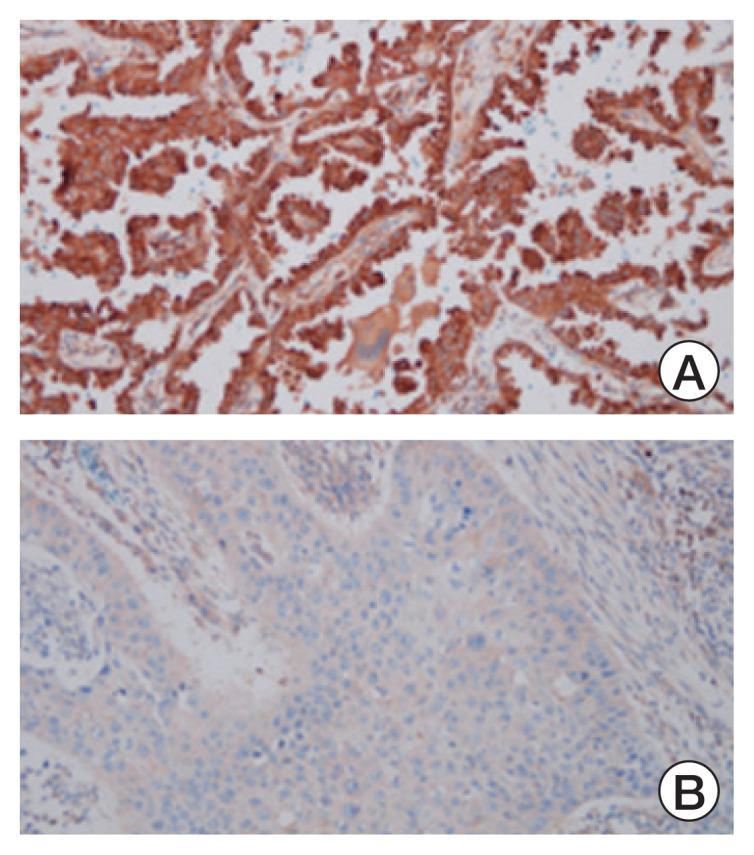
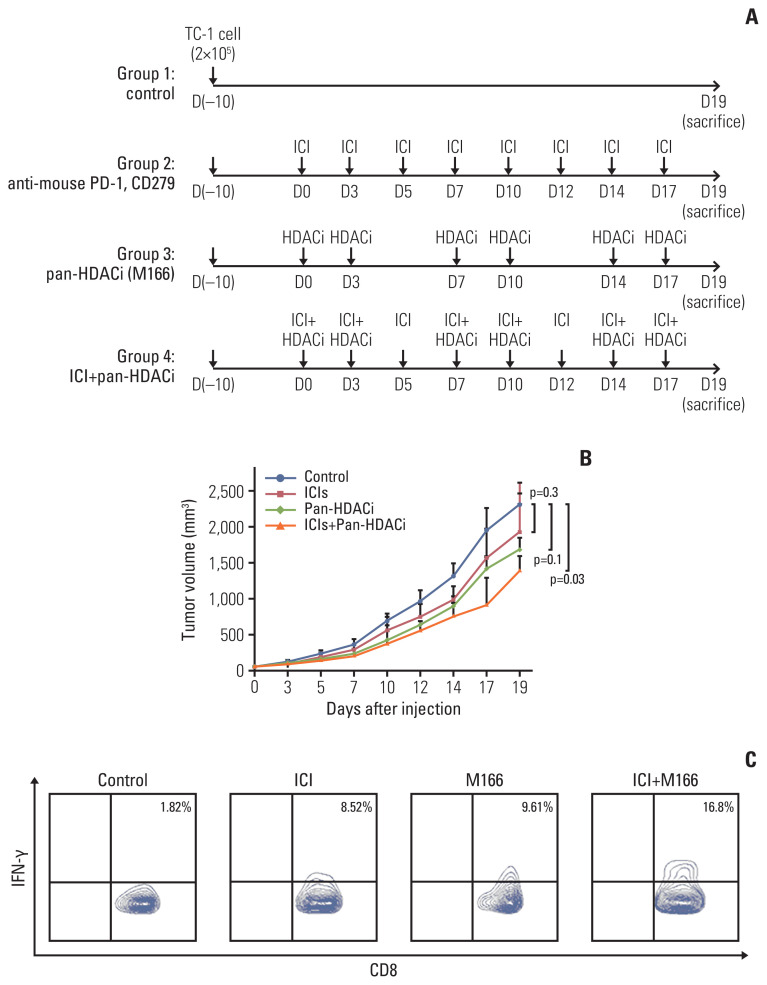
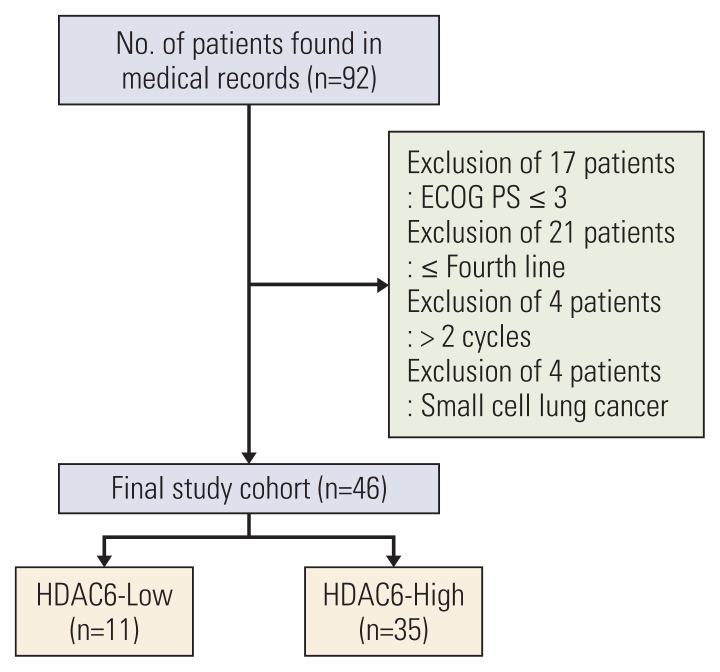
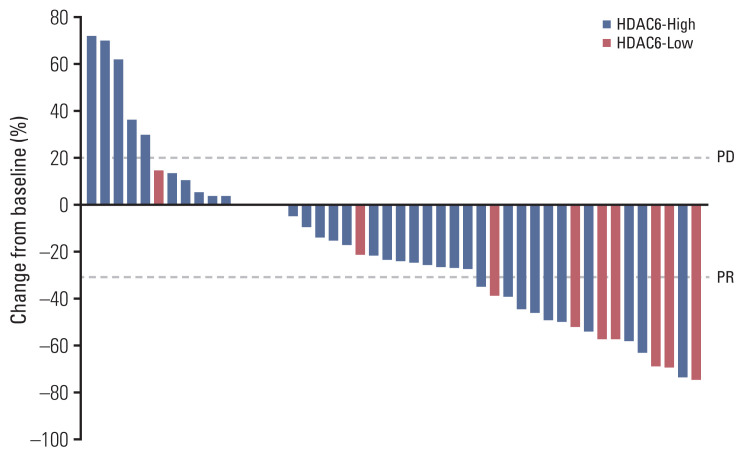
The overall response rate (ORR) and progression-free survival (PFS) were analyzed by the expression of HDAC. In vitro assay, the mRNA and protein expression levels of cytokines and programmed death-ligand 1 (PD-L1) were analyzed after HDACi treatment. In vivo assay, TC-1 tumor-bearing mice were treated with HDACi and mouse programmed cell death 1 (PD-1) inhibitor.
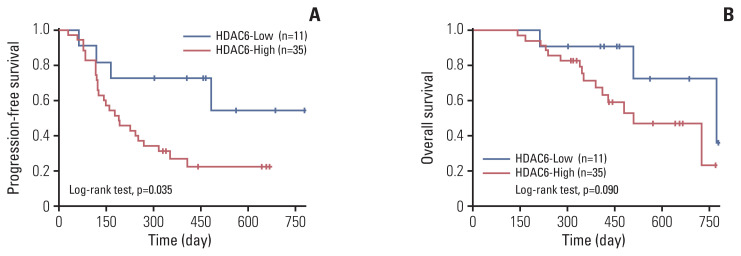
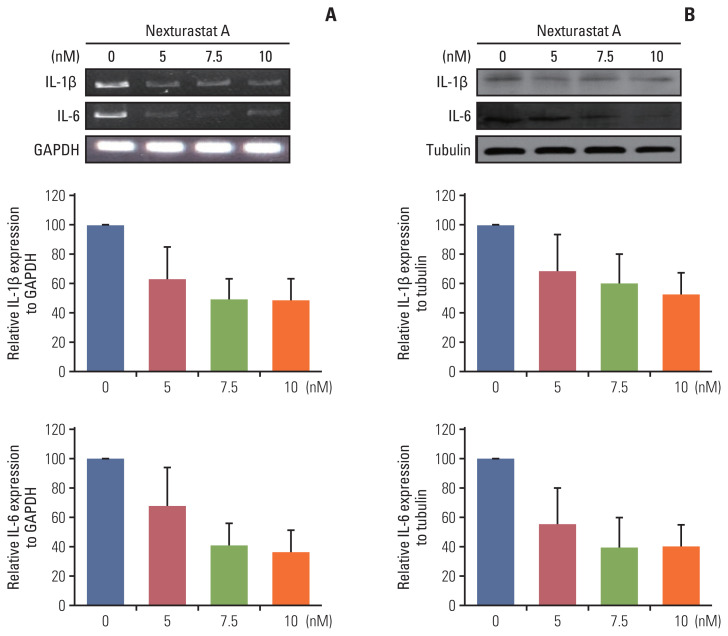
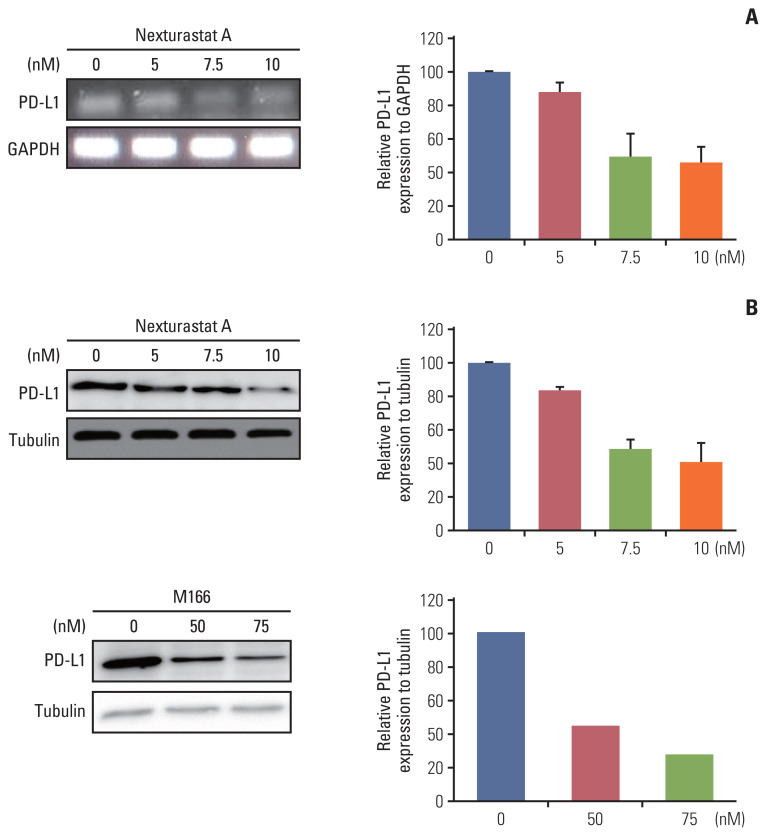
The HDAC6 low expression group showed high ORR and prolonged PFS. When the selective HDAC6 inhibitor was administered to the A549 cell line, the levels of interleukin-1β and interleukin-6 decreased and the expression of PD-L1 was reduced. Mice that received both the mouse PD-1 inhibitor and pan-HDACi had a smaller tumor size than that of the mice from the control group. Moreover, mice treated with the mouse PD-1 inhibitor and pan-HDACi generated greater numbers of E7-specific CD8+ T cells.
HDAC6 expression can predict the prognosis of non-small cell lung cancerpatients who were treated with ICIs. Furthermore, co-treatment with HDACi and PD-1 inhibitor was shown to decrease the tumor growth rate and create a favorable tumor microenvironment for cytotoxic T lymphocytes in the TC-1 mouse model.
组蛋白去乙酰化酶抑制剂(HDACis)是表观遗传调节剂,临床上用于治疗血液系统恶性肿瘤。最近,HDACis作为一种调节免疫系统的因子受到关注。在本研究中,分析了组蛋白去乙酰化酶(HDAC)表达作为接受免疫检查点抑制剂(ICIs)治疗的肺癌患者的预测标志物的作用,以及HDACi与ICI联合治疗在小鼠肿瘤模型中的作用。
通过HDAC的表达分析总缓解率(ORR)和无进展生存期(PFS)。在体外试验中,分析HDACi处理后细胞因子和程序性死亡配体1(PD-L1)的mRNA和蛋白表达水平。在体内试验中,用HDACi和小鼠程序性细胞死亡1(PD-1)抑制剂处理荷TC-1肿瘤的小鼠。
HDAC6低表达组显示出高ORR和延长的PFS。当将选择性HDAC6抑制剂应用于A549细胞系时,白细胞介素-1β和白细胞介素-6水平降低,PD-L1表达减少。同时接受小鼠PD-1抑制剂和泛HDACi的小鼠的肿瘤大小比对照组小鼠小。此外,用小鼠PD-1抑制剂和泛HDACi处理的小鼠产生了更多的E7特异性CD8+T细胞。
HDAC6表达可预测接受ICIs治疗的非小细胞肺癌患者的预后。此外,在TC-1小鼠模型中,HDACi与PD-1抑制剂联合治疗可降低肿瘤生长速率,并为细胞毒性T淋巴细胞创造有利的肿瘤微环境。