Centre for Health Management and Policy Research, School of Public Health, Cheeloo College of Medicine, Shandong University, Jinan, 250012, China.
NHC Key Laboratory of Health Economics and Policy Research (Shandong University), Jinan, 250012, China.
Hum Resour Health. 2021 Jul 6;19(1):79. doi: 10.1186/s12960-021-00626-8.
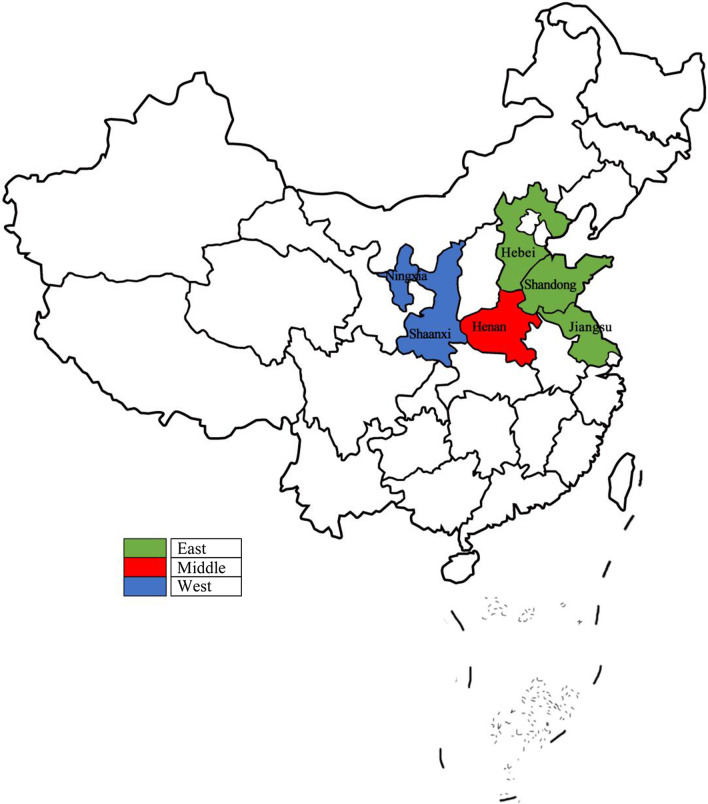
Pharmacists are a crucial part of the health workforce and play an important role in achieving universal health coverage. In China, pharmaceutical human resources are in short supply, and the distribution is unequal. This study aimed to identify the key job characteristics that influence the job preferences of undergraduate pharmacy students and to elicit the relative importance of different job characteristics to shed light on future policy interventions.
A discrete choice experiment was conducted to assess the job preferences of undergraduate pharmacy students from 6 provinces in mainland China. A face-to-face interview was used to collect data. Conditional logit and mixed logit models were used to analyse data, and the final model was chosen according to the model fit statistics. A series of policy simulations was also conducted.
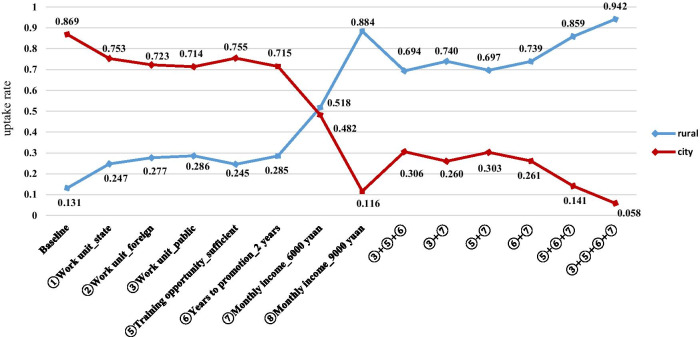
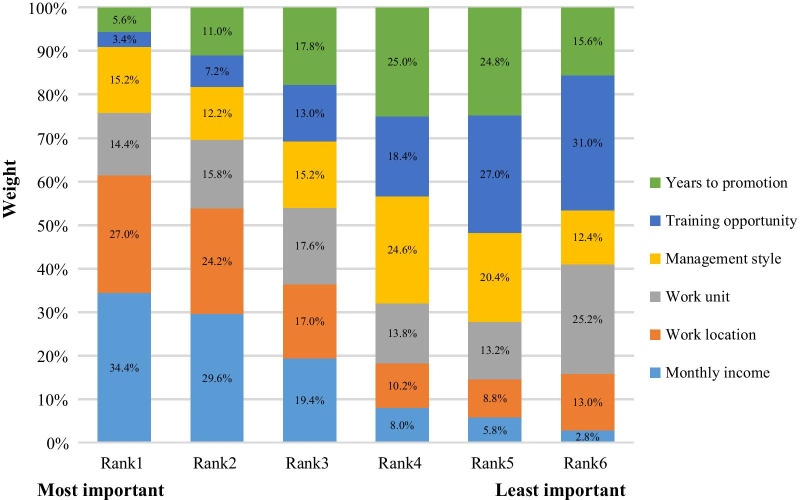
In total, 581 respondents completed the questionnaire, and 500 respondents who passed the internal consistency test were analysed. All attributes were statistically significant except for open management. Monthly income and work location were most important to respondents, followed by work unit (which refers to the nature of the workplace) and years to promotion. There was preference heterogeneity among respondents, e.g., male students preferred open management, and female students preferred jobs in public institutions. Furthermore, students with an urban background or from a single-child family placed higher value on a job in the city compared to their counterparts.
The heterogeneity of attributes showed the complexity of job preferences. Both monetary and nonmonetary job characteristics significantly influenced the job preferences of pharmacy students in China. A more effective policy intervention to attract graduates to work in rural areas should consider both incentives on the job itself and the background of pharmacy school graduates.
药剂师是卫生人力的重要组成部分,在实现全民健康覆盖方面发挥着重要作用。在中国,医药人力资源短缺,分布不均。本研究旨在确定影响本科药学学生工作偏好的关键工作特征,并得出不同工作特征的相对重要性,为未来的政策干预提供参考。
采用离散选择实验评估中国大陆 6 个省份的本科药学学生的工作偏好。采用面对面访谈收集数据。使用条件逻辑回归和混合逻辑回归模型分析数据,并根据模型拟合统计量选择最终模型。还进行了一系列政策模拟。
共有 581 名受访者完成了问卷,其中 500 名通过内部一致性测试的受访者被纳入分析。除了开放式管理外,所有属性均具有统计学意义。月收入和工作地点对受访者最重要,其次是工作单位(指工作场所的性质)和晋升年限。受访者之间存在偏好异质性,例如,男生更喜欢开放式管理,女生更喜欢在公立机构工作。此外,来自城市背景或独生子女家庭的学生比同龄人更看重在城市工作。
属性的异质性表明工作偏好的复杂性。货币和非货币工作特征都显著影响了中国药学学生的工作偏好。为吸引毕业生到农村工作,更有效的政策干预应考虑工作本身的激励措施以及药学毕业生的背景。