Université Paris-Saclay, Faculté de Médecine, Le Kremlin-Bicêtre, France.
Gustave Roussy Cancer Campus, Villejuif, France.
Cell Death Differ. 2021 Dec;28(12):3297-3315. doi: 10.1038/s41418-021-00817-9. Epub 2021 Jul 6.
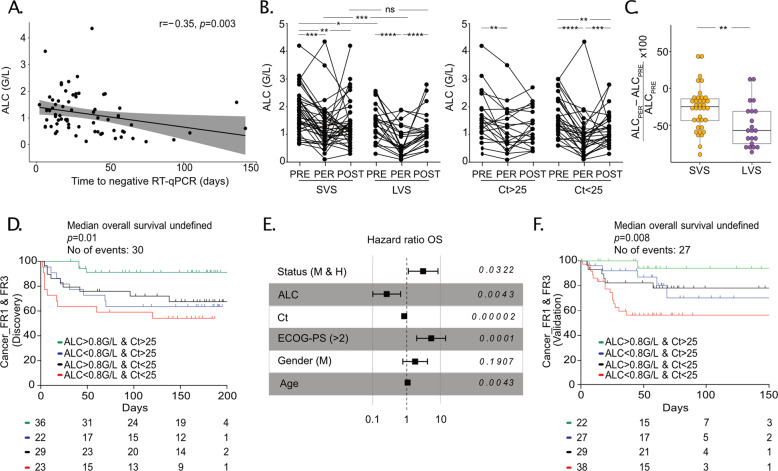
Patients with cancer are at higher risk of severe coronavirus infectious disease 2019 (COVID-19), but the mechanisms underlying virus-host interactions during cancer therapies remain elusive. When comparing nasopharyngeal swabs from cancer and noncancer patients for RT-qPCR cycle thresholds measuring acute respiratory syndrome coronavirus-2 (SARS-CoV-2) in 1063 patients (58% with cancer), we found that malignant disease favors the magnitude and duration of viral RNA shedding concomitant with prolonged serum elevations of type 1 IFN that anticorrelated with anti-RBD IgG antibodies. Cancer patients with a prolonged SARS-CoV-2 RNA detection exhibited the typical immunopathology of severe COVID-19 at the early phase of infection including circulation of immature neutrophils, depletion of nonconventional monocytes, and a general lymphopenia that, however, was accompanied by a rise in plasmablasts, activated follicular T-helper cells, and non-naive Granzyme BFasL, EomesTCF-1, PD-1CD8 Tc1 cells. Virus-induced lymphopenia worsened cancer-associated lymphocyte loss, and low lymphocyte counts correlated with chronic SARS-CoV-2 RNA shedding, COVID-19 severity, and a higher risk of cancer-related death in the first and second surge of the pandemic. Lymphocyte loss correlated with significant changes in metabolites from the polyamine and biliary salt pathways as well as increased blood DNA from Enterobacteriaceae and Micrococcaceae gut family members in long-term viral carriers. We surmise that cancer therapies may exacerbate the paradoxical association between lymphopenia and COVID-19-related immunopathology, and that the prevention of COVID-19-induced lymphocyte loss may reduce cancer-associated death.
癌症患者患严重 2019 年冠状病毒病(COVID-19)的风险较高,但癌症治疗期间病毒-宿主相互作用的机制仍不清楚。在 1063 名患者(58%患有癌症)中,我们比较了癌症和非癌症患者的鼻咽拭子的实时定量聚合酶链反应(RT-qPCR)循环阈值,以测量急性呼吸综合征冠状病毒-2(SARS-CoV-2),我们发现恶性疾病有利于病毒 RNA 脱落的幅度和持续时间,同时伴有 1 型干扰素(IFN)的血清水平升高,与抗 RBD IgG 抗体呈负相关。SARS-CoV-2 RNA 检测时间延长的癌症患者在感染早期表现出典型的 COVID-19 严重免疫病理学,包括不成熟中性粒细胞的循环、非传统单核细胞的耗竭以及普遍的淋巴细胞减少,但同时伴有浆母细胞、激活滤泡辅助 T 细胞和非幼稚 Granzyme B FasL、Eomes TCF-1、PD-1 CD8 Tc1 细胞的增加。病毒诱导的淋巴细胞减少加重了癌症相关的淋巴细胞减少,淋巴细胞计数低与慢性 SARS-CoV-2 RNA 脱落、COVID-19 严重程度以及大流行第一波和第二波中癌症相关死亡风险增加相关。淋巴细胞减少与多胺和胆汁盐途径的代谢物以及来自肠杆菌科和微球菌科肠道家族成员的血液 DNA 增加显著相关,这些患者为长期病毒携带者。我们推测癌症治疗可能会加剧淋巴细胞减少与 COVID-19 相关免疫病理学之间的矛盾关联,预防 COVID-19 引起的淋巴细胞减少可能会降低癌症相关的死亡率。