Institute of Genomic Medicine, College of Pharmacy, Jinan University, Guangzhou, 510632, China.
Department of Anatomy, School of Basic Medical Sciences, Southern Medical University, Guangzhou, 510515, China.
Sci Rep. 2021 Jul 7;11(1):14001. doi: 10.1038/s41598-021-93430-2.
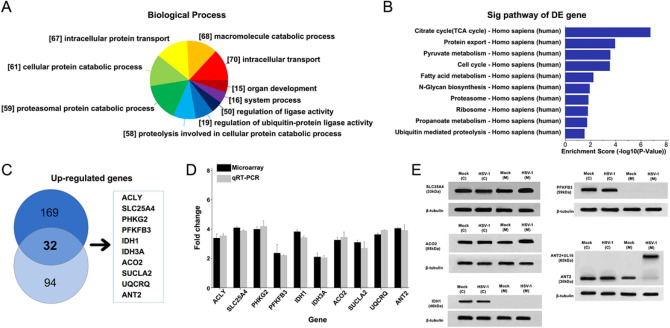
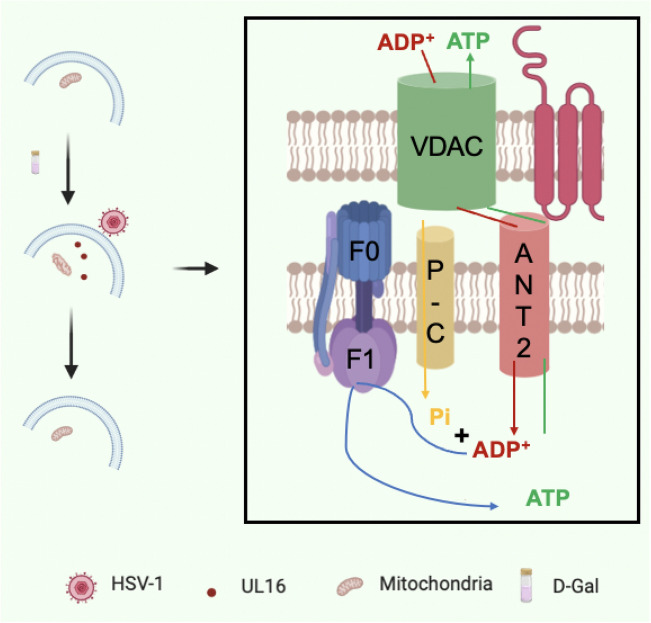
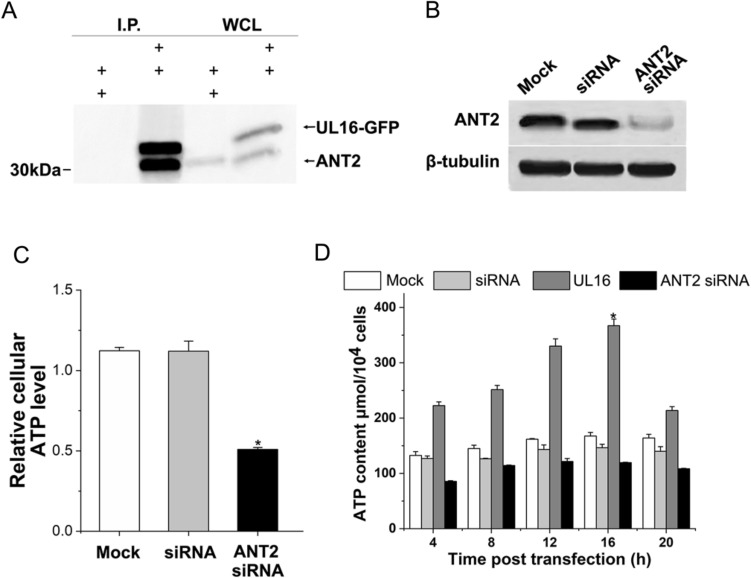
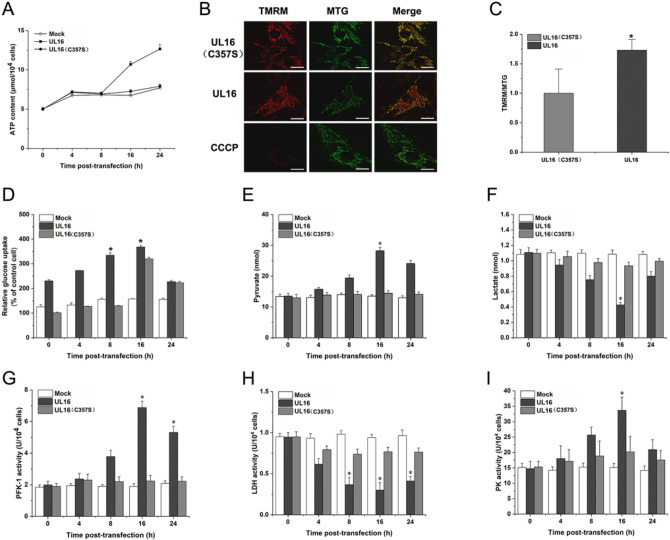
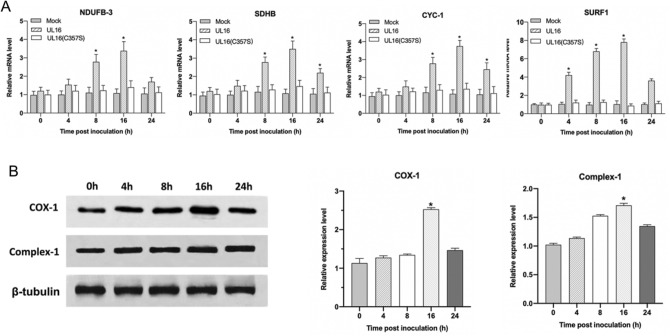
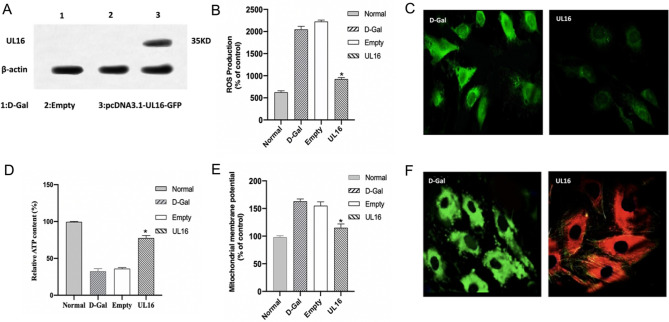
Long-term studies have shown that virus infection affects the energy metabolism of host cells, which mainly affects the function of mitochondria and leads to the hydrolysis of ATP in host cells, but it is not clear how virus infection participates in mitochondrial energy metabolism in host cells. In our study, HUVEC cells were infected with HSV-1, and the differentially expressed genes were obtained by microarray analysis and data analysis. The viral gene encoding protein UL16 was identified to interact with host protein ANT2 by immunoprecipitation and mass spectrometry. We also reported that UL16 transfection promoted oxidative phosphorylation of glucose and significantly increased intracellular ATP content. Furthermore, UL16 was transfected into the HUVEC cell model with mitochondrial dysfunction induced by D-Gal, and it was found that UL16 could restore the mitochondrial function of cells. It was first discovered that viral protein UL16 could enhance mitochondrial function in mammalian cells by promoting mitochondrial metabolism. This study provides a theoretical basis for the prevention and treatment of mitochondrial dysfunction or the pathological process related to mitochondrial dysfunction.
长期研究表明,病毒感染会影响宿主细胞的能量代谢,主要影响线粒体的功能,导致宿主细胞中 ATP 的水解,但病毒感染如何参与宿主细胞中线粒体的能量代谢尚不清楚。在我们的研究中,用 HSV-1 感染 HUVEC 细胞,通过微阵列分析和数据分析获得差异表达基因。通过免疫沉淀和质谱分析鉴定出编码蛋白 UL16 的病毒基因与宿主蛋白 ANT2 相互作用。我们还报道说,UL16 的转染促进了葡萄糖的氧化磷酸化,显著增加了细胞内 ATP 的含量。此外,将 UL16 转染到由 D-Gal 诱导的线粒体功能障碍的 HUVEC 细胞模型中,发现 UL16 可以恢复细胞的线粒体功能。本研究首次发现病毒蛋白 UL16 通过促进线粒体代谢来增强哺乳动物细胞中的线粒体功能。这项研究为预防和治疗线粒体功能障碍或与线粒体功能障碍相关的病理过程提供了理论依据。