Bellinato Francesco, Gisondi Paolo, Girolomoni Giampiero
Department of Medicine, Section of Dermatology and Venereology, University of Verona, Verona, Italy.
Biologics. 2021 Jun 29;15:247-253. doi: 10.2147/BTT.S290309. eCollection 2021.
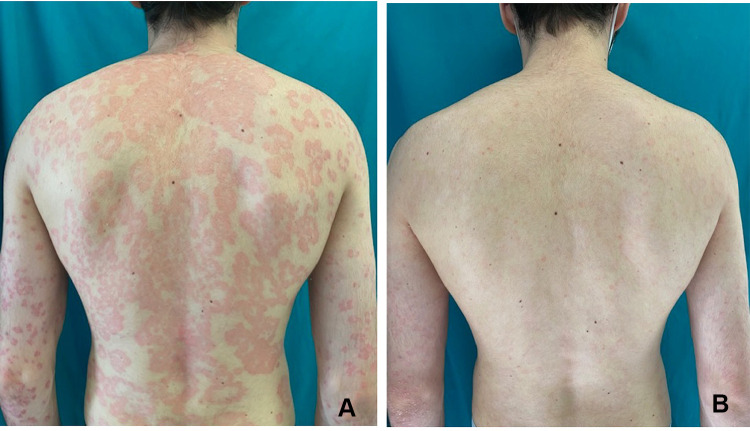
Psoriasis is a common immune-mediated chronic skin disease. Disease severity is influenced by several factors including the extent and localization of skin lesions, severity of pruritus and comorbidities, such as psoriatic arthritis. Moderate to severe psoriasis is defined when cutaneous involvement is diffuse, covering more than 10% of the body surface areas and/or involving the sensitive areas such as face, genitalia, folds or nails or has high impact on patients' quality of life, and it occurs in approximately 15% of cases. In recent years, a growing understanding of psoriasis pathophysiology allowed the development of an increasing number of effective and safe treatments, including biologicals that are indicated for moderate to severe psoriasis. Different classes of biologicals have been already approved, including TNF-α (etanercept, infliximab, adalimumab and certolizumab pegol), IL-12/23 (ustekinumab), IL-17 (secukinumab, ixekizumab, brodalumab) and IL-23 (guselkumab, risankizumab, tildrakizumab) inhibitors. The objective of this narrative review is to revise efficacy and safety data of the latest biologicals, small oral molecules and biosimilar drugs for the treatment of chronic plaque psoriasis at Phase III of clinical development. The latest IL-17 and IL-23 inhibitors include bimekizumab, netakimab and mirikizumab as well as oral small molecules, such as deucravacitinib, a tyrosine kinase 2 selective inhibitor, and piclidenoson, an agonist of the Gi protein-associated A3 adenosine receptor. Additional molecules are in an early phase of development. Highly promising biologicals and small oral molecules are the leading edge of the systemic treatment of psoriasis.
银屑病是一种常见的免疫介导性慢性皮肤病。疾病严重程度受多种因素影响,包括皮肤病变的范围和部位、瘙痒程度以及合并症,如银屑病关节炎。当中度至重度银屑病的皮肤受累广泛,覆盖超过10%的体表面积和/或累及面部、生殖器、褶皱或指甲等敏感部位,或对患者生活质量有重大影响时,即被定义为中度至重度银屑病,约15%的病例会出现这种情况。近年来,对银屑病病理生理学的认识不断深入,使得越来越多有效且安全的治疗方法得以开发,包括用于中度至重度银屑病的生物制剂。不同类别的生物制剂已获批准,包括肿瘤坏死因子-α(依那西普、英夫利昔单抗、阿达木单抗和赛妥珠单抗)、白细胞介素-12/23(乌司奴单抗)、白细胞介素-17(司库奇尤单抗、依奇珠单抗、布罗达单抗)和白细胞介素-23(古塞库单抗、瑞莎珠单抗、替拉珠单抗)抑制剂。本叙述性综述的目的是修订处于临床开发III期的最新生物制剂、口服小分子药物和生物类似药治疗慢性斑块状银屑病的疗效和安全性数据。最新的白细胞介素-17和白细胞介素-23抑制剂包括比美吉珠单抗、奈他珠单抗和mirikizumab,以及口服小分子药物,如酪氨酸激酶2选择性抑制剂迪考昔替尼和Gi蛋白相关A3腺苷受体激动剂匹克利多松。其他分子正处于早期开发阶段。极具前景的生物制剂和口服小分子药物是银屑病全身治疗的前沿。