de Haro Juan Carlos, Tatsi Elisavet, Fagiolari Lucia, Bonomo Matteo, Barolo Claudia, Turri Stefano, Bella Federico, Griffini Gianmarco
Department of Chemistry, Materials and Chemical Engineering "Giulio Natta", Politecnico di Milano, Piazza Leonardo da Vinci 32, 20133 Milano, Italy.
Department of Applied Science and Technology, Politecnico di Torino, Corso Duca degli Abruzzi 24, 10129 Torino, Italy.
ACS Sustain Chem Eng. 2021 Jun 28;9(25):8550-8560. doi: 10.1021/acssuschemeng.1c01882. Epub 2021 Jun 14.
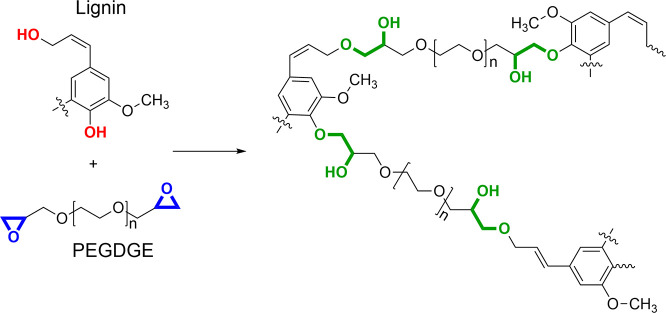
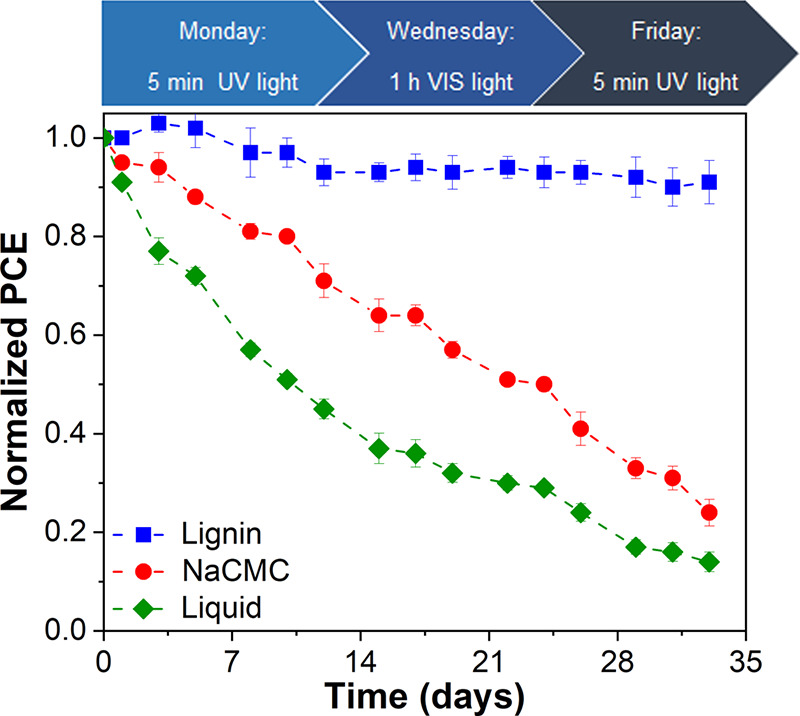
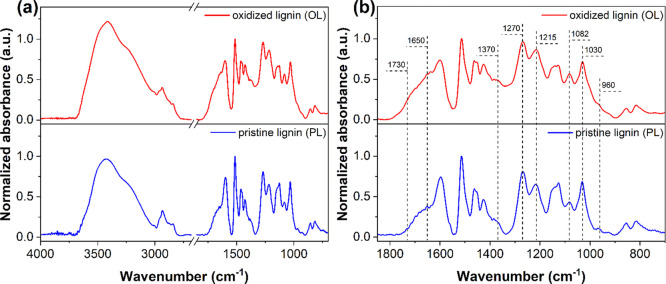
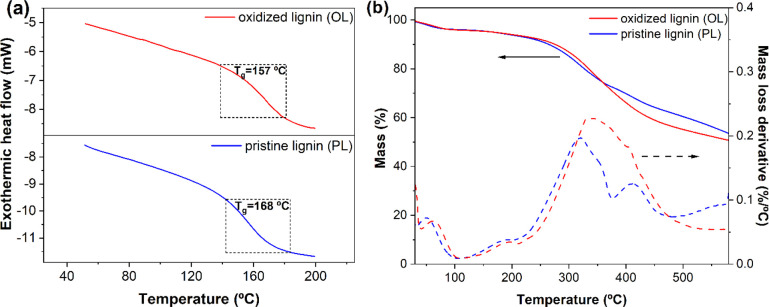
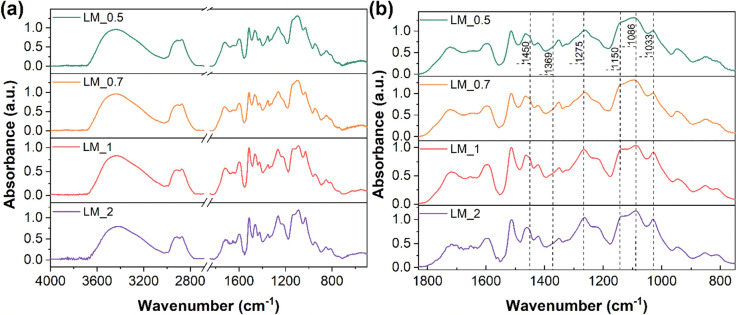
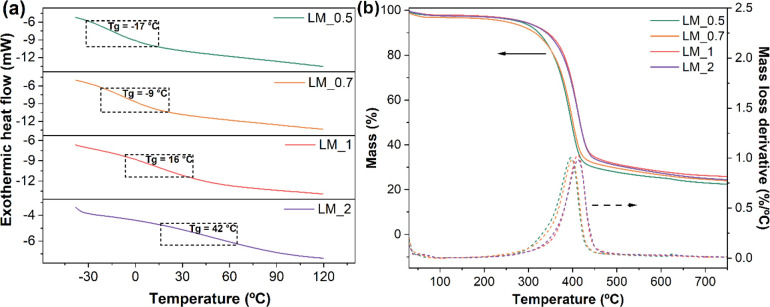
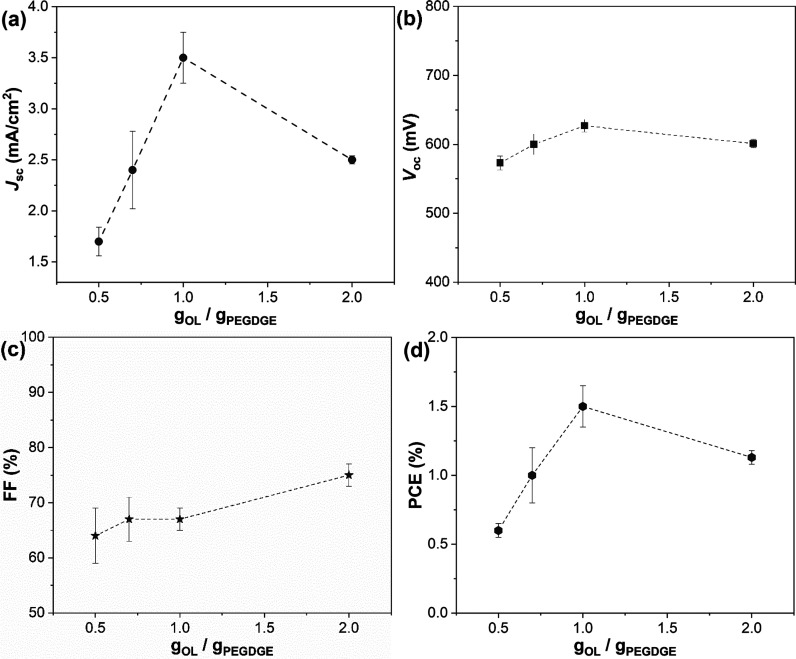
In the quest for sustainable materials for quasi-solid-state (QS) electrolytes in aqueous dye-sensitized solar cells (DSSCs), novel bioderived polymeric membranes were prepared in this work by reaction of preoxidized kraft lignin with poly(ethylene glycol)diglycidylether (PEGDGE). The effect of the PEGDGE/lignin relative proportions on the characteristics of the obtained membranes was thoroughly investigated, and clear structure-property correlations were highlighted. In particular, the glass transition temperature of the materials was found to decrease by increasing the amount of PEGDGE in the formulation, indicating that polyethylene glycol chains act as flexible segments that increase the molecular mobility of the three-dimensional polymeric network. Concurrently, their swelling ability in liquid electrolyte was found to increase with the concentration of PEGDGE, which was also shown to influence the ionic transport efficiency within the membrane. The incorporation of these lignin-based cross-linked systems as QS electrolyte frameworks in aqueous DSSCs allowed the preparation of devices with excellent long-term stability under UV-vis light, which were found to be superior to benchmark QS-DSSCs incorporating state-of-the-art carboxymethylcellulose membranes. This study provides the first demonstration of lignin-based QS electrolytes for stable aqueous DSSCs, establishing a straightforward strategy to exploit the potential of lignin as a functional polymer precursor for the field of sustainable photovoltaic devices.
在寻求用于水性染料敏化太阳能电池(DSSC)准固态(QS)电解质的可持续材料的过程中,本研究通过预氧化硫酸盐木质素与聚乙二醇二缩水甘油醚(PEGDGE)反应制备了新型生物衍生聚合物膜。深入研究了PEGDGE/木质素相对比例对所得膜特性的影响,并突出了明确的结构-性能相关性。特别地,发现通过增加配方中PEGDGE的量,材料的玻璃化转变温度降低,这表明聚乙二醇链作为柔性链段增加了三维聚合物网络的分子流动性。同时,发现它们在液体电解质中的溶胀能力随PEGDGE浓度的增加而增加,这也表明其会影响膜内的离子传输效率。将这些基于木质素的交联体系作为QS电解质骨架引入水性DSSC中,使得能够制备在紫外-可见光下具有优异长期稳定性的器件,发现其优于采用最先进羧甲基纤维素膜的基准QS-DSSC。本研究首次证明了基于木质素的QS电解质可用于稳定的水性DSSC,建立了一种直接策略来开发木质素作为可持续光伏器件领域功能性聚合物前体的潜力。