Shenzhen Key Laboratory of Pathogen and Immunity, National Clinical Research Center for Infectious Disease, State Key Discipline of Infectious Disease, Shenzhen Third People's Hospital, Second Hospital Affiliated to Southern University of Science and Technology, No. 29, Bulan Road, Longgang district, Shenzhen, 518112, China.
School of Public Health, Southern Medical University, Guangzhou, 510515, China.
Respir Res. 2021 Jul 9;22(1):203. doi: 10.1186/s12931-021-01798-6.
Thousands of Coronavirus Disease 2019 (COVID-19) patients have been discharged from hospitals Persistent follow-up studies are required to evaluate the prevalence of post-COVID-19 fibrosis.
This study involves 462 laboratory-confirmed patients with COVID-19 who were admitted to Shenzhen Third People's Hospital from January 11, 2020 to April 26, 2020. A total of 457 patients underwent thin-section chest CT scans during the hospitalization or after discharge to identify the pulmonary lesion. A total of 287 patients were followed up from 90 to 150 days after the onset of the disease, and lung function tests were conducted about three months after the onset. The risk factors affecting the persistence of pulmonary fibrosis were identified through regression analysis and the prediction model of the persistence of pulmonary fibrosis was established.
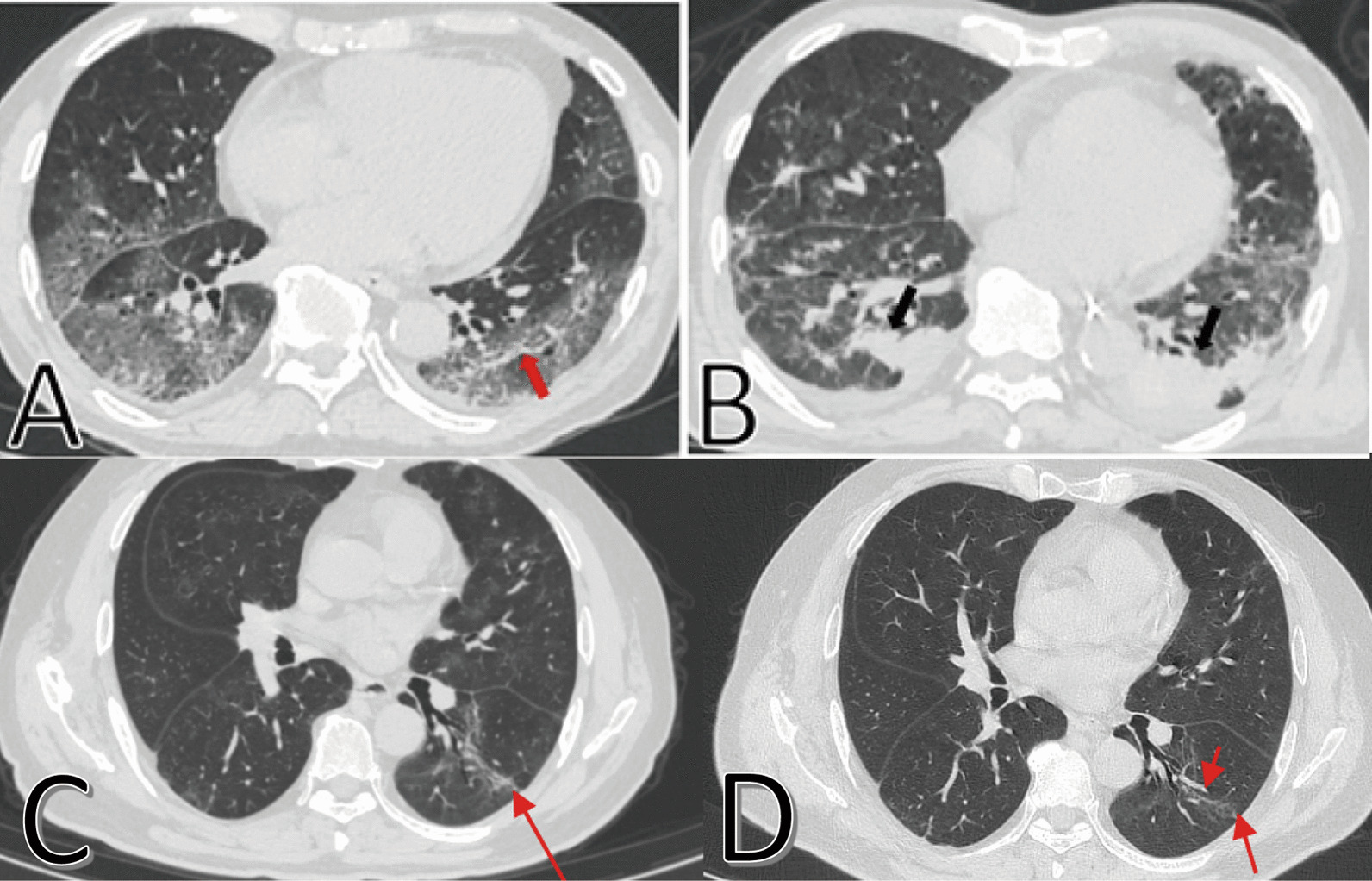
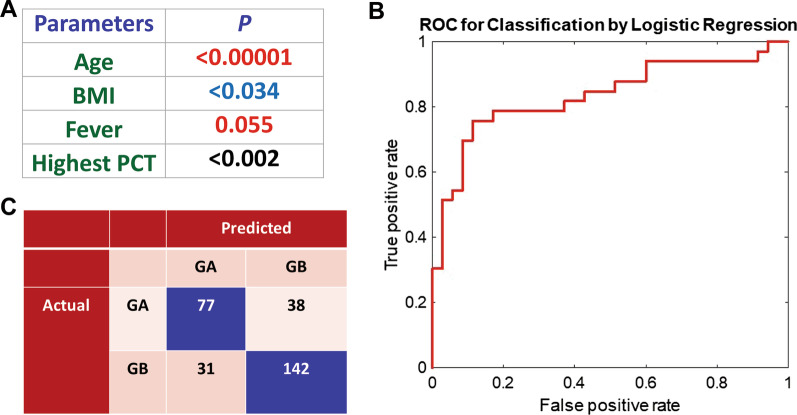
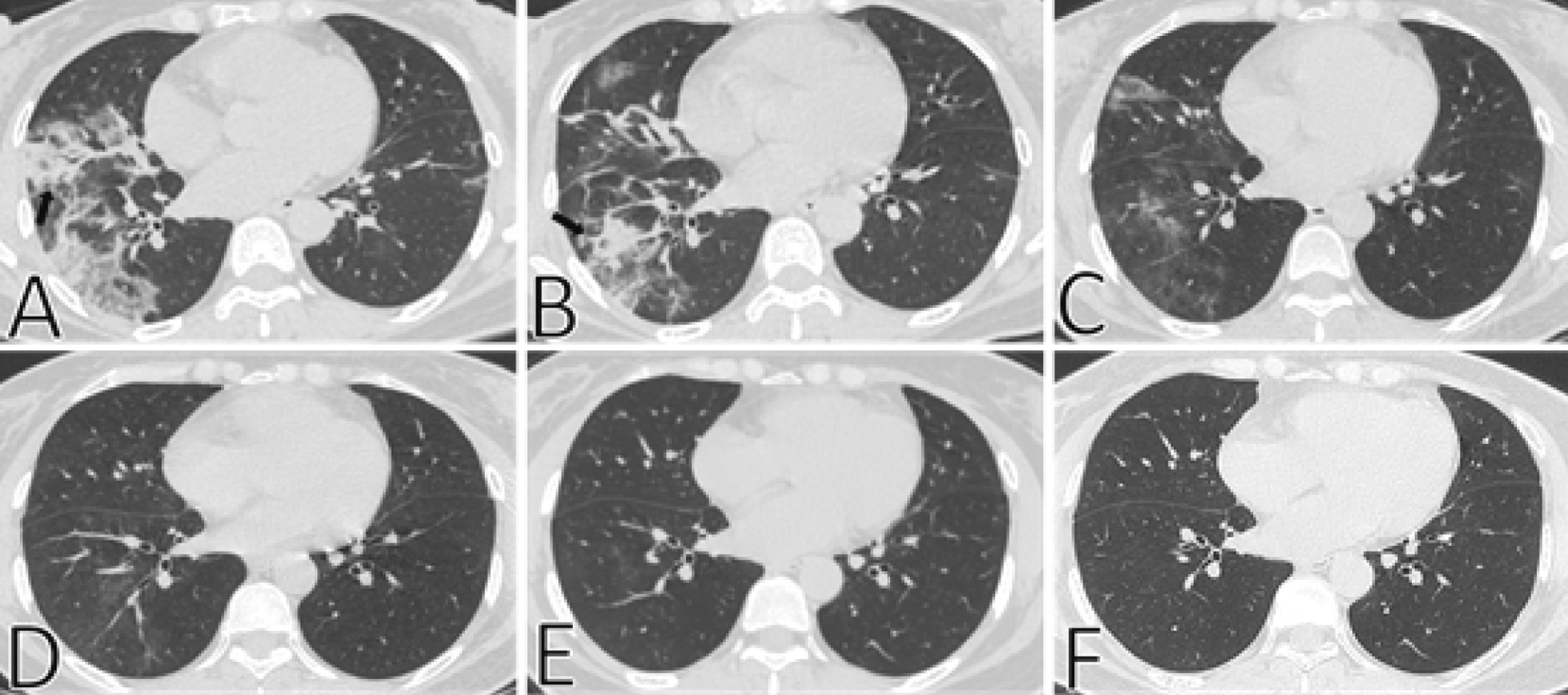
Parenchymal bands, irregular interfaces, reticulation and traction bronchiectasis were the most common CT features in all COVID-19 patients. During the 0-30, 31-60, 61-90, 91-120 and > 120 days after onset, 86.87%, 74.40%, 79.56%, 68.12% and 62.03% patients developed with pulmonary fibrosis and 4.53%, 19.61%, 18.02%, 38.30% and 48.98% patients reversed pulmonary fibrosis, respectively. It was observed that Age, BMI, Fever, and Highest PCT were predictive factors for sustaining fibrosis even after 90 days from onset. A predictive model of the persistence with pulmonary fibrosis was developed based-on the Logistic Regression method with an accuracy, PPV, NPV, Sensitivity and Specificity of the model of 76%, 71%, 79%, 67%, and 82%, respectively. More than half of the COVID-19 patients revealed abnormal conditions in lung function after 90 days from onset, and the ratio of abnormal lung function did not differ on a statistically significant level between the fibrotic and non-fibrotic groups.
Persistent pulmonary fibrosis was more likely to develop in patients with older age, higher BMI, severe/critical condition, fever, a longer viral clearance time, pre-existing disease and delayed hospitalization. Fibrosis developed in COVID-19 patients could be reversed in about a third of the patients after 120 days from onset. The pulmonary function of less than half of COVID-19 patients could turn to normal condition after three months from onset. An effective prediction model with an average area under the curve (AUC) of 0.84 was established to predict the persistence of pulmonary fibrosis in COVID-19 patients for early diagnosis.
数千例 2019 冠状病毒病(COVID-19)患者已从医院出院,需要进行持续的随访研究来评估 COVID-19 后纤维化的患病率。
本研究纳入了 2020 年 1 月 11 日至 4 月 26 日期间因 COVID-19 入住深圳市第三人民医院的 462 例经实验室确诊的患者。共有 457 例患者在住院期间或出院后接受了薄层胸部 CT 扫描,以确定肺部病变。共有 287 例患者在发病后 90-150 天进行了随访,发病后约三个月进行了肺功能检查。通过回归分析确定影响肺纤维化持续存在的危险因素,并建立肺纤维化持续存在的预测模型。
所有 COVID-19 患者的 CT 特征最常见的是实质带、不规则界面、网状和牵引性支气管扩张。在发病后 0-30、31-60、61-90、91-120 和>120 天,分别有 86.87%、74.40%、79.56%、68.12%和 62.03%的患者发生肺纤维化,分别有 4.53%、19.61%、18.02%、38.30%和 48.98%的患者肺纤维化逆转。结果发现年龄、BMI、发热和最高降钙素原(PCT)是即使在发病后 90 天仍存在纤维化的预测因素。根据 Logistic 回归方法建立了肺纤维化持续存在的预测模型,该模型的准确性、阳性预测值、阴性预测值、敏感性和特异性分别为 76%、71%、79%、67%和 82%。超过一半的 COVID-19 患者在发病后 90 天出现肺功能异常,纤维化组和非纤维化组肺功能异常的比例无统计学差异。
年龄较大、BMI 较高、重症/危重症、发热、病毒清除时间较长、合并基础疾病和延迟住院的 COVID-19 患者更易发生持续性肺纤维化。COVID-19 患者的纤维化在发病后 120 天左右约有三分之一可逆转。发病后三个月,不到一半的 COVID-19 患者的肺功能可恢复正常。建立了一种预测模型,平均曲线下面积(AUC)为 0.84,用于早期诊断 COVID-19 患者肺纤维化的持续存在。