Akbar Noor, Aslam Zara, Siddiqui Ruqaiyyah, Shah Muhammad Raza, Khan Naveed Ahmed
College of Arts and Sciences, American University of Sharjah, University City, 26666, Sharjah, United Arab Emirates.
International Centre for Chemical and Biological Sciences, H.E.J. Research Institute of Chemistry, University of Karachi, Karachi, 75270, Pakistan.
AMB Express. 2021 Jul 10;11(1):104. doi: 10.1186/s13568-021-01261-1.
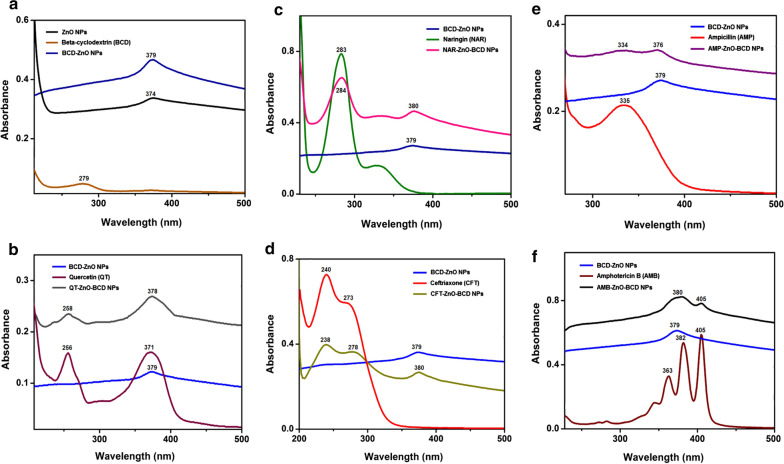
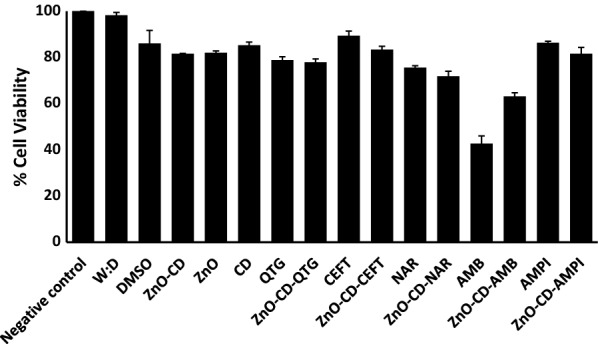
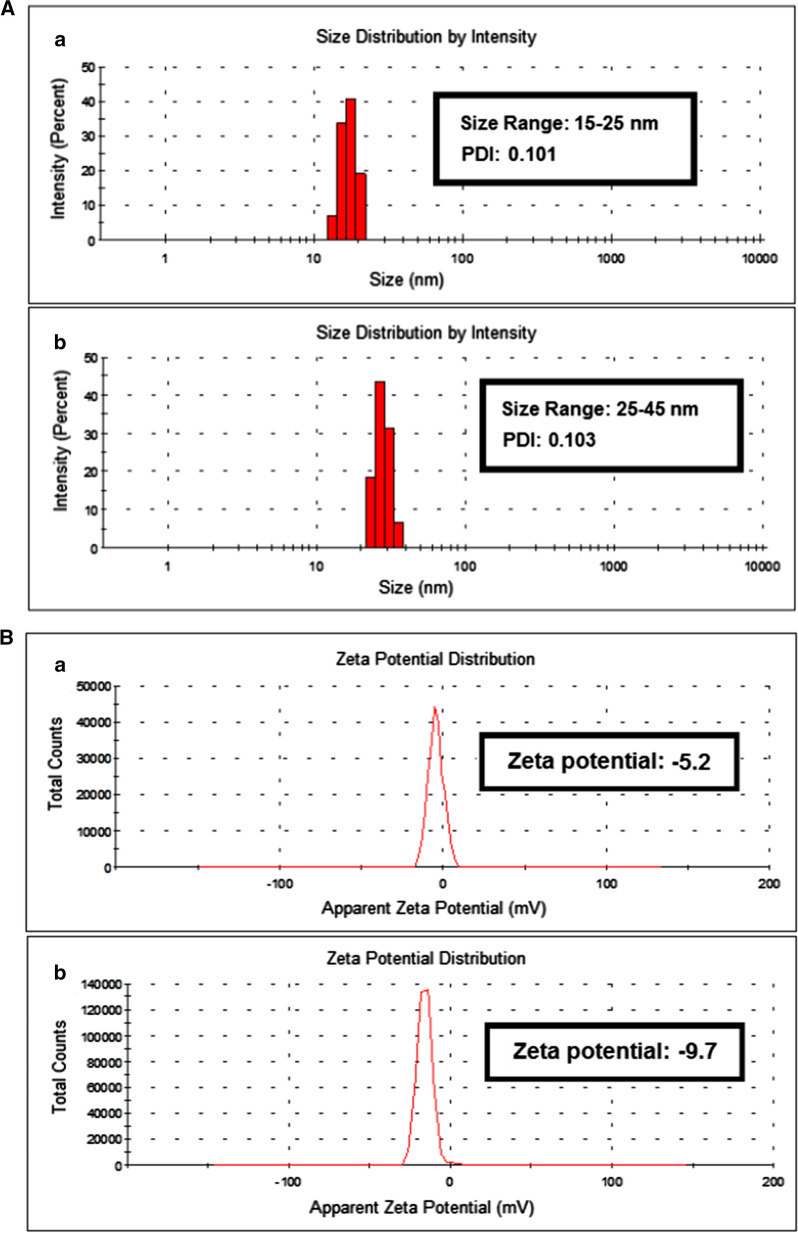
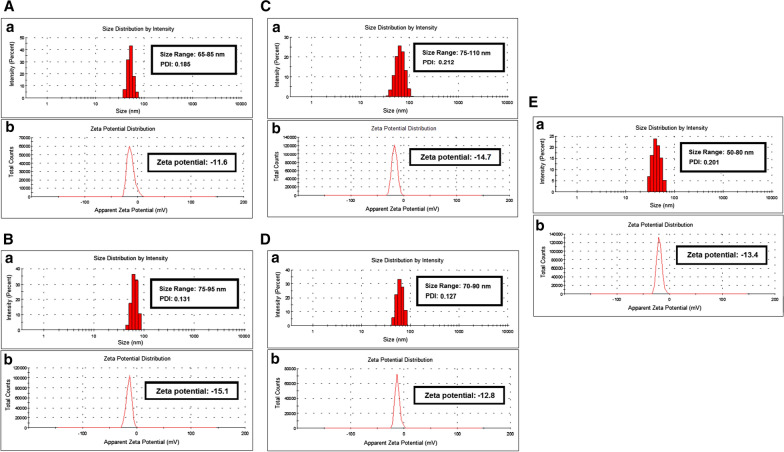
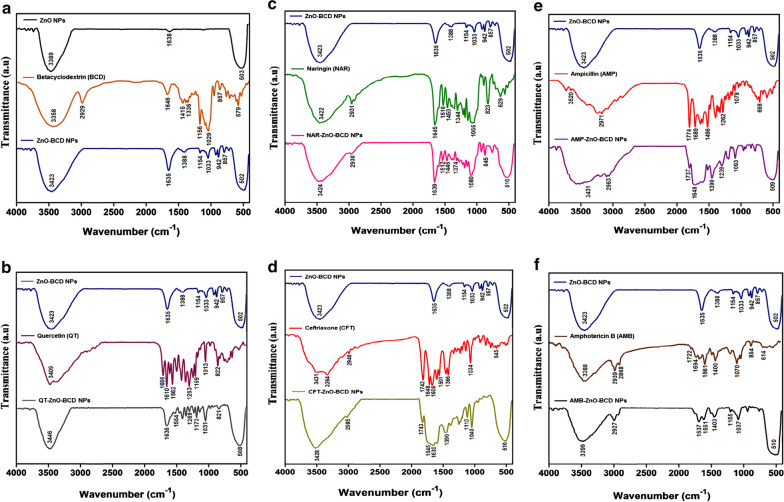
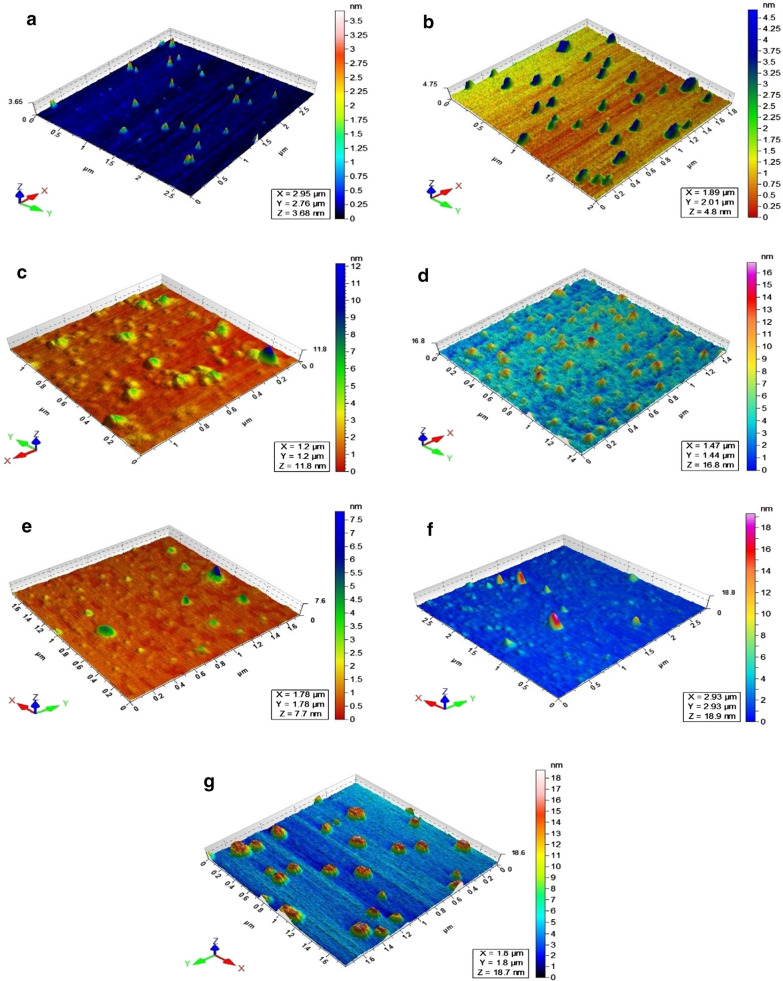
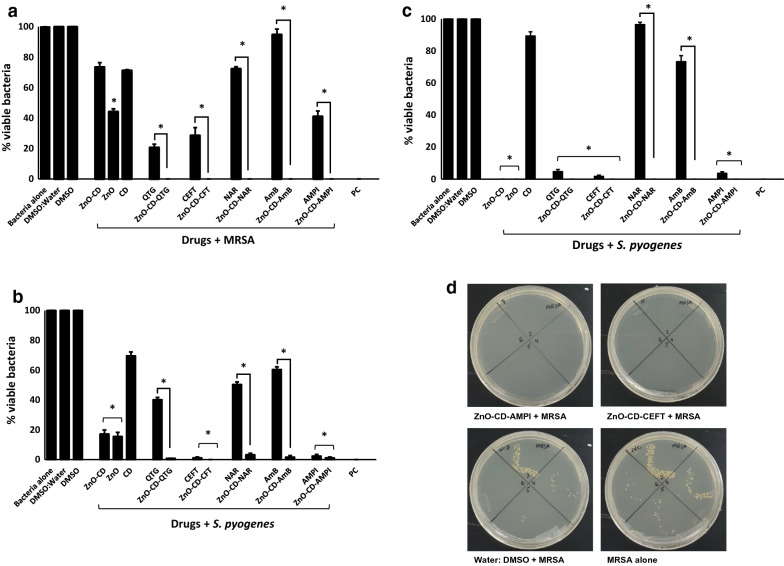
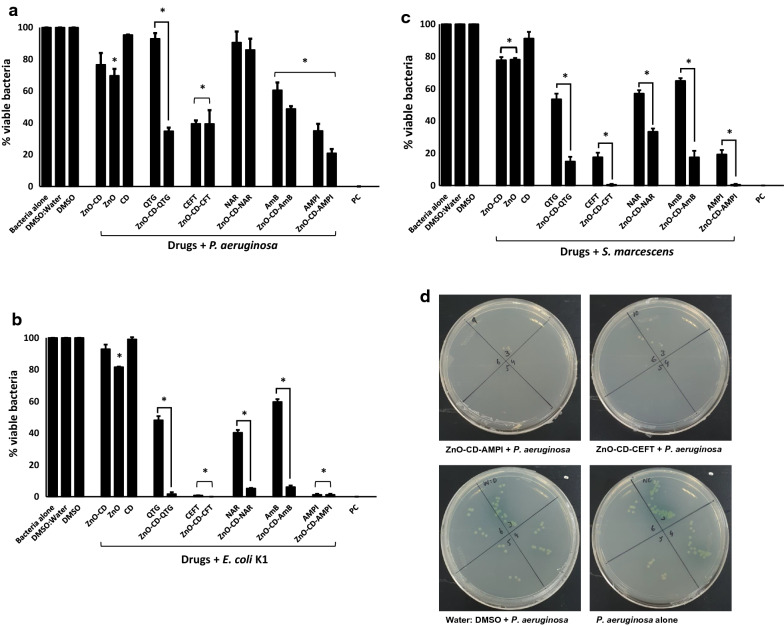
At present, antibiotic resistance is one of the most pressing issues in healthcare globally. The development of new medicine for clinical applications is significantly less than the emergence of multiple drug-resistant bacteria, thus modification of existing medicines is a useful avenue. Among several approaches, nanomedicine is considered of potential therapeutic value. Herein, we have synthesized Zinc oxide nanoparticles (ZnO-NPs) conjugated with clinically-approved drugs (Quercetin, Ceftriaxone, Ampicillin, Naringin and Amphotericin B) with the aim to evaluate their antibacterial activity against several Gram-positive (Methicillin resistant Staphylococcus aureus, Streptococcus pneumoniae and Streptococcus pyogenes) and Gram-negative (Escherichia coli K1, Serratia marcescens and Pseudomonas aeruginosa) bacteria. The nanoparticles and their drug conjugates were characterized using UV-visible spectrophotometry, dynamic light scattering, Fourier transform infrared spectroscopy and atomic force microscopy. Antibacterial activity was performed by dilution colony forming unit method and finally 3-(4,5-dimethylthiazole-2-yl)-2,5-diphenyltetrazolium bromide (MTT) assays were performed to determine their cytotoxic effects against human cell lines. ZnO-NPs revealed maxima surface plasmon resonance band at 374 and after conjugation with beta-cyclodextrin at 379 nm, polydispersity with size in range of 25-45 nm with pointed shaped morphology. When conjugated with ZnO-NPs, drug efficacy against MDR bacteria was enhanced significantly. In particular, Ceftriaxone- and Ampicillin-conjugated ZnO-NPs exhibited potent antibacterial effects. Conversely, ZnO-NPs and drugs conjugated NPs showed negligible cytotoxicity against human cell lines except Amphotericin B (57% host cell death) and Amphotericin B-conjugated with ZnO-NPs (37% host cell death). In conclusion, the results revealed that drugs loaded on ZnO-NPs offer a promising approach to combat increasingly resistant bacterial infections.
目前,抗生素耐药性是全球医疗保健领域最紧迫的问题之一。用于临床应用的新药研发速度明显低于多重耐药菌的出现速度,因此对现有药物进行改良是一条可行的途径。在多种方法中,纳米医学被认为具有潜在的治疗价值。在此,我们合成了与临床批准药物(槲皮素、头孢曲松、氨苄西林、柚皮苷和两性霉素B)共轭的氧化锌纳米颗粒(ZnO-NPs),旨在评估它们对几种革兰氏阳性菌(耐甲氧西林金黄色葡萄球菌、肺炎链球菌和化脓性链球菌)和革兰氏阴性菌(大肠杆菌K1、粘质沙雷氏菌和铜绿假单胞菌)的抗菌活性。使用紫外可见分光光度法、动态光散射、傅里叶变换红外光谱和原子力显微镜对纳米颗粒及其药物共轭物进行了表征。通过稀释菌落形成单位法进行抗菌活性测试,最后进行3-(4,5-二甲基噻唑-2-基)-2,5-二苯基四氮唑溴盐(MTT)测定,以确定它们对人类细胞系的细胞毒性作用。ZnO-NPs在374 nm处显示出最大表面等离子体共振带,与β-环糊精共轭后在379 nm处,多分散性,尺寸范围为25-45 nm,形态为尖状。当与ZnO-NPs共轭时,对多重耐药菌的药物疗效显著增强。特别是,头孢曲松和氨苄西林共轭的ZnO-NPs表现出强大的抗菌作用。相反,ZnO-NPs和药物共轭纳米颗粒对人类细胞系显示出可忽略不计的细胞毒性,除了两性霉素B(57%宿主细胞死亡)和与ZnO-NPs共轭的两性霉素B(37%宿主细胞死亡)。总之,结果表明负载在ZnO-NPs上的药物为对抗日益耐药的细菌感染提供了一种有前景的方法。