Mengistu Adam, Naimuddin Mohammed, Abebe Buzuayehu
Department of Applied Biology, School of Applied Natural Science, Adama Science and Technology University P.O. Box:1888 Adama Ethiopia
Department of Applied Chemistry, School of Applied Natural Science, Adama Science and Technology University P.O. Box:1888 Adama Ethiopia
RSC Adv. 2023 Aug 21;13(35):24835-24845. doi: 10.1039/d3ra04488b. eCollection 2023 Aug 11.
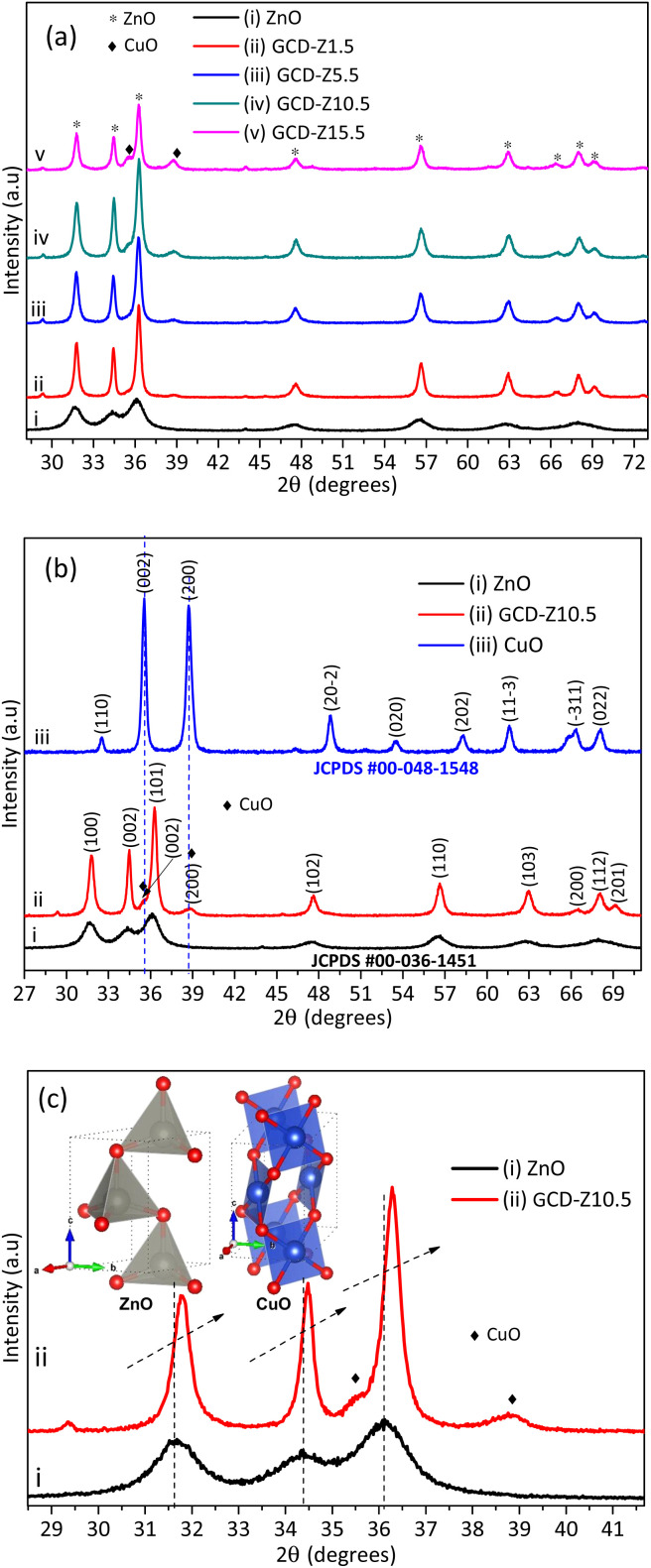
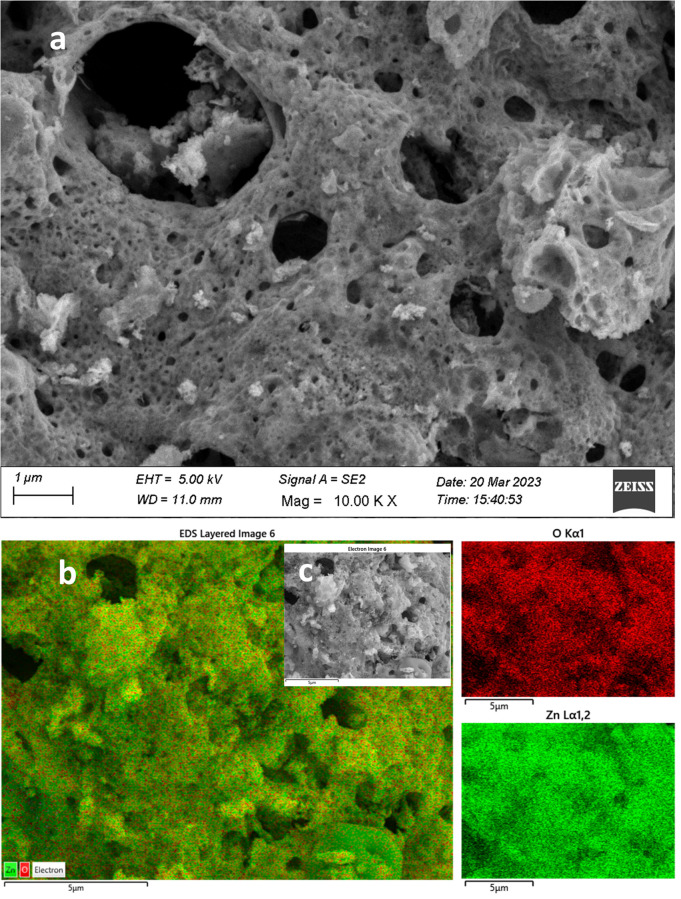
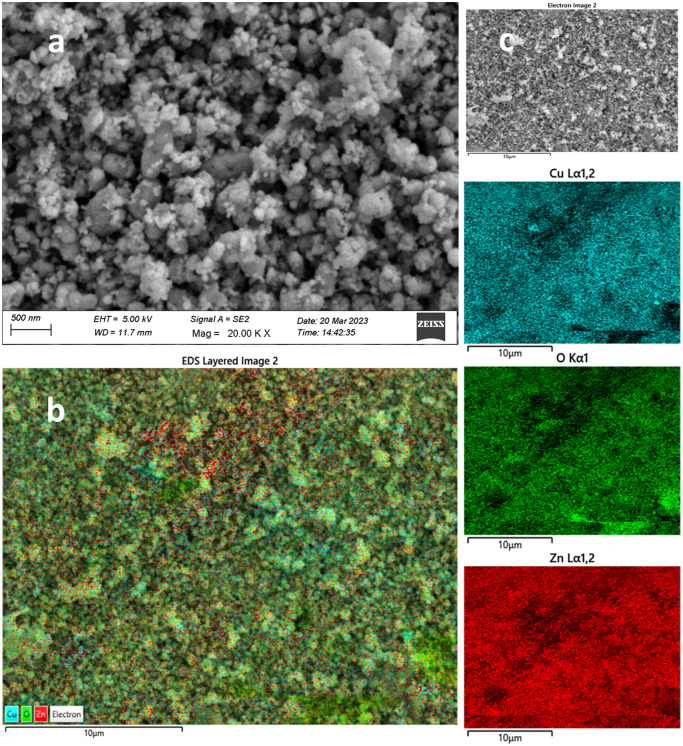
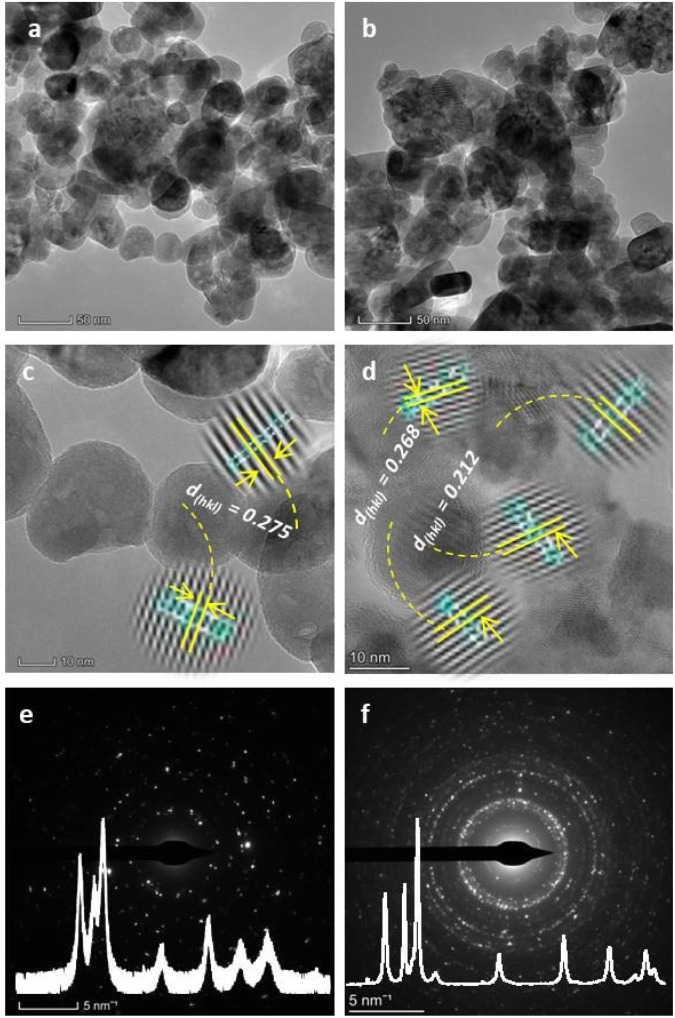
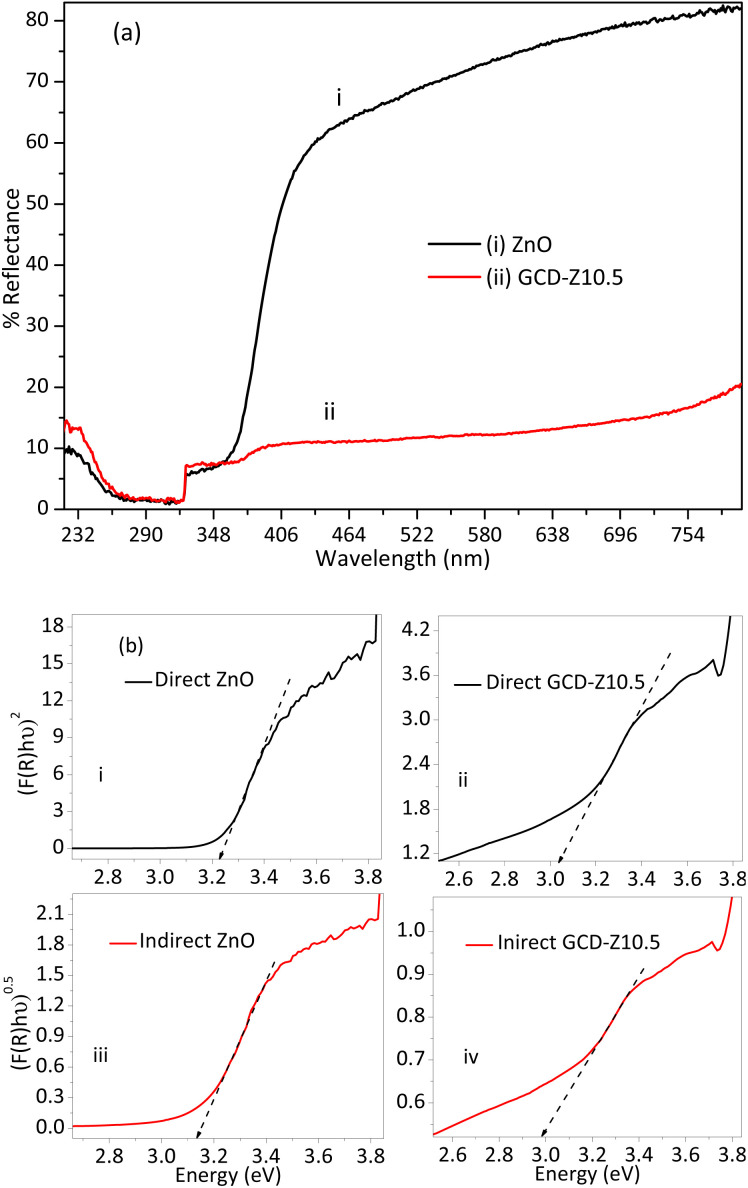
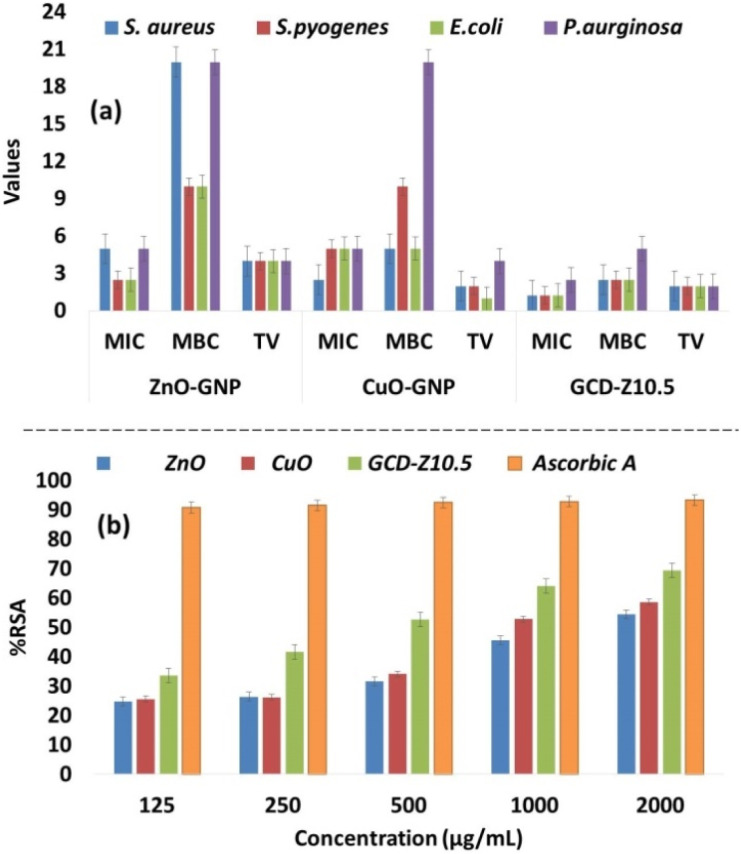
The emergence and re-emergence of antibiotic-resistant bacteria is a potential threat to treating infectious diseases. This study employed a nanometer-scale green synthesis using an extract of leaves to obtain nanoparticles (NPs) and nanocomposites (NCs) possessing antibacterial properties. The FESEM-EDS elemental mapping analysis proved the novelty of the green synthesis approach in synthesizing a copper-doped ZnO NCs with good dopant distribution. The crystallinity and ZnO bandgap were adjusted by extrinsic copper doping in the ZnO lattice. The optical property adjustments from 3.04 to 2.97 eV for indirect Kubelka-Munk functions were confirmed from DRS-UV-vis analysis. The dopant inclusion in the host lattice was also confirmed by the angle shift on the XRD pattern analysis relative to single ZnO. In addition to doping, the XRD pattern analysis also showed the development of CuO crystals. The lattice fringe values from HRTEM analysis confirmed the existence of both CuO and ZnO crystals with local heterojunctions. Doping and heterojunctions have crucial values in charge transfer and visible light harvesting behaviour, as proved by the PL analysis. The synergistic effects of the doped NCs showed greater antibacterial activity against both Gram-positive and Gram-negative bacteria as a result of more ROS generation through the bacteria-cell-catalyst interaction and release of metal ions. The antioxidant potential of the doped NCs was found to be higher than that of single NPs, using the 2,2-diphenyl-1-picrylhydrazyl free radical scavenging assay and is expected to impart protective effects to the host cells by scavenging destructive free radicals. Thus, the overall analysis leads to the conclusion that the potentiality of synthesized materials has a future outlook for biological applications, especially in the development of antimicrobials to combat antibiotic-resistant bacteria and microbes.
抗生素耐药细菌的出现和再次出现对治疗传染病构成了潜在威胁。本研究采用纳米级绿色合成方法,利用树叶提取物获得具有抗菌性能的纳米颗粒(NPs)和纳米复合材料(NCs)。场发射扫描电子显微镜-能谱元素映射分析证明了绿色合成方法在合成具有良好掺杂剂分布的铜掺杂氧化锌纳米复合材料方面的新颖性。通过在氧化锌晶格中进行外在铜掺杂来调整结晶度和氧化锌带隙。通过漫反射紫外可见光谱分析证实了间接库贝尔卡-蒙克函数的光学性质从3.04 eV调整到2.97 eV。相对于单一氧化锌,X射线衍射图谱分析中的角度偏移也证实了主体晶格中掺杂剂的存在。除了掺杂外,X射线衍射图谱分析还显示了氧化铜晶体的形成。高分辨率透射电子显微镜分析得到的晶格条纹值证实了氧化铜和氧化锌晶体以及局部异质结的存在。如光致发光分析所证明的,掺杂和异质结对电荷转移和可见光捕获行为具有关键价值。由于通过细菌-细胞-催化剂相互作用产生更多活性氧并释放金属离子,掺杂纳米复合材料的协同效应显示出对革兰氏阳性菌和革兰氏阴性菌都具有更强的抗菌活性。使用2,2-二苯基-1-苦基肼自由基清除试验发现,掺杂纳米复合材料的抗氧化潜力高于单一纳米颗粒,预计通过清除破坏性自由基对宿主细胞起到保护作用。因此,综合分析得出结论,合成材料在生物应用方面具有未来前景,特别是在开发抗微生物剂以对抗抗生素耐药细菌和微生物方面。