Ali Mehboob, Gupta Mehak, Wani Abubakar, Sharma Ankita, Abdullaha Mohd, Kour Dilpreet, Choudhary Sushil, Bharate Sandip B, Singh Gurdarshan, Kumar Ajay
PK-PD-Toxicology Division, CSIR-Indian Institute of Integrative Medicine, Jammu, India.
Academy of Scientific and Innovative Research (AcSIR), Ghaziabad, India.
Front Pharmacol. 2021 Jun 25;12:695712. doi: 10.3389/fphar.2021.695712. eCollection 2021.
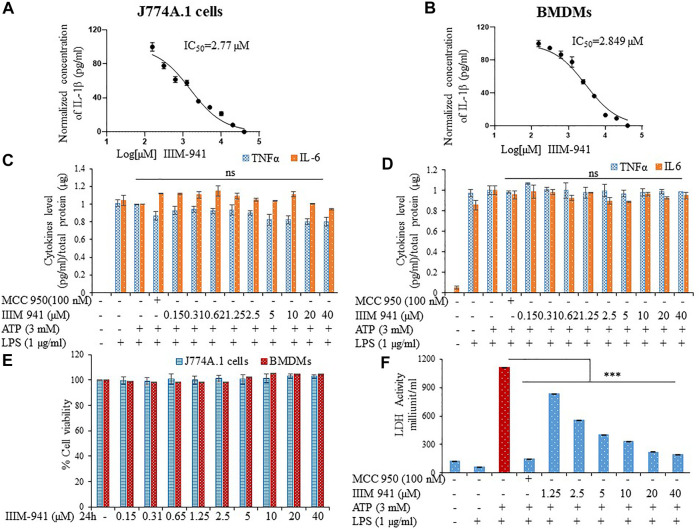
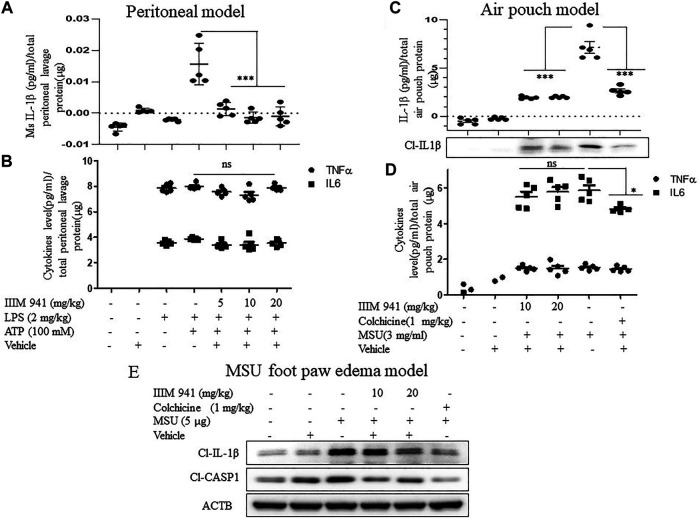
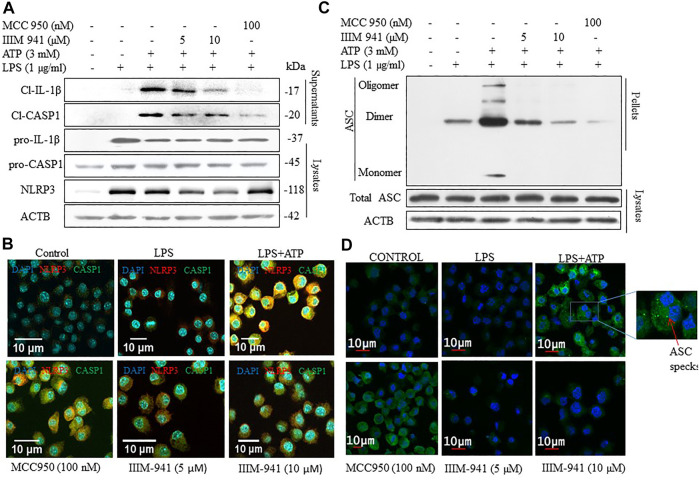
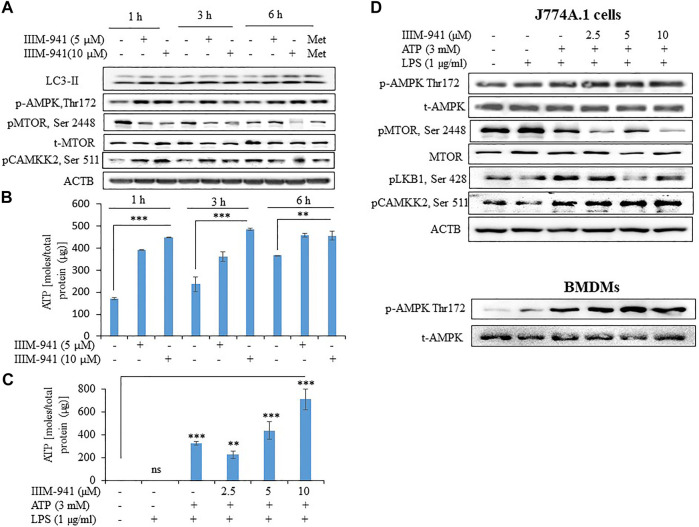
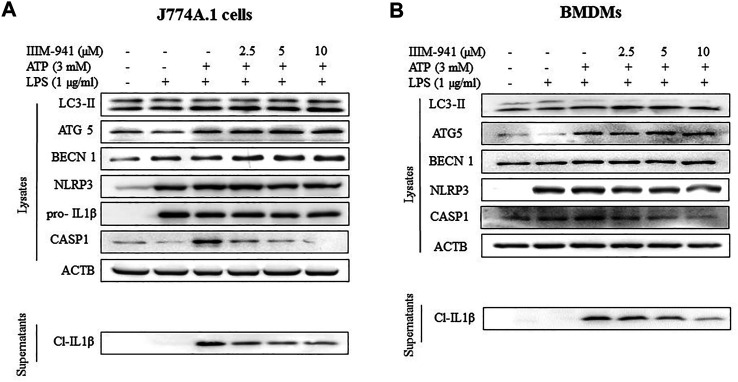
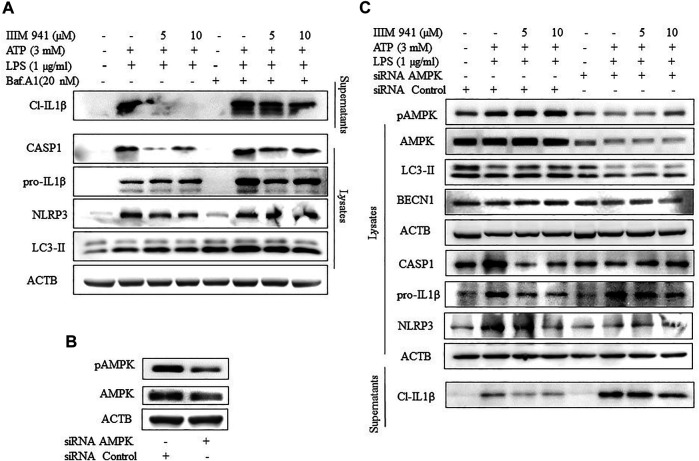
Aberrant activation of NLRP3 inflammasome has been implicated in several inflammatory diseases. Autophagy is one of the primary mechanisms that regulate NLRP3 inflammasome activity. In this study, we attempted to target NLRP3 inflammasome activity by a synthetic compound IIIM-941. We found that IIIM-941 inhibits ATP induced NLRP3 inflammasome by induction of autophagy through AMPK pathway in bone marrow derived macrophages (BMDMs) and J774A.1 cells. It was interesting to observe that IIIM-941 did not show any inhibitory activity against LPS induced pro-inflammatory cytokines TNF-α and IL-6. The anti-NLRP3 activity of IIIM-941 was significantly reversed when we attempted to block autophagy by using either pharmacological inhibitor bafilomycin A1or by using siRNA against AMPK. Further, we found that IIIM-941 downregulated the expression of NLRP3 and prevented the oligomerization of ASC to exert its anti-NLRP3 inflammasome effect in J774A.1 cells. We validated inhibitory activity of IIIM-941 against NLRP3 in three different mice models. The anti-inflammatory effect of IIIM-941 was highly significant in ATP induced peritoneal inflammation model. IIIM-941 was similarly effective in suppressing MSU induced IL-1β in the air pouch model of inflammation without affecting the levels of TNF-α and IL-6. Finally, oral efficacy of IIIM-941 was also proved in MSU indued foot paw edema model of inflammation in mice at 10 and 20 mg/kg (b.w.). The compounds like IIIM-941 can be explored further for the development of therapies against diseases such as Alzheimer's disease and Parkinson's disease, where hampered autophagy and NLRP3 activation play a crucial role in the pathological development.
NLRP3炎性小体的异常激活与多种炎症性疾病有关。自噬是调节NLRP3炎性小体活性的主要机制之一。在本研究中,我们试图用一种合成化合物IIIM-941来靶向NLRP3炎性小体活性。我们发现IIIM-941通过在骨髓来源的巨噬细胞(BMDM)和J774A.1细胞中通过AMPK途径诱导自噬来抑制ATP诱导的NLRP3炎性小体。有趣的是,观察到IIIM-941对LPS诱导的促炎细胞因子TNF-α和IL-6没有任何抑制活性。当我们试图通过使用药理学抑制剂巴弗洛霉素A1或针对AMPK的siRNA来阻断自噬时,IIIM-941的抗NLRP3活性被显著逆转。此外,我们发现IIIM-941下调了NLRP3的表达,并阻止了ASC的寡聚化,从而在J774A.1细胞中发挥其抗NLRP3炎性小体的作用。我们在三种不同的小鼠模型中验证了IIIM-941对NLRP3的抑制活性。IIIM-941在ATP诱导的腹膜炎模型中的抗炎作用非常显著。在气囊炎症模型中,IIIM-941在抑制MSU诱导的IL-β方面同样有效,而不影响TNF-α和IL-6的水平。最后,在小鼠的MSU诱导的足爪水肿炎症模型中,也证明了IIIM-941在10和20mg/kg(体重)时的口服疗效。像IIIM-941这样的化合物可以进一步探索用于开发针对阿尔茨海默病和帕金森病等疾病的疗法,在这些疾病中,自噬受阻和NLRP3激活在病理发展中起关键作用。