Gurgu Raluca Simona, Ciobanu Adela Magdalena, Danasel Roxana Ionela, Panea Cristina Aura
Neurology Department, 'Elias' University Hospital of Emergency, 011461 Bucharest, Romania.
Neurosciences Department, Discipline of Psychiatry, 'Carol Davila' University of Medicine and Pharmacy, 020021 Bucharest, Romania.
Exp Ther Med. 2021 Aug;22(2):909. doi: 10.3892/etm.2021.10341. Epub 2021 Jun 28.
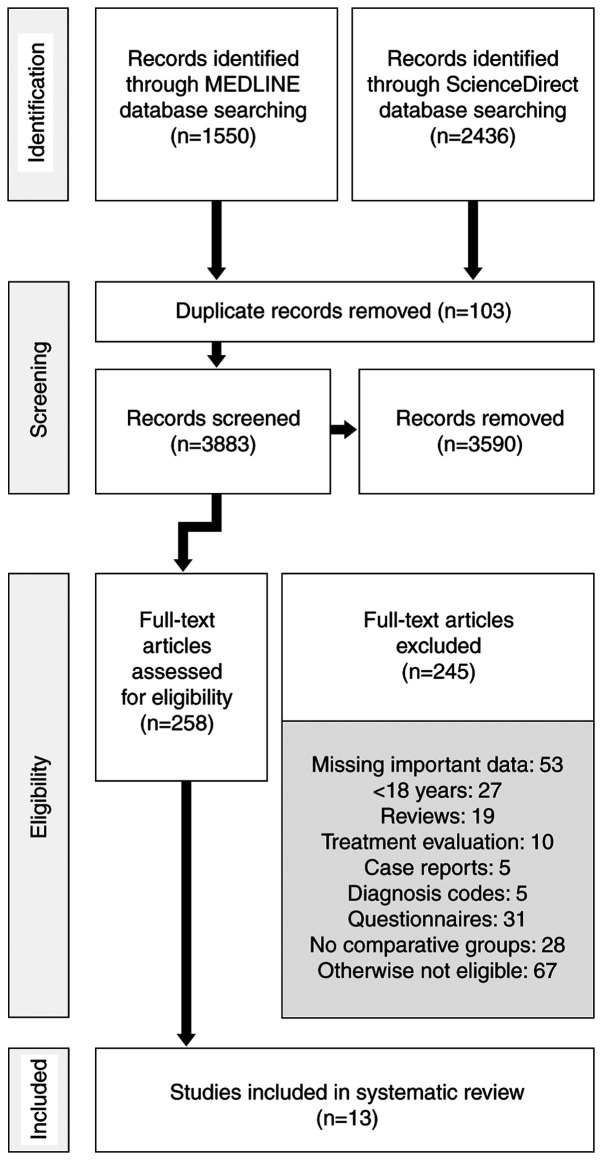
The co-occurrence of epilepsy and psychiatric disorders is long known. The scope of this systematic review was to describe the prevalence of specific interictal psychiatric disorders in patients with epilepsy and to assess possible associations between psychiatric disorders and other sociodemographic or clinical characteristics of epilepsy patients. MEDLINE and ScienceDirect were searched for original articles published between January 2015 and February 2021 describing studies that involved epilepsy patients with psychiatric comorbidities. We identified 13 studies with heterogenous methodology and reporting. Prevalence of any psychiatric disorder observed was up to 51% in idiopathic generalized epilepsy (IGE), up to 43.1% in temporal lobe epilepsy (TLE) and up to 43.3% in a general population of patients with epilepsy. The most frequent psychiatric comorbidities associated with epilepsy included mood/affective disorders (up to 40% for lifetime occurrence and up to 23% for current occurrence), anxiety disorders (up to 30.8% for lifetime occurrence and up to 15.6% for current occurrence), personality disorders [up to 11% in juvenile myoclonic epilepsy (JME)] and psychotic disorders (up to 4% of epilepsy patients). In focal epilepsy, depressive disorders might be associated with specific brain imaging findings and with cognitive impairment. Anxiety disorders are associated with a higher frequency of generalized tonico-clonic seizure (GTCS) and with worse social functioning. Psychotic disorders were found to be associated with longer duration of epilepsy. Childhood maltreatment experiences were found to be a powerful predictor for the occurrence of psychiatric comorbidities in epilepsy patients, while data regarding association of other epilepsy characteristics with the presence of psychiatric disorders is conflicting.
癫痫与精神障碍的共病现象早已为人所知。本系统综述的目的是描述癫痫患者发作间期特定精神障碍的患病率,并评估精神障碍与癫痫患者其他社会人口统计学或临床特征之间可能存在的关联。在MEDLINE和ScienceDirect数据库中检索了2015年1月至2021年2月发表的原创文章,这些文章描述了涉及患有精神疾病共病的癫痫患者的研究。我们确定了13项方法和报告各异的研究。在特发性全身性癫痫(IGE)中,观察到的任何精神障碍患病率高达51%,在颞叶癫痫(TLE)中高达43.1%,在癫痫患者总体人群中高达43.3%。与癫痫相关的最常见精神疾病共病包括情绪/情感障碍(终生患病率高达40%,当前患病率高达23%)、焦虑障碍(终生患病率高达30.8%,当前患病率高达15.6%)、人格障碍[青少年肌阵挛性癫痫(JME)中高达11%]和精神障碍(癫痫患者中高达4%)。在局灶性癫痫中,抑郁症可能与特定的脑成像结果和认知障碍有关。焦虑障碍与全身性强直阵挛发作(GTCS)的较高频率以及较差的社会功能有关。发现精神障碍与癫痫持续时间较长有关。童年期虐待经历被发现是癫痫患者发生精神疾病共病的有力预测因素,而关于癫痫其他特征与精神障碍存在之间关联的数据则相互矛盾。